During SLOM 2025, Monobuoy presented its technological proposal for CALM Buoy systems, designed for crude oil transfer operations in offshore facilities. Anna Collard, commercial manager, and Giulia Hawerroth, junior engineer, offered a comprehensive overview of the company, presenting both its expansion strategy for Latin America and the technical capabilities of its solutions. In this context, they emphasized that their products are not standard, but rather offshore buoys designed specifically for each operation, with a high level of technical customization.
Monobuoy has its design center in Monaco, where mooring solutions are conceptualized and developed. At the same time, manufacturing takes place at a shipyard in Dubai, a strategic choice that combines technical capacity, experience in offshore projects, and logistical proximity to important regions such as the Middle East, where they have already executed projects for operators such as Aramco.
"Collaboration with a shipyard that understands our technical requirements is key to maintaining consistency in every unit we manufacture," explained Hawerroth, who also highlighted that this synergy allows them to meet demanding schedules even in complex operating environments.
A distinctive feature of Monobuoy is its ability to offer highly customized solutions, designed based on structural variables, marine environment conditions, and monitoring system integration requirements. Thanks to the in-house development of telemetry modules, the company can adapt protocols and add components such as CCTV cameras according to each customer's specifications.
"The small size of our team facilitates direct communication with the customer, which speeds up decision-making throughout the project cycle," said Collard. This approach reduces administrative complexity and allows us to meet estimated delivery times of around 12 months, from design to final implementation.
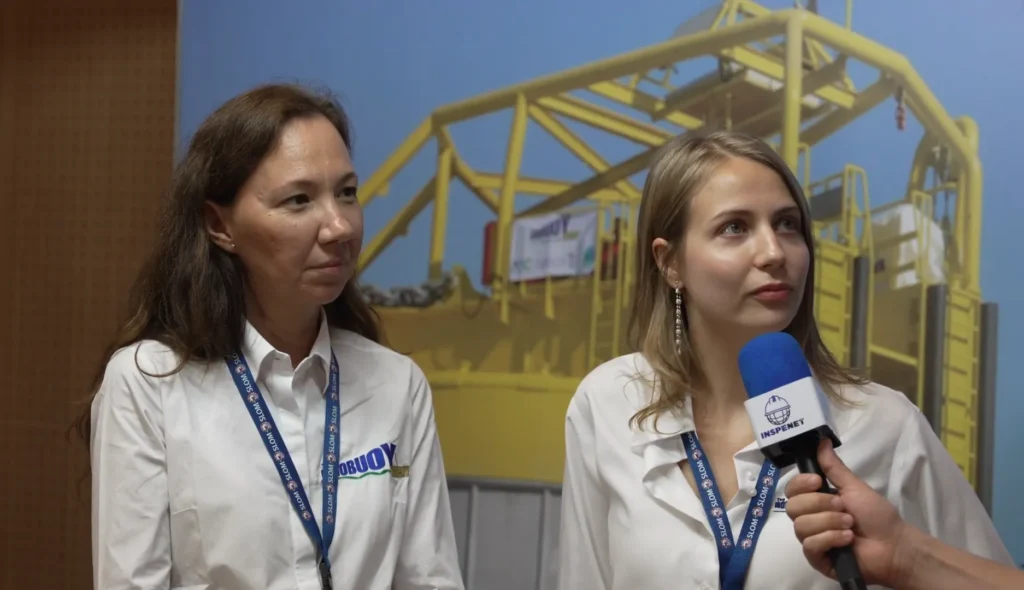
In their presentation during SLOM 2025, both representatives highlighted Monobuoy's sustained interest in deepening its participation in Latin America. Although they already have operational units in Canada and Colombia, the current goal is to expand their project portfolio in the region.
One of the most relevant examples is the installation carried out for ASENSA in Colombia. Despite the logistical challenges arising from the pandemic, the project was delivered without significant setbacks, consolidating itself as an operational validation of Monobuoy's approach in the Latin American context.
"It was our first system in the region and allowed us to verify that we can adapt our processes to its specific conditions. We want to scale that experience to other countries,"
said Collard.
Monobuoy's technical adaptability is also reflected in its willingness to adjust to the regulatory frameworks defined by different classification entities. Depending on the country or customer requirements, its buoys can be certified under ABS (American Bureau of Shipping) or DNV standards, which increases the technical reliability of its products.
"It is the customer who defines the classification society, and we work with both without any problems," explained Hawerroth, who also highlighted that this flexibility is essential for entering regulated markets with specific technical requirements and rigorous documentation.
For more content on SLOM 2025, visit our LinkedIn profile.
Source: Inspenet.