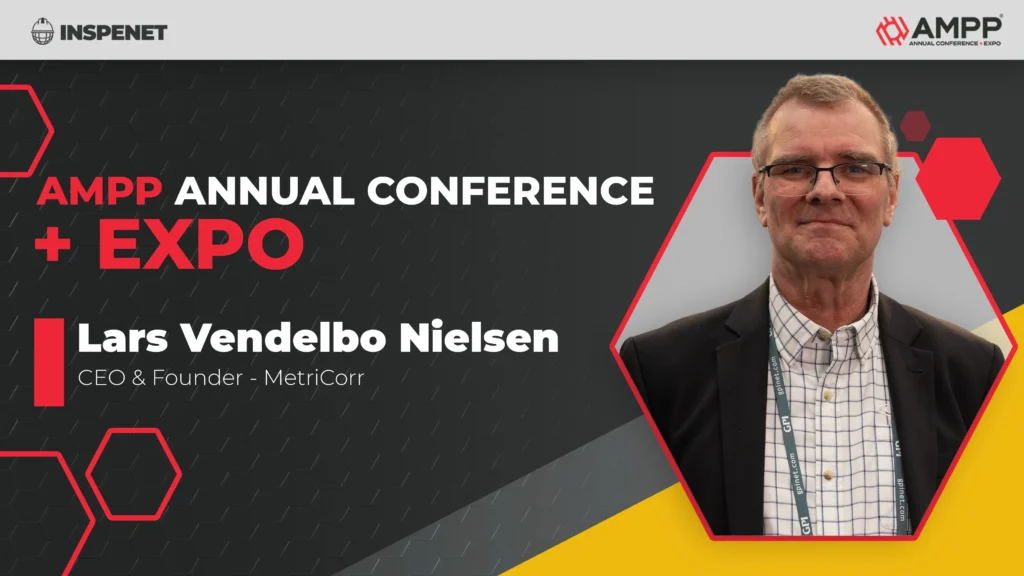
At the AMPP Annual Conference + Expo 2026, corrosion monitoring was established as one of the key pillars for energy infrastructure management. In this context, Lars Vendelbo Nielsen, CEO and founder of MetriCorr, presented a solution aimed at transforming how operators monitor pipeline integrity, leveraging digital technologies for onshore and offshore environments.
The interview focused on a persistent challenge in the energy industry: the difficulty of obtaining precise and continuous data on the real condition of infrastructures. In response, corrosion monitoring emerges as a crucial area for optimizing operations and anticipating failures.
MetriCorr has developed a platform for monitoring corrosion in buried pipelines, integrating multiple variables related to cathodic protection and environmental conditions.
The system allows operators to access data through a web portal, providing a centralized view of their assets' status.
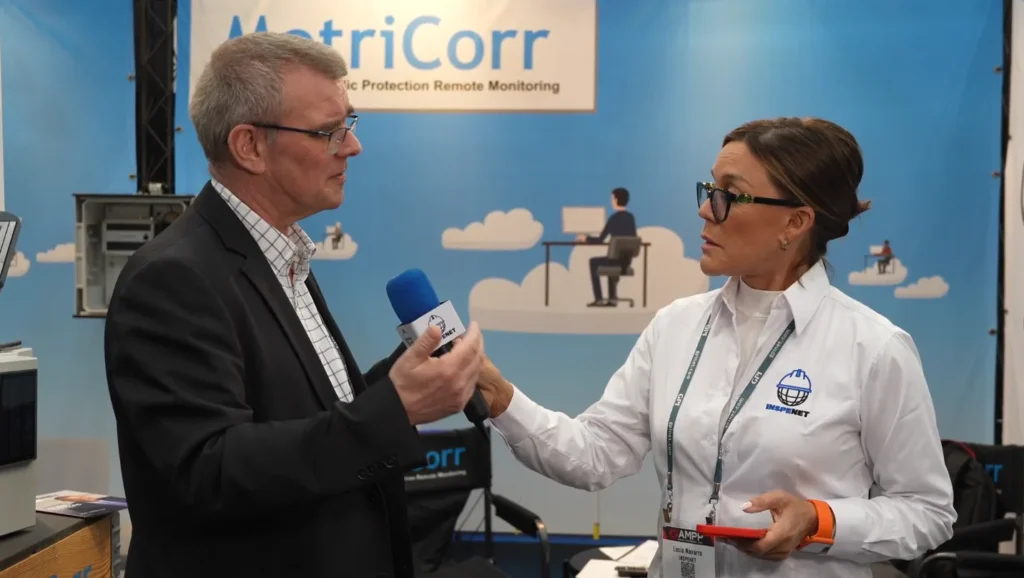
As explained by Lars Vendelbo Nielsen.
Furthermore, the solution is not limited to data collection but acts as an integrity management tool. Through this platform, clients can monitor whether coatings are functioning correctly and if cathodic protection levels remain within adequate parameters.
On the other hand, the traditional inspection model presents significant limitations. Historically, pipeline evaluation has relied on manual inspections at specific points, which involves long periods of fieldwork and a fragmented view of the infrastructure.
In many cases, a technician can take months to cover an entire pipeline, making it difficult to obtain an updated picture of its condition. Additionally, factors such as weather conditions or human error can affect the quality of measurements.
Consequently, this methodology prevents the detection of simultaneous events or complex corrosion patterns, reducing operators' response capability.
In contrast to these limitations, corrosion monitoring using remote systems introduces significant improvements. One of the main advantages is the ability to perform simultaneous measurements along the entire infrastructure, providing a complete real-time overview.
Furthermore, this technology significantly reduces inspection times and improves data accuracy. By eliminating reliance on manual processes, the risk of errors is minimized, and greater consistency in measurements is ensured.
This allows operators to react more quickly to any anomaly, optimizing both maintenance and facility safety.
Regarding information processing, MetriCorr's platform incorporates algorithms capable of analyzing large volumes of data according to industry standards. This approach transforms complex data into easily interpretable information.
As the company's CEO explained, the system uses a visual representation based on a color scheme (red, yellow, and green) that facilitates the immediate identification of incidents along the pipeline.
Likewise, users can delve into each critical point to understand the causes of the problem and receive guidance on possible corrective actions. This level of detail improves decision-making and adds value to asset management.
Another relevant aspect is the integration of advanced technologies such as machine learning and artificial intelligence in certain processes. These tools allow for the identification of corrosion patterns and the prediction of future behaviors based on historical data.
In this sense, corrosion monitoring is evolving towards a more predictive model, where decisions are based on automated and continuous analyses. This capability is especially useful in complex environments where multiple factors can influence material deterioration.
Beyond buried pipelines, MetriCorr's solutions also find application in other segments of the energy sector. These include offshore infrastructures, such as offshore wind farms, where environmental conditions demand rigorous corrosion control.
Additionally, the system allows for monitoring AC and DC interference, as well as evaluating cathodic protection behavior in different scenarios. This versatility expands the scope of corrosion monitoring and reinforces its role in comprehensive asset management.
It is worth noting that the company has a solid research foundation, developed in collaboration with the oil & gas industry and academic centers such as the Technical University of Denmark.
Ultimately, corrosion monitoring is positioned as a key tool for improving operational efficiency in the energy sector. The ability to access real-time data, combined with advanced analytics, allows operators to anticipate problems and optimize their maintenance strategies.
In an environment where infrastructure reliability is critical, solutions like the one presented by MetriCorr reflect a clear trend towards the digitalization and automation of processes. This approach contributes to more precise management aligned with the industry's current needs.
For more content about AMPP 2026, please visit our LinkedIn profile.
Source: Inspenet.