Cathodic protection is establishing itself as an essential solution to guarantee pipeline integrity in a context marked by increasing technical and operational demands.
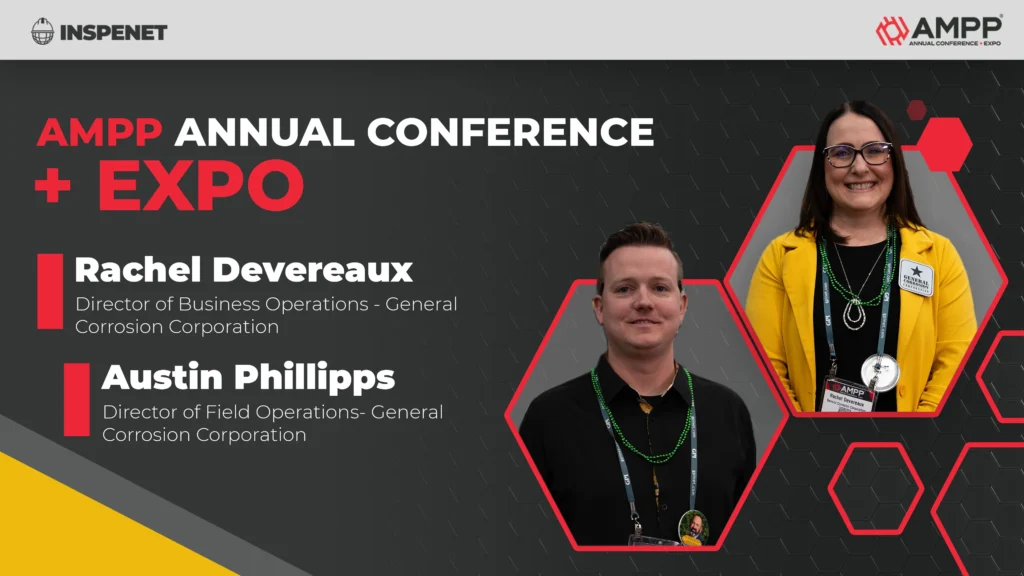
Within the framework of the AMPP Annual Conference + Expo 2026, Rachel Devereaux, Director of Business Operations, and Austin Phillipps, Director of Field Operations at General Corrosion Corporation, analyze how the sector is addressing current corrosion control challenges and what factors determine the success of energy infrastructure projects.
The energy industry faces an increasingly demanding scenario in terms of safety, regulatory compliance, and asset life. Corrosion remains one of the primary risks to pipeline integrity, necessitating the adoption of precise and well-executed technical solutions.
In this context, cathodic protection plays a central role as a method to reduce the deterioration of metallic infrastructure. Likewise, the growing interaction between electrical systems and pipelines has increased the need to address phenomena such as alternating current (AC) interference.
During the AMPP 2026 event, these issues centered much of the technical debate, with specialized companies presenting solutions aimed at improving safety and operational efficiency.
General Corrosion Corporation positions itself as a company specializing in full-service corrosion control, with a strong presence in the U.S. Midwest. Its value proposition is based on offering comprehensive solutions ranging from design to the installation of protection systems.
Rachel Devereaux highlights that the company works as a full-service cathodic protection provider, allowing each project to be approached with a global vision. This approach facilitates adaptation to the specific conditions of each environment and reinforces the quality of the results obtained.
Furthermore, the company maintains solid relationships with its clients, which contributes to ensuring the correct execution of projects and compliance with industry standards.
Designing an effective cathodic protection system requires taking multiple technical variables into account. Among them, soil resistivity is one of the most decisive factors, as it directly influences the system's behavior.
Similarly, it is essential to analyze the environment where the infrastructure will be installed. Environmental conditions, soil type, and interaction with other systems can affect the performance of the protection system.
In this regard, technical teams must have detailed information about the area to develop solutions adapted to each case. This preliminary analysis allows for design optimization and ensures adequate long-term protection.
Alternating current mitigation has become an important element within corrosion control programs. This phenomenon can pose risks to both the infrastructure and the technicians working in the field.
General Corrosion Corporation explains that the installation of AC mitigation systems allows for the reduction of corrosion induced by external electrical currents. Likewise, it contributes to improving safety conditions during operations.
This type of solution is especially relevant in environments where pipelines share space with power lines or other sources of interference. The correct implementation of these measures minimizes risks and improves overall system performance.
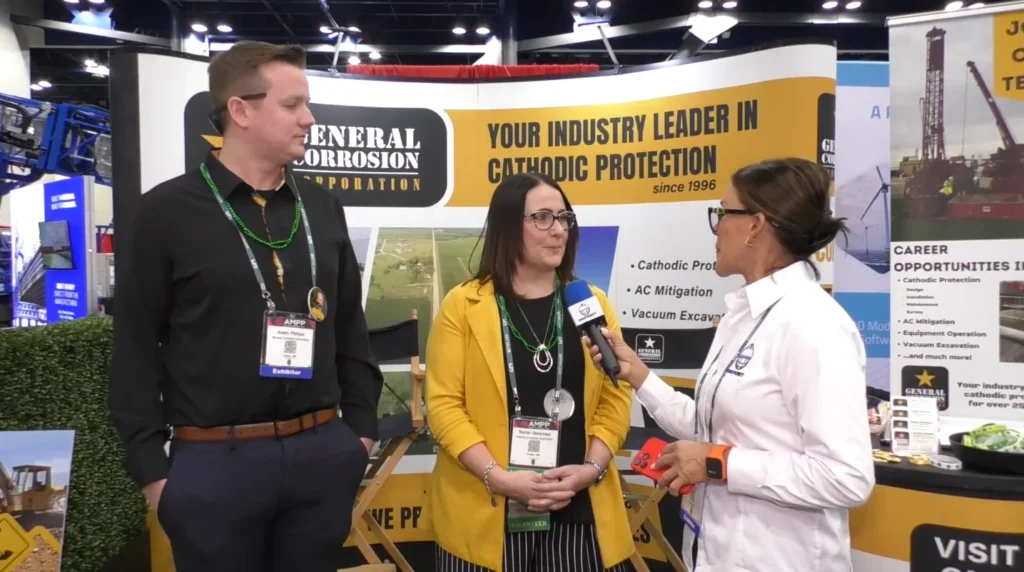
One of the most decisive aspects in the success of a corrosion control program is the coordination between consulting teams and field execution teams.
Devereaux emphasizes that communication between both areas is fundamental to defining key aspects such as materials to be used, installation methods, and execution times. Without this coordination, the risk of errors increases and results may be compromised.
Likewise, joint planning allows for the alignment of objectives and ensures that all phases of the project are developed coherently. This approach favors more efficient installations and greater reliability in system operation.
On the other hand, artificial intelligence is beginning to generate interest within the corrosion control sector, although its implementation is still limited in the operational field.
According to Devereaux, its direct impact on the company's current operations is still small; however, she recognizes that it is a tool with the potential to optimize processes and reduce costs in the future.
The integration of these technologies could facilitate data analysis, improve decision-making, and provide greater precision in the design of cathodic protection systems.
Finally, participation in events such as the AMPP Annual Conference + Expo allows companies like General Corrosion Corporation to reinforce their positioning in the sector and maintain direct contact with clients and professionals.
The company highlights the importance of these events for exchanging knowledge, presenting solutions, and strengthening relationships. This close approach contributes to consolidating its reputation within the industry.
Ultimately, the combination of technical expertise, operational coordination, and adaptation to new challenges positions cathodic protection as a key tool for ensuring the integrity of energy infrastructure.
For more content about AMPP 2026, please visit our LinkedIn profile.
Source: Inspenet.