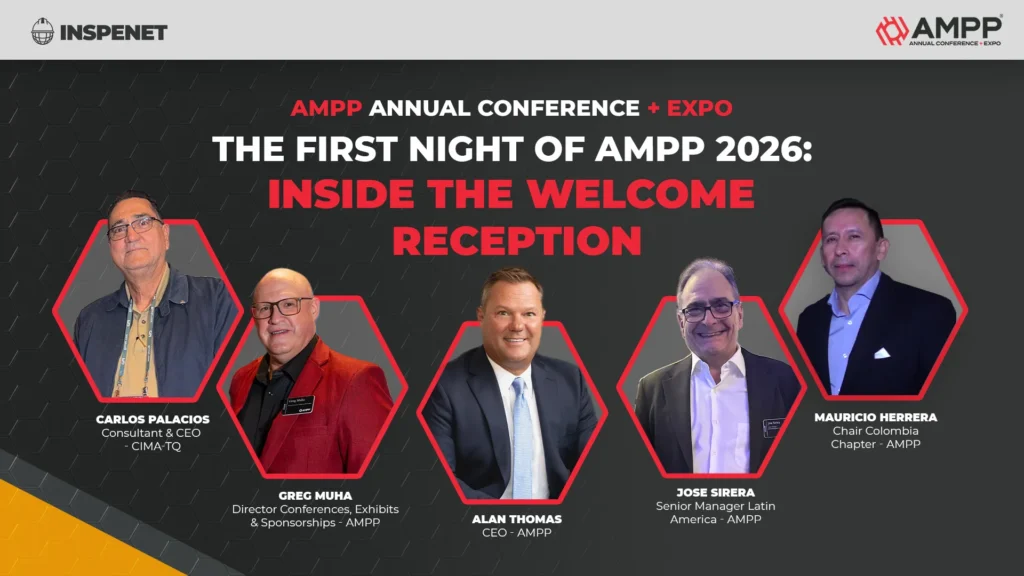
The AMPP Annual Conference + Expo 2026, held in Houston, reaffirms its position as the premier global meeting point for professionals dedicated to materials protection and corrosion control. With over 5,300 industry specialists participating and a presence in more than 130 countries, the event solidifies its role as a crucial space for knowledge exchange, trend analysis, and the search for solutions to one of the industry's greatest challenges: the degradation of critical infrastructure.
The conference, organized by the Association for Materials Protection and Performance (AMPP), brings together a community of over 40,000 members committed to sustainability and asset integrity in strategic sectors such as oil & gas, energy, and industrial infrastructure.
Firstly, AMPP 2026 stands out for its international scope and its ability to bring together experts from various disciplines. From engineers to manufacturers of advanced technologies, the event is positioned as the world's leading authority on corrosion, as noted by industry leaders during interviews conducted at the meeting.
Furthermore, the congress serves as a technological showcase and a discussion forum addressing the current challenges faced by industries. Corrosion, responsible for millions in losses and operational risks, continues to be a critical problem requiring increasingly sophisticated and collaborative solutions.
Likewise, the event's agenda reflects a combination of traditional topics and emerging new areas. This balance allows attendees to update themselves on established practices while exploring innovations that are transforming the sector.
On the other hand, one of the most relevant aspects of AMPP 2026 is the diversity of technologies presented. Key topics include protective coatings, cathodic protection, and advanced solutions for mitigating corrosion in complex infrastructures.
However, the event also highlights new trends that are redefining the industry. Technologies such as the use of drones for inspection, digital tools for real-time monitoring, and solutions related to carbon capture demonstrate a clear evolution towards smarter and more sustainable environments.
In this context, the integration of technological innovation with predictive maintenance strategies is emerging as a primary development path. These tools allow for cost optimization, risk reduction, and the extension of industrial asset lifespans.
Similarly, the adoption of these technologies responds to the need to adapt to increasingly demanding operating environments, where efficiency and safety are determining factors.
Likewise, AMPP 2026 highlights the direct relationship between corrosion management and the energy transition. As projects related to new energy sources, such as green hydrogen, advance, technical challenges arise that require specific solutions in materials protection.
In this sense, corrosion plays a strategic role in the development of sustainable infrastructure. The durability of pipelines, processing plants, and storage systems largely depends on the implementation of appropriate protection technologies.
Consequently, the event addresses current issues and also anticipates the future needs of the energy sector. This vision allows companies to prepare for scenarios where innovation and sustainability will be fully integrated.
Similarly, the discussion on carbon capture and other emerging technologies reinforces the importance of having resistant materials and advanced protection solutions.
In contrast to the global advancement of the sector, Latin America faces significant challenges related to access to information and specialized training. During the event, experts highlighted that one of the main barriers in the region is the lack of technological dissemination and training opportunities.
This situation limits the adoption of new solutions and delays the implementation of best practices in crucial industries. However, it also represents a significant opportunity for the growth and modernization of the sector in the region.
Despite these limitations, some Latin American countries show progress in areas such as new energies, positioning themselves competitively against other markets. This development opens the door to greater participation in international events like AMPP and integration into global knowledge networks.
Likewise, communication initiatives and specialized coverage play a fundamental role in closing the information gap. The dissemination of technical content and international experiences brings innovation closer to professionals and companies seeking to improve their processes.
For its part, one of AMPP 2026's greatest values lies in its ability to foster networking and the exchange of experiences. Interaction among professionals from different countries and sectors facilitates knowledge transfer and the generation of strategic alliances.
This collaborative environment promotes the development of more comprehensive solutions adapted to the real needs of the industry. Furthermore, it allows for identifying trends, sharing success stories, and analyzing lessons learned in different operational contexts.
Similarly, the event contributes to strengthening the global community dedicated to materials protection, promoting higher standards of quality and safety.
Consequently, AMPP acts as both a technical event and a catalyst for the sector's global advancement.
Finally, AMPP 2026 makes it clear that the future of the corrosion industry will be defined by the integration of technology, sustainability, and international collaboration. The complexity of current challenges demands multidisciplinary solutions and a global vision.
In this scenario, events like this become essential platforms for promoting the sector's development and ensuring the protection of critical infrastructure worldwide.
Likewise, the growing participation of regions like Latin America suggests a path towards a more inclusive and connected industry, where access to knowledge will be a key factor for progress.
For more content about AMPP 2026, please visit our LinkedIn profile.
Source: Inspenet.