
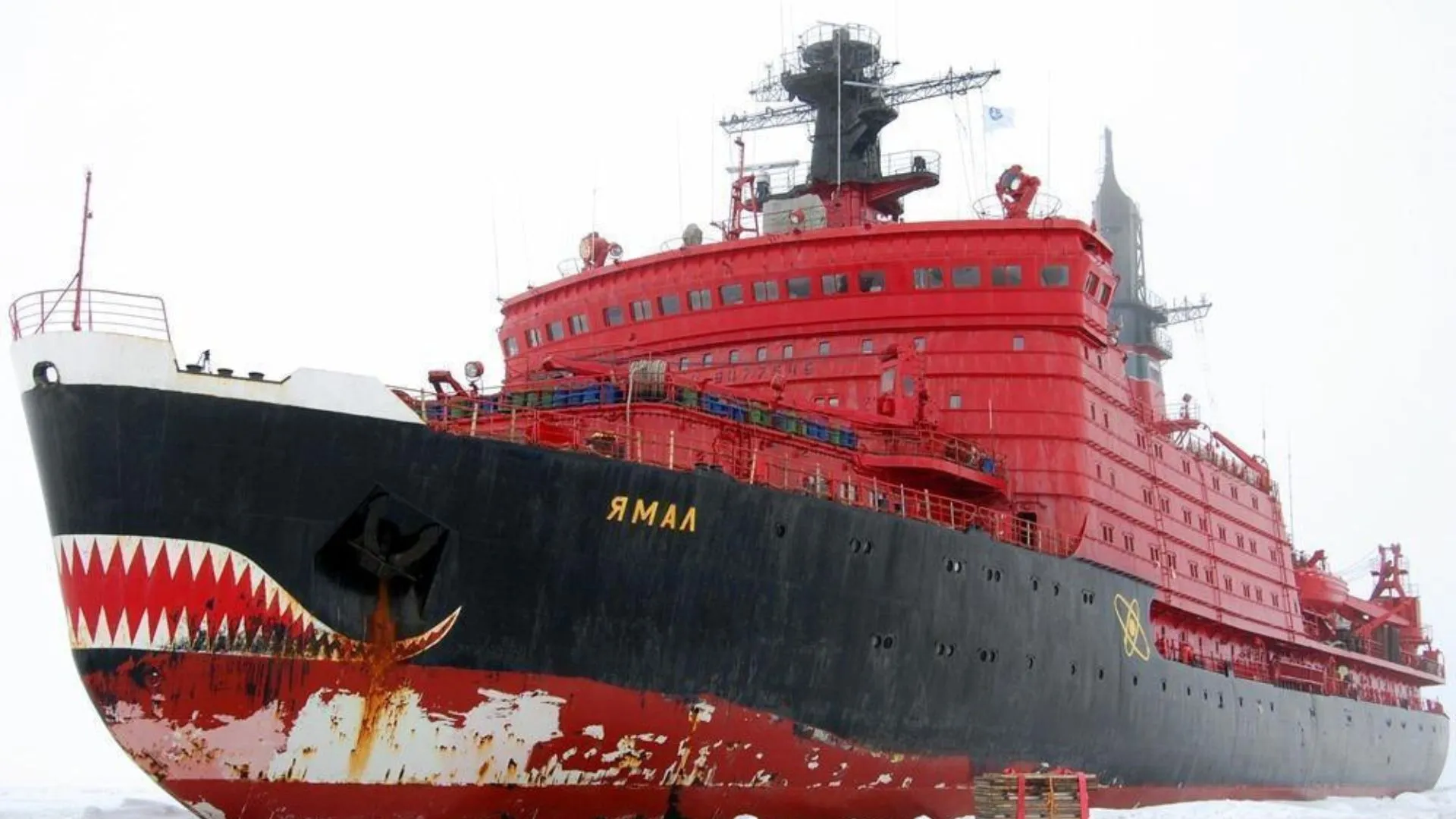
Originally conceived to keep the Northern Sea Route open, the Russian nuclear-powered icebreaker NS Yamal has become a major player in tourist expeditions to the North Pole. Operated by Rosatom through Atomflot, the nuclear-powered vessel is one of the technological jewels of the Arktika class, designed to face the most extreme conditions of the Arctic Ocean.
The NS Yamal is part of a larger nuclear fleet, consisting of units such as the Taymyr, Vaygach or the modern Arktika (2020).
The world’s largest nuclear-powered icebreaker
Construction of the Yamal began in 1986, but its launching was postponed until 1992, already under the Russian Federation. Despite its original conception to ensure Arctic commercial navigation, it was in polar tourism where it found its main function.
Cruises to the North Pole and voyages along the Siberian coast have been part of its offerings since the 1990s.
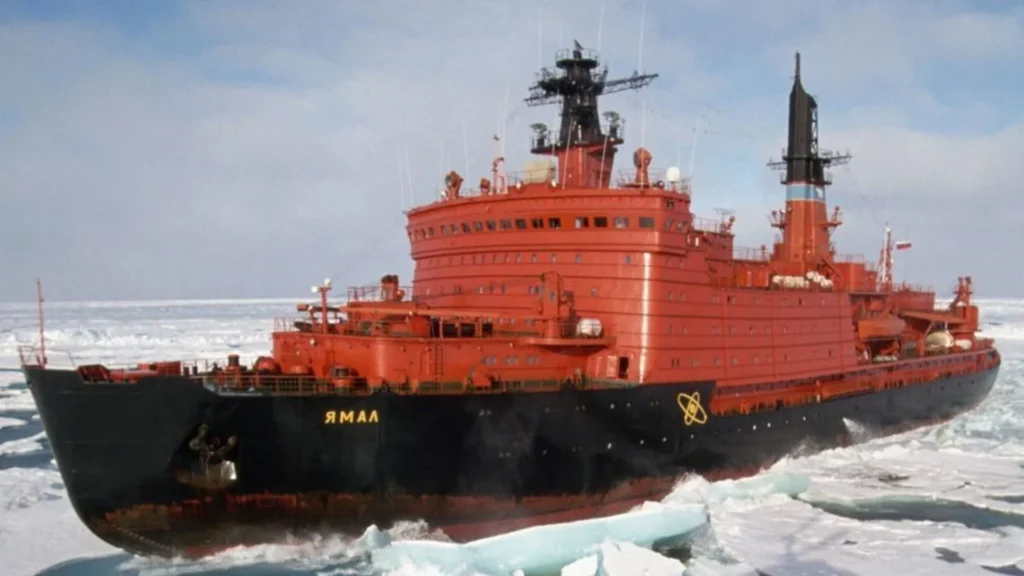
Powered by two OK-900A nuclear reactors, the Yamal can operate autonomously for several years without refueling. Its combined power of 342 MW allows it to break through ice up to 5 meters thick, while its turboelectric propulsion system ensures efficient travel through the frozen masses of the Arctic.
Design adapted to extreme conditions
The icebreaker has a double hull structure reinforced with armored steel, air bubbling systems to improve maneuverability air bubbling systems to improve maneuverability in ice and radioactive monitoring sensors distributed throughout the vessel.
It also has infrastructure for passengers, such as a library, gymnasium, swimming pool and heliport with Mi-2 helicopter, which makes it a viable option for expeditionary tourism.
Since its maiden voyage to the North Pole in 1994, the Yamal has been a constant presence in Arctic waters. One of the most memorable events was the first recorded swim to the North Pole by a U.S. citizen during an expedition organized by the NSF. However, the ship has also faced incidents such as a fire in 1996 and a collision in 2009, without serious consequences for its reactor.
Source and photos: CruiseMapper