
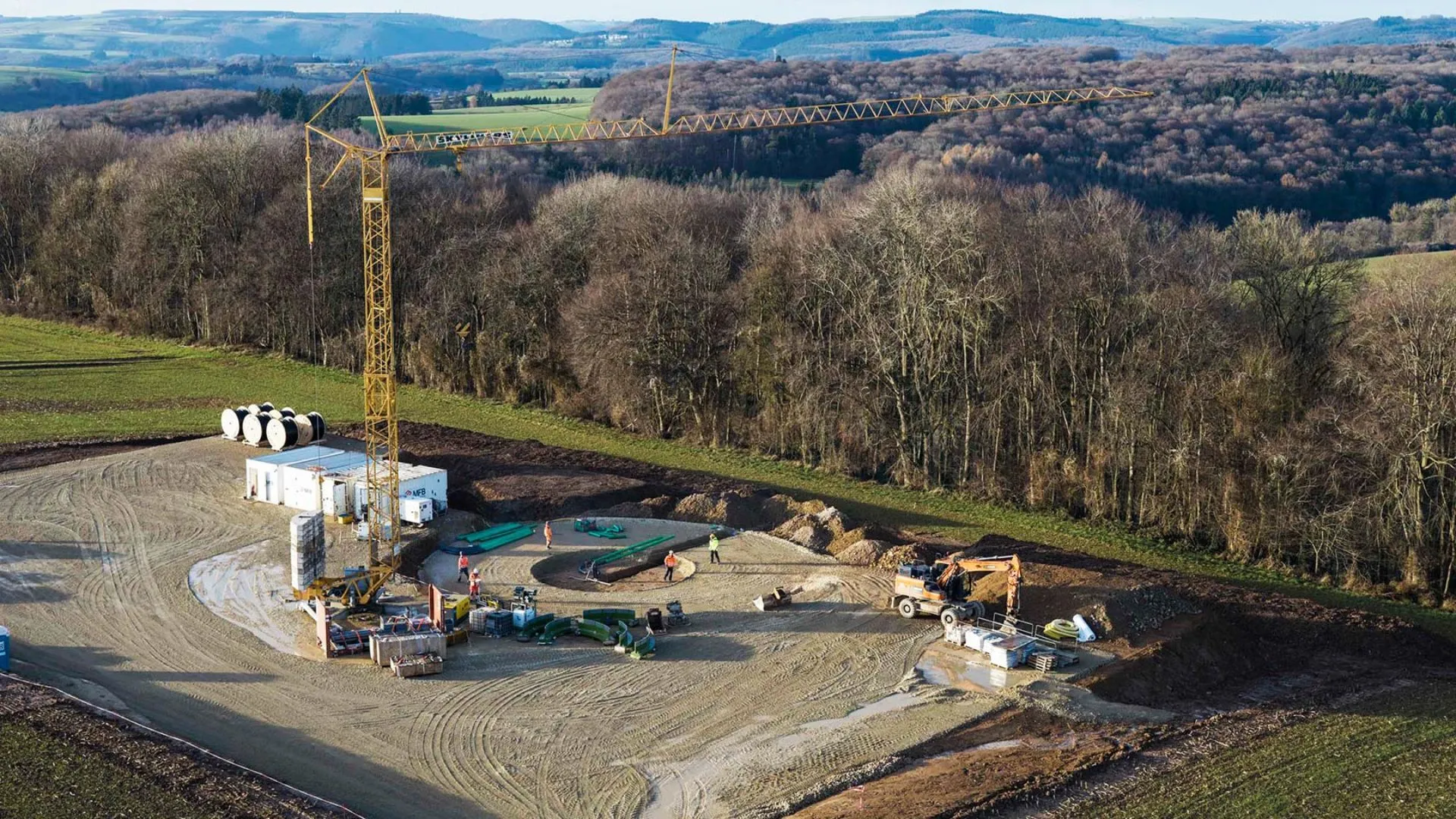
Swedish energy company Vattenfall has begun construction of a hybrid power plant that will integrate wind and solar energy in the same system. The project, called Hommerdingen-Biesdorf, is being developed in the municipality of Südeifel, near the border between Germany and Luxembourg.
The facility will combine wind turbines and photovoltaic modules under a single grid connection point. This model enables better utilization of existing electrical infrastructure and facilitates the integration of renewable energy into the energy system.
Hybrid Power Plant Characteristics
The park will feature four wind turbines manufactured by Enercon with a total capacity of 17 megawatts. This infrastructure will be complemented by a solar park consisting of more than 12,000 photovoltaic modules with an installed capacity of 7.6 MWp.
The wind turbines will be located in the Hommerdingen area while the solar plant will be installed in Biesdorf. Both facilities will operate as a single hybrid power plant capable of generating electricity from two complementary renewable sources.
The project is scheduled to be commissioned in fall 2026.
Complementary Wind and Solar Production
The hybrid approach takes advantage of the fact that wind and solar generation profiles typically produce electricity at different times of day and year. This complementarity enables more stable energy production.
When solar generation reaches its peak during hours of highest radiation, wind energy may decrease. At other times, especially with favorable weather conditions, wind can contribute more electricity to the grid.
The combination of both technologies helps balance renewable supply and reduces sharp variations in production.
Single Grid Connection
One of the technical features of the project is the use of a single connection to the distribution grid. The solar park will be integrated through the wind park infrastructure operated by local grid operator Westnetz.
From a technical standpoint, the solar plant will be managed as if it were an additional wind turbine within the same connection point. This approach reduces the need for new electrical infrastructure and optimizes available grid capacity.
Likewise, sharing the connection can reduce connection costs and facilitate the development of new renewable installations.
The Role of Hybrid Parks in the Energy Transition
Hybrid power plants are gaining prominence in the European energy sector. By combining different renewable technologies, these projects seek to improve electrical system efficiency and better utilize existing infrastructure.
Vattenfall has already applied this model in the Netherlands with the Haringvliet project, which integrates wind, solar generation and battery storage.
In Germany, the company is evaluating the incorporation of storage systems primarily in solar parks, depending on local conditions and grid capacity.
The Hommerdingen-Biesdorf project represents a significant step toward expanding the use of hybrid solutions within the German energy market.
Source and photo: Vattenfall