
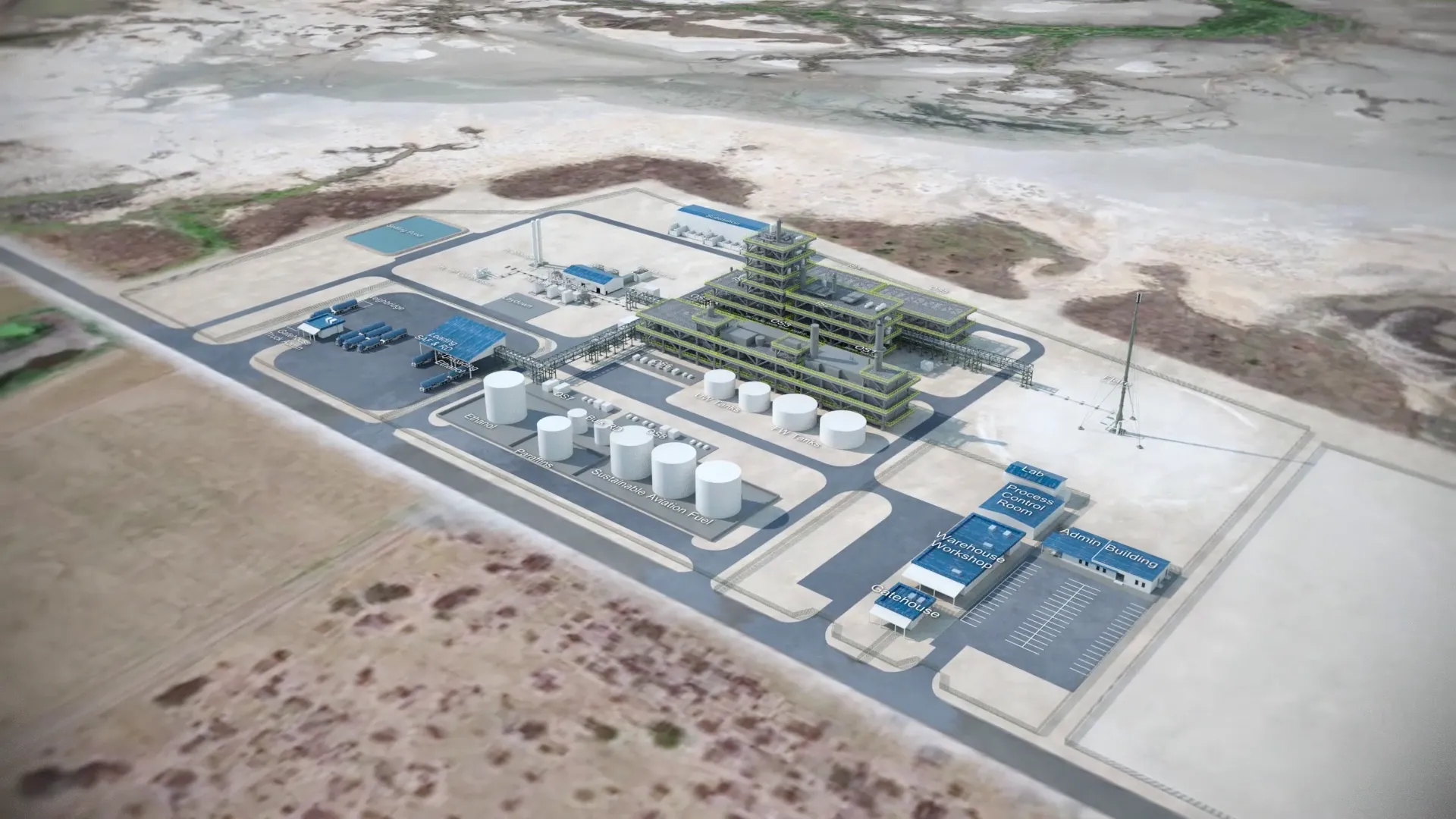
Jet Zero Australia is moving forward with the development of the Ulysses Project, an ambitious sustainable fuels production facility that could begin commercial operations by the end of 2027 in North Queensland. Located in the Townsville State Development Area, the complex will transform ethanol derived from agricultural by-products into sustainable aviation fuel (SAF) and renewable diesel (RD).
ATJ technology and strategic partners
The project will employ alcohol-to-jet (ATJ) technology, considered the second most viable route to produce PBS after the HEFA process. This method allows for greater flexibility in feedstock use and presents a scalable opportunity for the Australian energy industry.
The design and engineering (FEED) phase is already underway thanks to the collaboration between Jet Zero, Technip Energies, Long Energy & Resources and the financial support of the Australian Renewable Energy Agency (ARENA), which allocated $9 million to the project, whose total cost amounts to $36.81 million.
Environmental and strategic impact
Once completed, the Ulysses Project will have the capacity to generate 113 million liters per year of low-carbon liquid fuels, of which 90% will be PBS and 10% RD. The plant will process more than 180 million liters of bioethanol per year and will reduce CO₂ emissions from aviation by more than 70% compared to traditional fossil fuels.
In addition, the project promises to create 1,000 jobs during the construction phase and more than 100 direct jobs during operation. The project also seeks to:
- Increase industrial demand from Townsville’s emerging renewable energy hub.
- Ensure security of fuel supply for national defense (ADF).
- Supply renewable diesel to sectors such as reef tourism, mining and land transportation.
- Demonstrate the technical and commercial viability of the ATJ pathway as a pillar in the energy transition.
A commitment to the future of sustainable aviation
The Ulysses Project represents a strategic commitment for Australia to move towards cleaner aviation, while strengthening its regional economy and energy sovereignty. With the backing of international companies, cutting-edge technology and government support, it is consolidating its position as a key player in the production of UAS in the Asia-Pacific region.
Source and photo: Jet Zero