
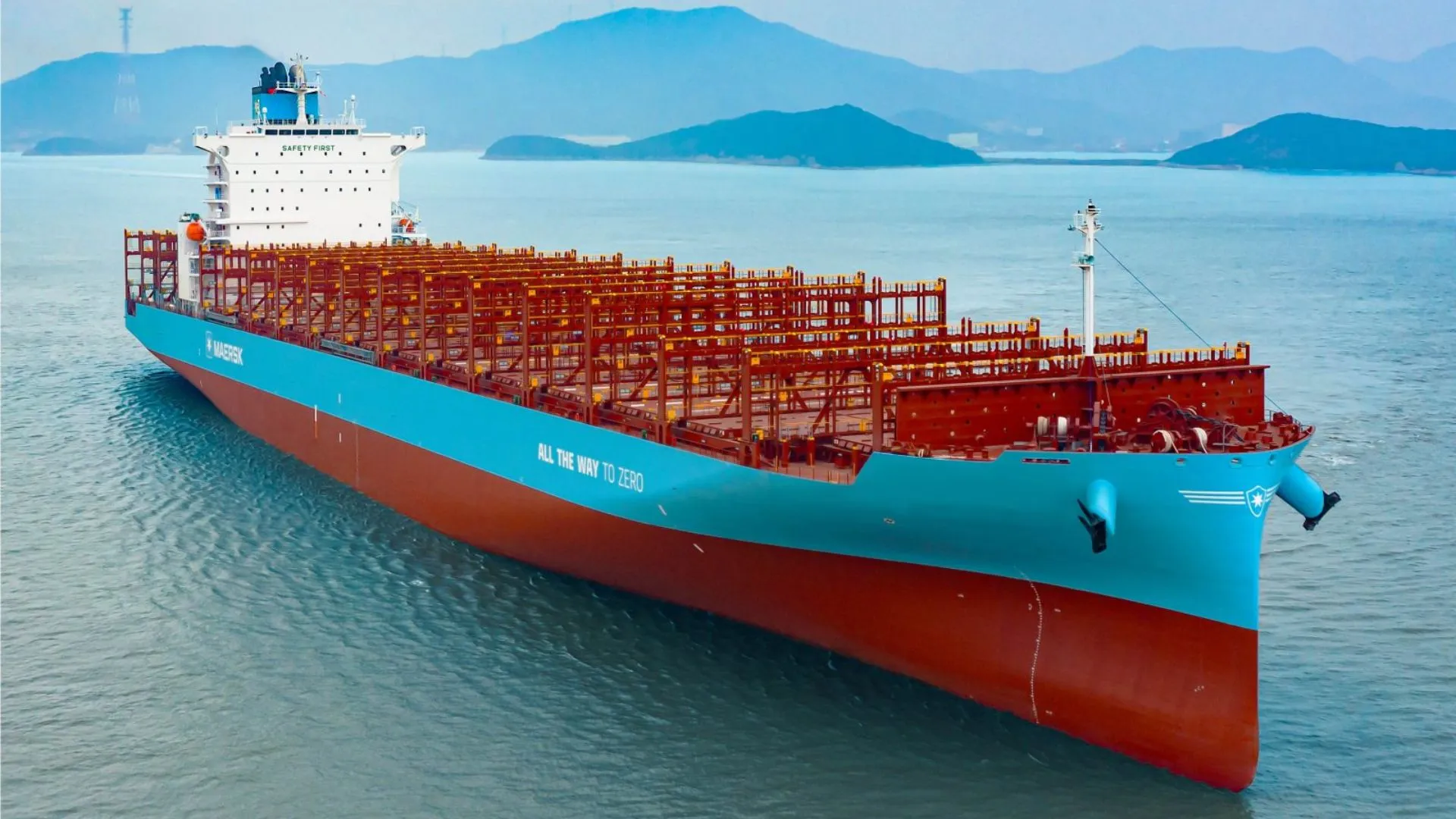
The delivery of a new dual-fuel dual-fuel container ship in China marks a strategic step forward for TSUNEISHI SHIPBUILDING in China marks a strategic breakthrough for TSUNEISHI SHIPBUILDING in the adoption of alternative fuels globally.
Dual-fuel container ship takes shape in China
On February 3, the TSUNEISHI GROUP (ZHOUSHAN) SHIPBUILDING INC. shipyard, a subsidiary in China of the Japanese giant TSUNEISHI SHIPBUILDING, completed the delivery of a 5,900 TEU container ship powered by methanol. methanol. The vessel has been chartered by A.P. Moller – Maersk, consolidating the operational expansion of vessels with sustainable technologies outside Japan.
Consolidation of an international green building network
This achievement represents the group’s third delivery of a vessel with this type of technology in less than a year. Following the delivery of an Ultramax Ultramax bulk carrier in Japan and the first methanol KAMSARMAX in the Philippines, the milestone in China confirms the group’s ability to replicate its expertise in different shipyards while maintaining design and efficiency standards.
The delivery to Maersk occurs in parallel to the expansion of its fleet of alternative fuel-powered vessels. With 20 dual-fuel containerships already in operation, the Danish company is advancing in its energy transition, diversifying its propulsion mix and strengthening its decarbonization strategy.
Continuous production beyond borders
For TSUNEISHI SHIPBUILDING, this delivery demonstrates that its global production system enables it to replicate low-emission solutions in different countries, adapting local capabilities to a shared vision. With shipyards in Japan, China and the Philippines, the company consolidates a construction model aligned with the environmental objectives of international shipping.
The company has confirmed that it will continue with the expansion of methanol-powered vessels in several product lines. This evolution will be developed under a framework of coordination between its plants, optimizing technical and logistical processes at its three key sites. Energy transition in shipping is no longer a future concept: it is an ongoing production system.
Source and photo: TSUNEISHI SHIPBUILDING