
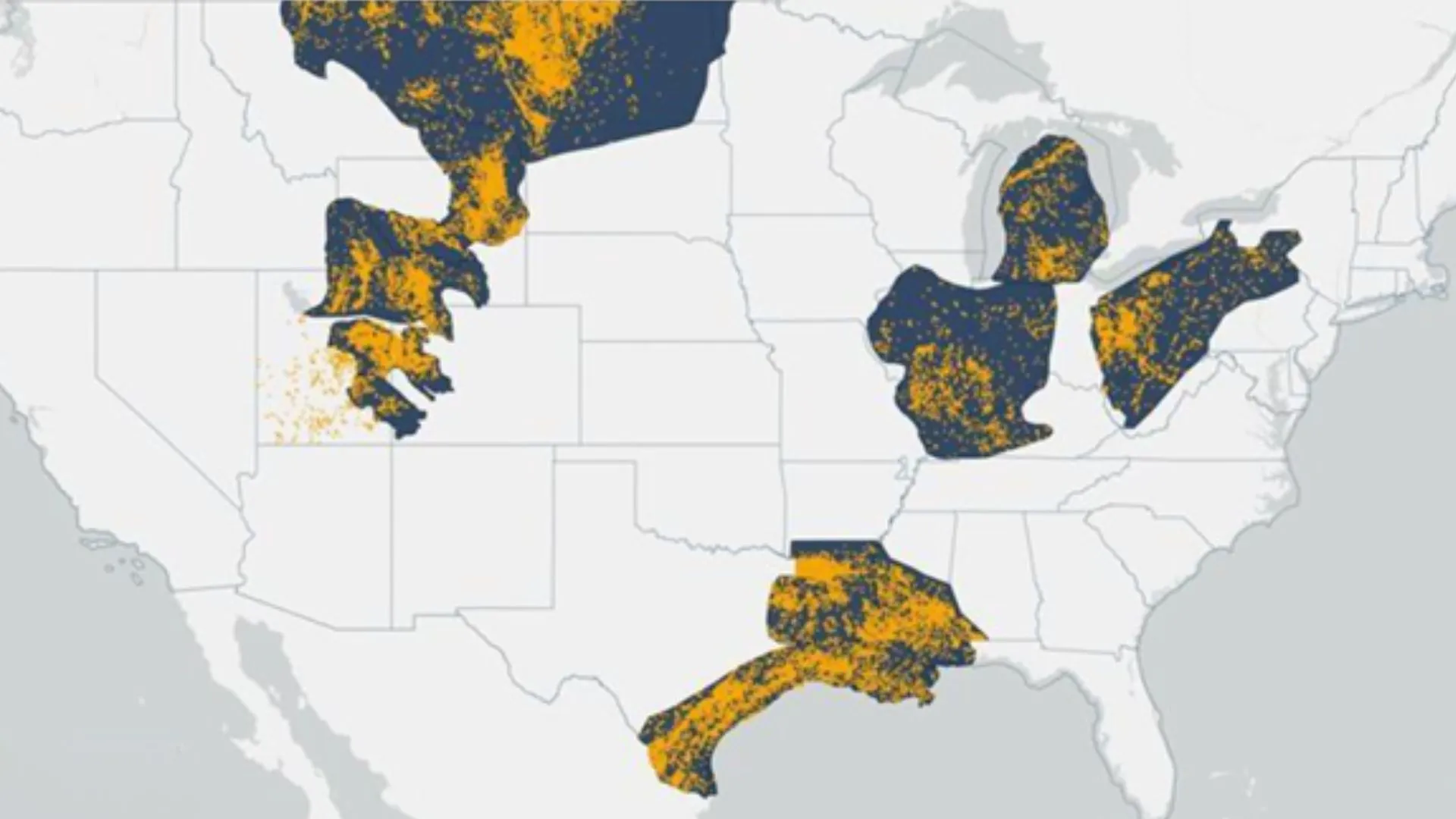
With the close of a long-running technical project, TGS has completed reservoir characterization in 13 strategic basins across the United States. This effort, spanning more than 48,000 wells, provides the energy industry with a robust set of calibrated data that optimizes everything from exploration to carbon storage planning.
Petrophysical assessment and carbon sequestration on a regional scale
The company has developed detailed petrophysical interpretations detailed formation-level petrophysical interpretations, allowing reservoir behavior to be modeled with high accuracy. These interpretations are supported by more than 3,700 regional maps detailing properties such as porosity, permeability, pressure and CO₂ storage potential.
The analysis extends to 340 formations, organized in consistent stratigraphic frameworks that allow comparison of geological characteristics between different basins. Such technical consistency favors more reliable decision making in exploration and development of energy projects.
Integrated data includes inferred curves, formation tests, cores and downhole temperatures. This wealth of information is designed to integrate directly into workflows ranging from permitting to planned well abandonment, bringing efficiency and clarity throughout the asset lifecycle.
The watersheds characterized include critical areas such as the Gulf Coast, Appalachia, Illinois, Michigan, Uinta and Powder River, among others. These regions are relevant for conventional production, and also play a central role in the transition to carbon capture and storage technologies.
According to TGS, the project responds to the growing need for reliable geological intelligence in a changing energy environment. The dataset enables multivariate and scalable analyses that are critical for accelerating technical assessments and reducing uncertainty in energy investments.
The detailed characterization of these reservoirs improves the management of existing fossil resources, and also allows the viability of long-term CO₂ storage to be assessed. With this capability, operators will be able to comply with stricter regulations and adopt more sustainable strategies in a context of climate change and regulatory pressure.
Source and photo: TGS