
Table of Contents
Sweden’s mining industry has been a cornerstone of its economic development since Viking times. Today, at the height of the global energy transition, the Scandinavian country is once again occupying a strategic role with its leadership in essential minerals and advanced mining technologies.
The legacy of the Swedish mining industry
Since the 9th century, Sweden has exploited its geological resources with an increasingly sophisticated approach. In the Middle Ages, mines such as Falun marked the European economy with its copper. Later, Sweden’s high-purity, low-impurity iron cemented the country’s industrialization and geopolitical influence.
During the 20th century, mining was modernized. Northern regions such as Kiruna and Gällivare established themselves as industry powerhouses. Today, that legacy lives on in the form of automated operations, low-carbon processes and a national commitment to sustainability.
Sweden leads iron ore production in the European Union, with about 90 % of the total. The state-owned LKAB and the multinational Boliden are the main operators in the country. LKAB, based in Kiruna and Malmberget, supplies more than 80 % of the iron consumed in Europe and develops technologies to transform mining waste into rare earths.
Boliden manages mines such as Aitik and Garpenberg, extracting copper, zinc, lead and gold. Its Rönnskär smelter has positioned itself as a benchmark in electronic recycling and emissions reduction, with support from European funds.
Both companies support an industrial cluster that includes engineering firms such as Sandvik, Atlas Copco, ABB and Epiroc, which export mining automation and electrification solutions globally.
The mining sector accounts for around 3% of Swedish GDP and generates up to 125,000 direct and indirect jobs. Its impact goes beyond revenues: it boosts regional development, strengthens European security of supply and enables progress in industrial decarbonization.
In 2023, Sweden produced more than 84 million tons of ore. Despite a slight decline from the previous year, the figures consolidate its position as a European mining epicenter. Rail infrastructure (such as the Malmbanan line) and the ports of Narvik and Luleå are key to international logistics.
The growth of the sector faces structural challenges. Mining permitting processes in Sweden are lengthy, which slows down the progress of new projects, despite European initiatives such as the Critical Raw Materials Act.
In addition, several deposits are located on traditional Sami lands. Cases such as Kallak highlight conflicts between industrial development and indigenous rights, a dilemma that calls into question the concept of green mining when local communities are not respected.
European demand for rare earths and other minerals will increase fivefold by 2050. Sweden has the potential to cover 18 % of Europe’s need for rare earth oxides thanks to the Per Geijer project.
The country’s commitment to fossil fuel-free mining by 2035 is a firm bet. LKAB, for example, estimates that it will need up to 70 TWh of energy to decarbonize its operations. This implies massive investments in electrical infrastructure, logistics and municipal services.
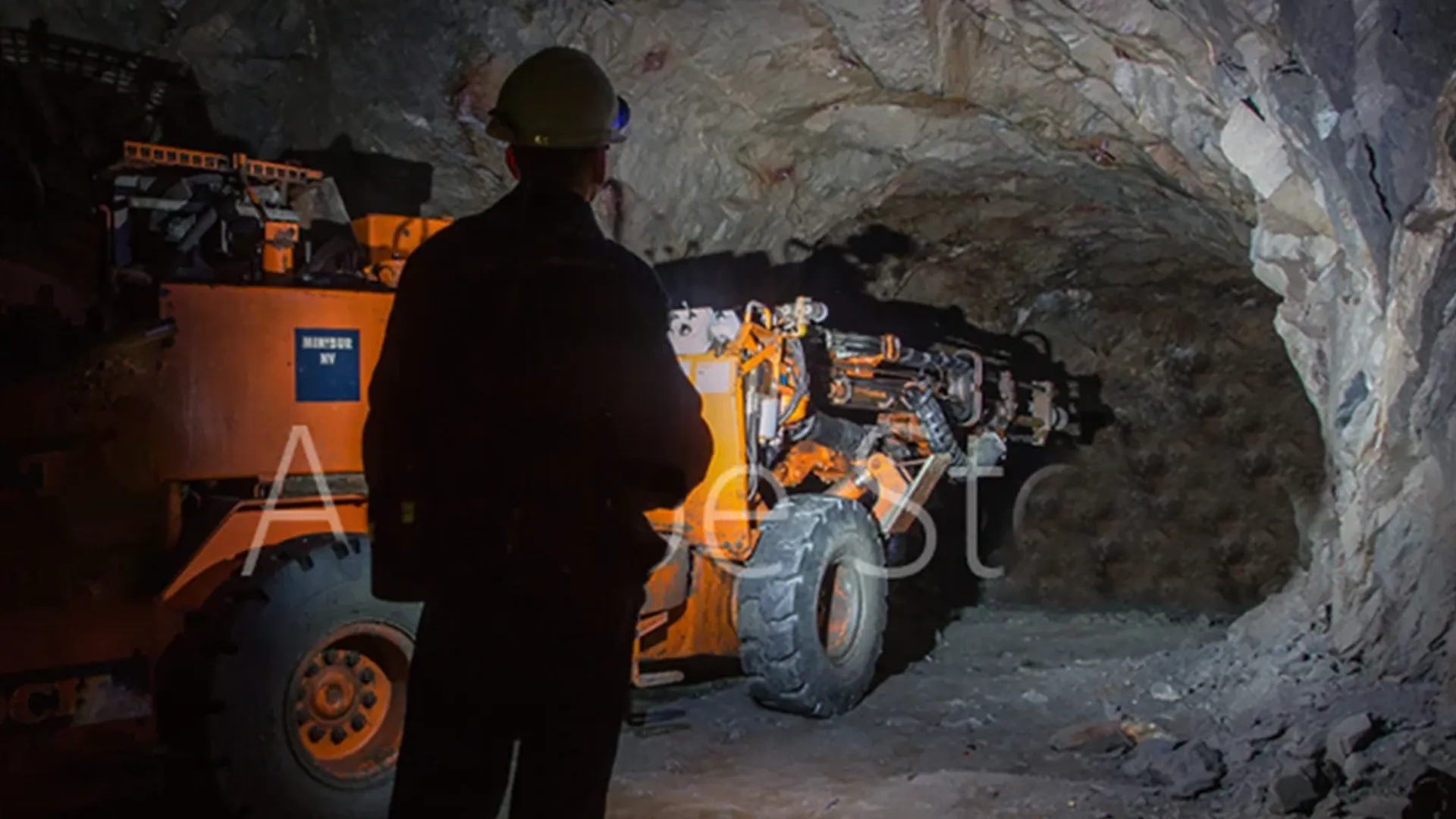
Sweden is at the global forefront of mining technologies. From Wi-Fi remote operation systems in subway galleries to autonomous vehicles with LiDAR, the industry is incorporating digital solutions that increase safety and reduce costs.
The local industrial ecosystem allows exporting these solutions to the world. Equipment developed in Sweden is now operating in mines in the Americas, Asia and Africa, reinforcing the country’s role as a supplier of state-of-the-art mining technology.
The future of Swedish mining will depend on how it manages its internal tensions: indigenous rights, environmental regulation and energy needs. If it can balance these factors with its industrial potential, Sweden can establish itself as a model of responsible, technological and sovereign mining in Europe.
Source and photo: Identec Solutions