
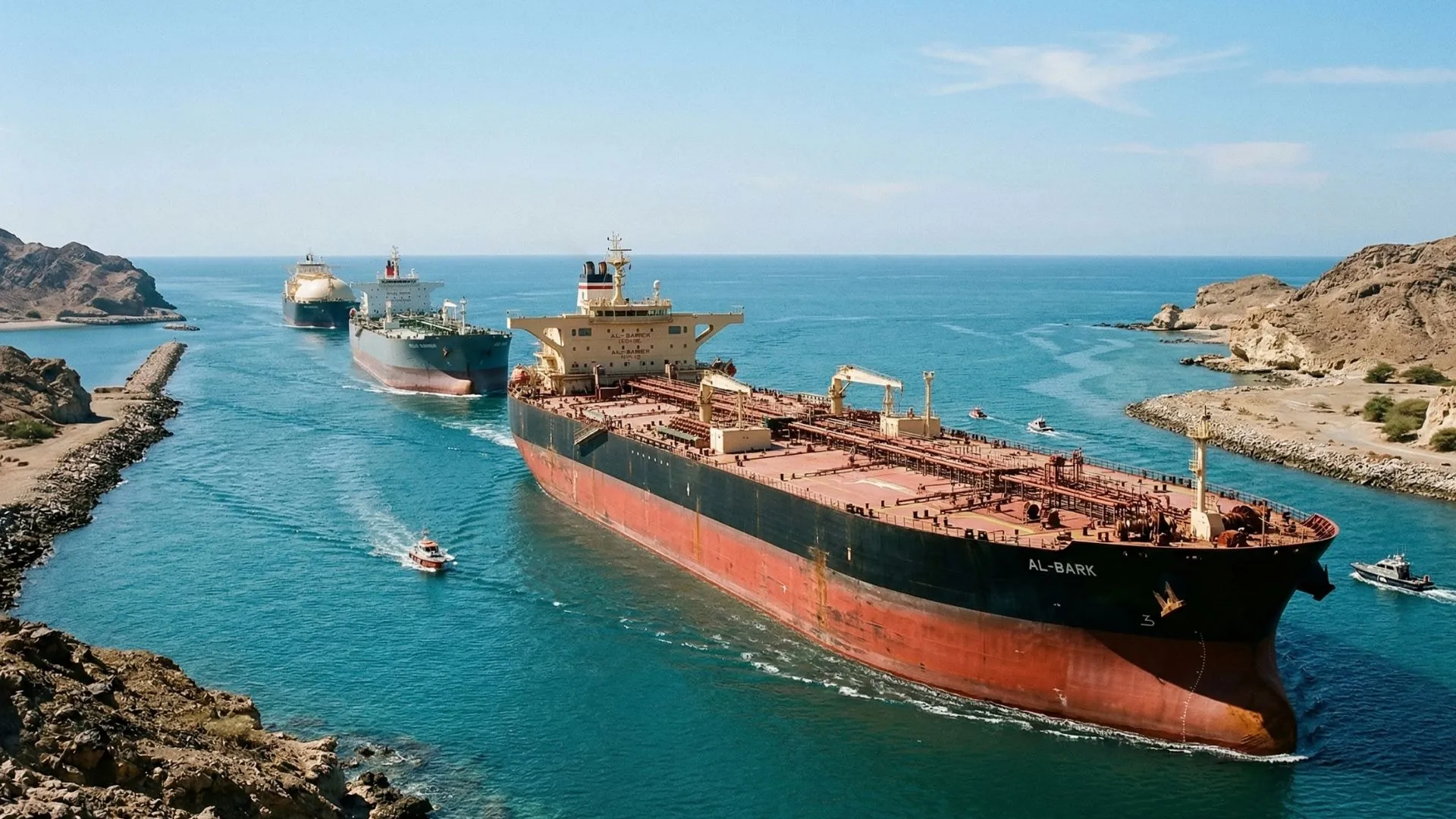
Iran’s blockade of the Strait of Hormuz has caused a disruption in the energy supply chain, driving oil prices up 50% and urea up 35%. This logistics crisis threatens food security and the stability of global industrial markets.
Confirmed Facts in the Conflict Zone
Iran has proceeded to close the Strait of Hormuz, one of the most critical maritime arteries for energy and petrochemical product trade.
As an immediate consequence, oil prices reached their highest level in four years, registering a 50% increase compared to the period prior to hostilities.
In the fertilizer sector, urea sold in Egypt—a benchmark market for economists—increased more than 35% in just one week due to logistics paralysis.
Operational Importance of the Maritime Route
The Strait of Hormuz is the export channel for more than one-third of global urea and nearly a quarter of globally produced ammonia.
Five key nations (Iran, Saudi Arabia, Qatar, United Arab Emirates, and Bahrain) depend exclusively on this route to export their nitrogen derivatives.
The disruption occurs at a critical operational time for the northern hemisphere, where demand for fertilizers for spring crops is imminent.
Geopolitical Context and Market Restrictions
The current crisis bears similarities to the onset of the conflict between Russia and Ukraine, where the geography of agriculture was exposed by grain shortages.
China, the logical alternative for fertilizer supply, maintains export restrictions imposed last year to protect its domestic consumption.
This situation pressures governments in the Global South to increase agricultural subsidies, which could worsen sovereign debt levels in vulnerable countries.
Impact on Energy and Financial Markets
Stocks in Asian markets have registered consistent declines as a direct response to rising energy costs.
In the United States, gasoline prices have risen 17% since the onset of tensions, affecting transportation and industrial operation costs.
Specialists suggest that the long-term technical solution involves reducing dependence on inputs that must transit through this geographic bottleneck.
Source: The New York Times