
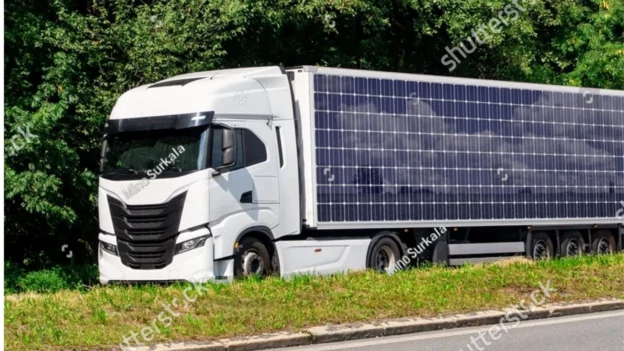
This process of using solar panels on vehicles not only optimizes electricity consumption, but also helps to even out energy supply and demand, contributing to a more efficient and scalable electricity system.
An extensive nine-month study on European roads confirms that vehicle-integrated solar panels represent a viable source of renewable energy for transport, capable of reducing annual energy consumption by up to 50% in southern Europe, although urban shading and user behavior present significant challenges to their mass implementation.
Research travels thousands of kilometers
The Netherlands Organisation for Applied Scientific Research (TNO), the Fraunhofer Institute for Solar Energy Systems (ISE) and three leading providers of solar vehicle technology (Lightyear, IM Efficiency and Sono Motors) have completed an unprecedented measurement campaign in Europe.
Since March 2024, a total of 18 vehicles equipped with advanced roof- and side-mounted sensors have driven more than one million kilometers on roads in the Netherlands, Germany and Slovakia. The test fleet included delivery trucks, city buses, commercial vans and passenger cars.
“Measurements during driving cycles in the Netherlands and northern Germany confirm that side-mounted panels receive approximately 50% less irradiance than roof-mounted panels,” explained Lenneke Slooff, senior consultant at TNO.
Data on solar panels and energy production
The quantified results of the SolarMoves project reveal specific figures on the performance of vehicle-integrated photovoltaic (VIPV) panels. The top panels recorded an average of 2.8 kWh/m² per day, while the side panels reached 1.3 kWh/m² per day.
These measurements validate previous predictive models and provide real data on the energy potential of this technology under normal operating conditions in central and northern Europe.
The report presents two outstanding case studies: a delivery truck operating in the Benelux region, coordinated by IM Efficiency, and a comparison of city buses in Slovakia equipped with sensors developed by Sono Motors.
What are the implications for sustainable mobility?
The results of the SolarMoves study provide empirical evidence on the role that integrated solar panels can play in the transition to more sustainable mobility.
VIPV technology is not intended to completely replace external charging, but to complement it, extending the range of autonomy of electric vehicles and reducing the frequency of charging in public infrastructure.
For commercial fleets operating predictable urban routes, this 35-50% reduction in external energy dependence represents significant operational savings and increased logistical efficiency.
Source: TNO