
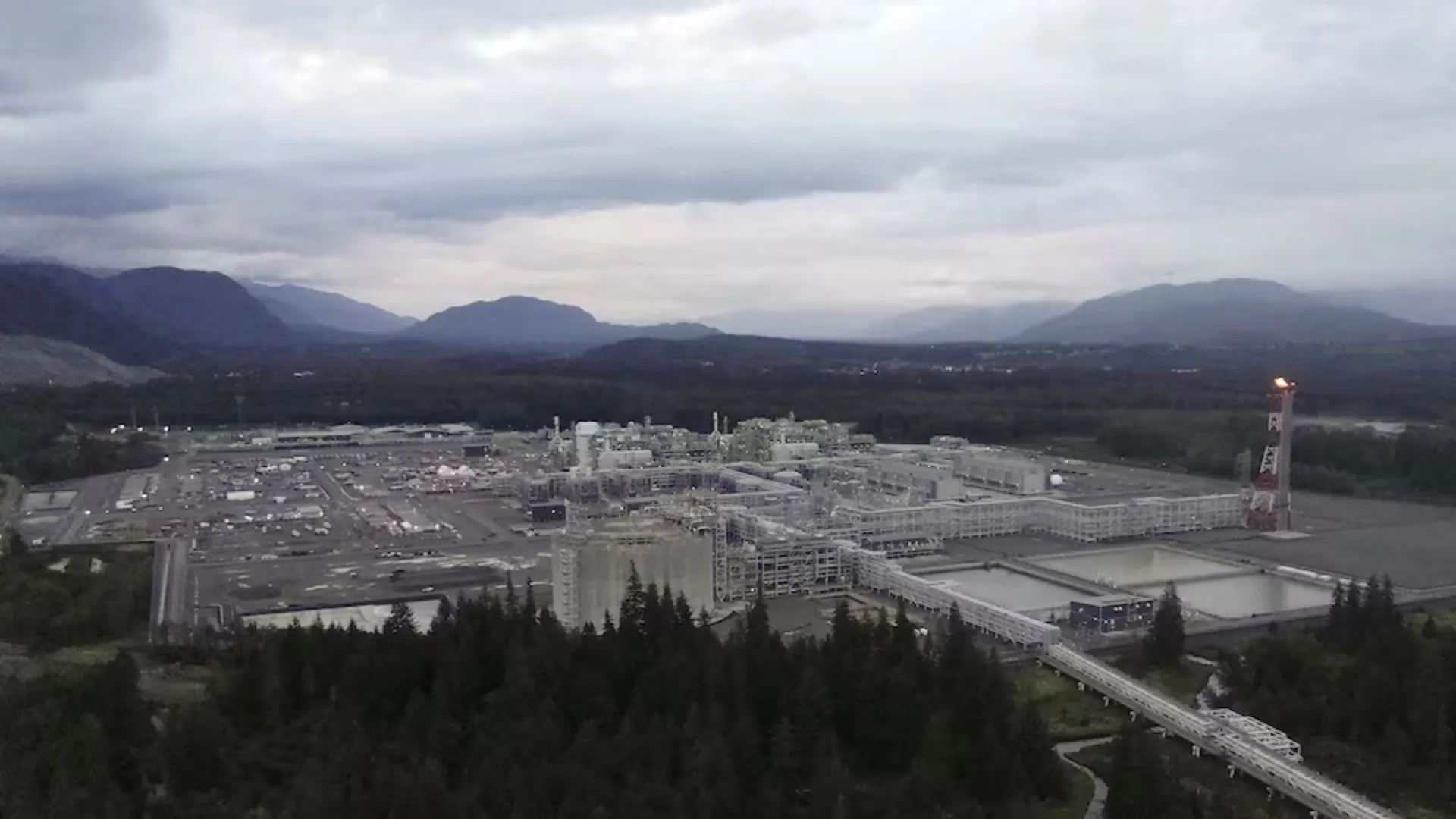
The multinational Shell and Mitsubishi are considering the partial sale of their stakes in the LNG Canada project, a natural gas plant in Canada. natural gas plantal liquefied natural gas located in Kitimat, British Columbia. This facility, valued at 40 billion Canadian dollars, is the only LNG terminal on the North American Pacific coast currently in operation.
Shell and Mitsubishi adjust their energy portfolios
Shell, which owns 40% of the project, is evaluating divesting up to 30% of its stake. The company has hired Rothschild to explore alternatives as the consortium prepares for a potential Phase 2 that would double export capacity. Mitsubishi, with 15%, is in contact with RBC Capital Markets to analyze similar scenarios, albeit at an early stage.
This maneuver follows a well-known trend in infrastructure projects: reducing shareholding once assets begin to generate cash flow. Companies can then redirect capital to new initiatives. In December, Petronas sold part of its stake in the same project to MidOcean Energy, backed by Saudi Aramco and EIG.
Operational challenges and logistical advantages
LNG Canada Phase 1 started production in June and has a projected annual capacity of 14 million metric tons of LNG. However, technical problems in one of the processing units have affected operational continuity. Despite this, the Pacific coast location represents a competitive advantage due to direct access to Asian markets and lower logistics costs compared to facilities located in the Gulf of Mexico. Gulf of Mexico.
Shell has informed potential buyers that it will maintain long-term supply contracts with the terminal, guaranteeing revenue stability for new shareholders.
Global context and market caution
The international LNG market is currently experiencing oversupply, adding uncertainty to investment decisions. Companies such as Energy Transfer have suspended similar plans in the United States, reflecting greater caution in new expansions.
Despite this environment, infrastructure funds and large investors maintain an interest in consolidated assets with stable revenue prospects, such as LNG Canada. The participation of Aramco and EIG in the acquisition of Petronas assets underscores this trend.
The final decision on Phase 2 is expected in the next few months, and could be a determining factor in the finalization of sales transactions by both Shell and Mitsubishi.
Source and photo: Reuters