
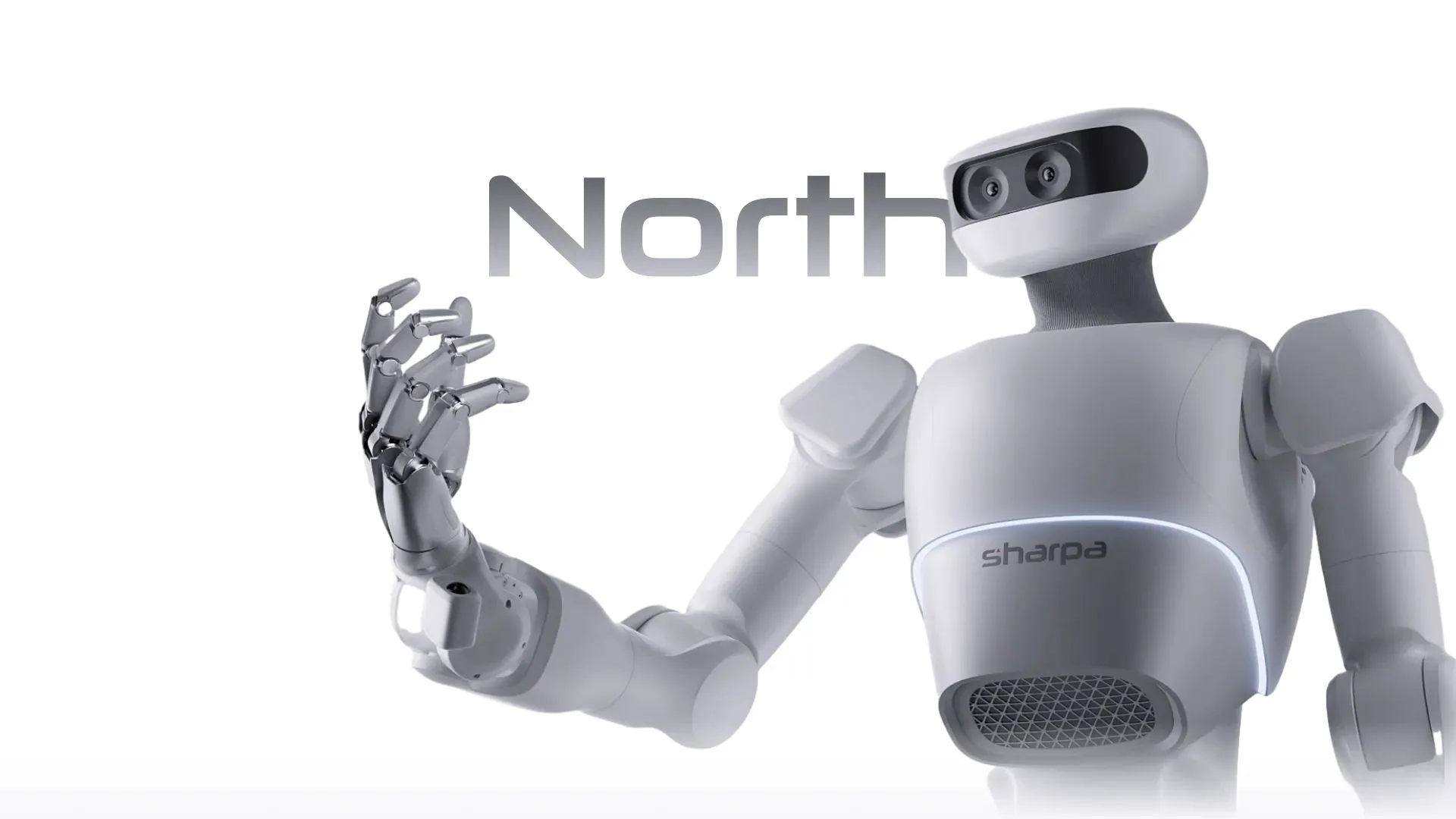
Sharpa, the emerging robotics and robotics and artificial intelligencesurprised at the CES 2026 with the official unveiling of North, its first autonomous humanoid robot with human-like manipulation abilities. With this presentation, the company marks a bold step towards the development of useful and versatile robotic systems for real-world environments.
Humanoid North has millimetric precision
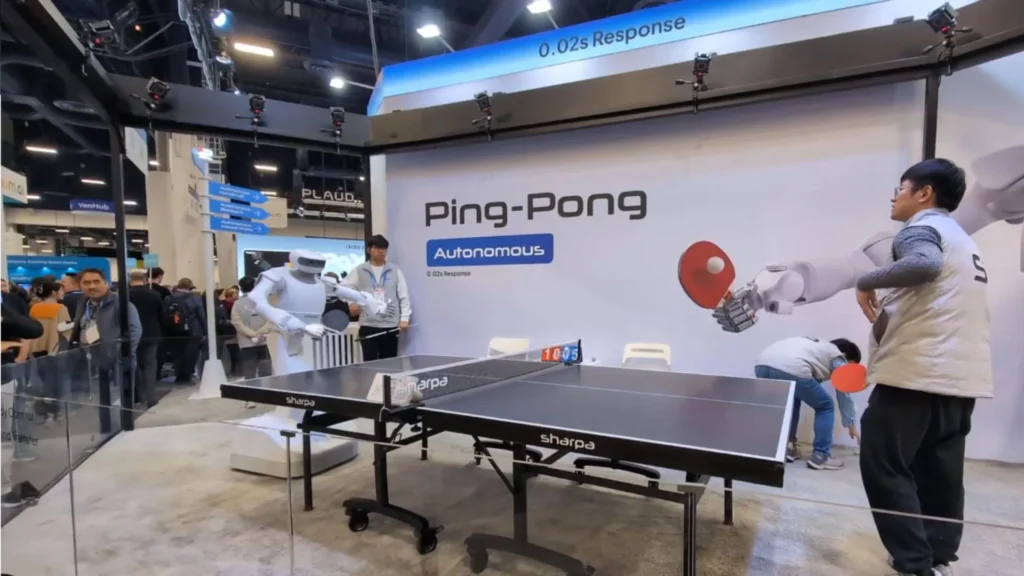
During the event in Las Vegas, North starred in a series of fully autonomous demonstrations. Among them was his performance on a ping-pong table, where he reacted with a speed of 0.02 seconds.
It also took photographs with a framing accuracy of close to 2 millimeters and delivered letters through real-time multimodal reasoning, combining vision and natural language.
Long tasks, stable manipulation and sensory coordination
One of the most striking moments was the autonomous construction of a paper mill, a task that included more than 30 sequential steps without human intervention. North maintained smooth hand-eye-touch coordination throughout the activity, demonstrating prolonged execution without loss of accuracy.
This ability to sustain complex tasks over the long term is rare in robotics today and represents an advance over isolated demonstrations. The key, according to Sharpa, lies in a combination of a proprietary neural network, advanced kinematics and its new robotic hand SharpaWave.
A robotic hand with enhanced sensitivity
SharpaWave is an anthropomorphic hand with human proportions and a mechanical design that replicates 22 active degrees of freedom. Each finger incorporates more than a thousand tactile sensors with sub-millimeter resolution, allowing objects to be manipulated with extreme care, even removing a card from a deck of cards without messing it up.
This level of control is designed to facilitate daily tasks of high precision in sectors such as manufacturingpersonal assistance and logistics. It also allows North to interact in unpredictable scenarios without compromising safety and efficiency.
An approach focused on freeing up human time
The philosophy behind North is not simply technological. Sharpa argues that his goal is to “create useful time” by automating repetitive tasks and giving people space to engage in more valuable activities.
With a robotic architecture that integrates full torso and arm mobility, combined with multimodal perception algorithms, North represents a firm step towards robots that coexist in everyday environments without constant supervision.
Source and photos: Sharpa