
Scientists at the Central Research Institute of Mechanical Engineering Technology (CNIITMASH), part of Rosatom’s Mechanical Engineering Division, have succeeded in developing a new type of steel for nuclear reactors. It is a heat-resistant austenitic steel, specifically designed to operate at extreme temperatures of up to 600 degrees Celsius under high radiation and in contact with heavy liquid-metal coolants such as lead.
What are its applications?
The new steel was designed for use in advanced fast reactors, particularly lead-cooled ones, such as the BREST-OD-300, the core of the strategic “Proryv” (Breakthrough) project. Unlike VVER-type reactors, whose core reaches between 320 and 350 °C, these new systems will operate between 500 and 600 °C, requiring materials capable of maintaining structural integrity and corrosion resistance under extreme conditions.
As Sergei Logashov, Deputy Director General of CNIITMASH and Director of the Institute of Materials Science, explained, the steel’s development integrates decades of experience in the behavior of metals in environments with heavy liquid coolants. Thanks to the use of advanced computational models, they achieved an alloy with superior characteristics in radiation durability, long-term strength, and excellent thermal stability.
Laser welding test results
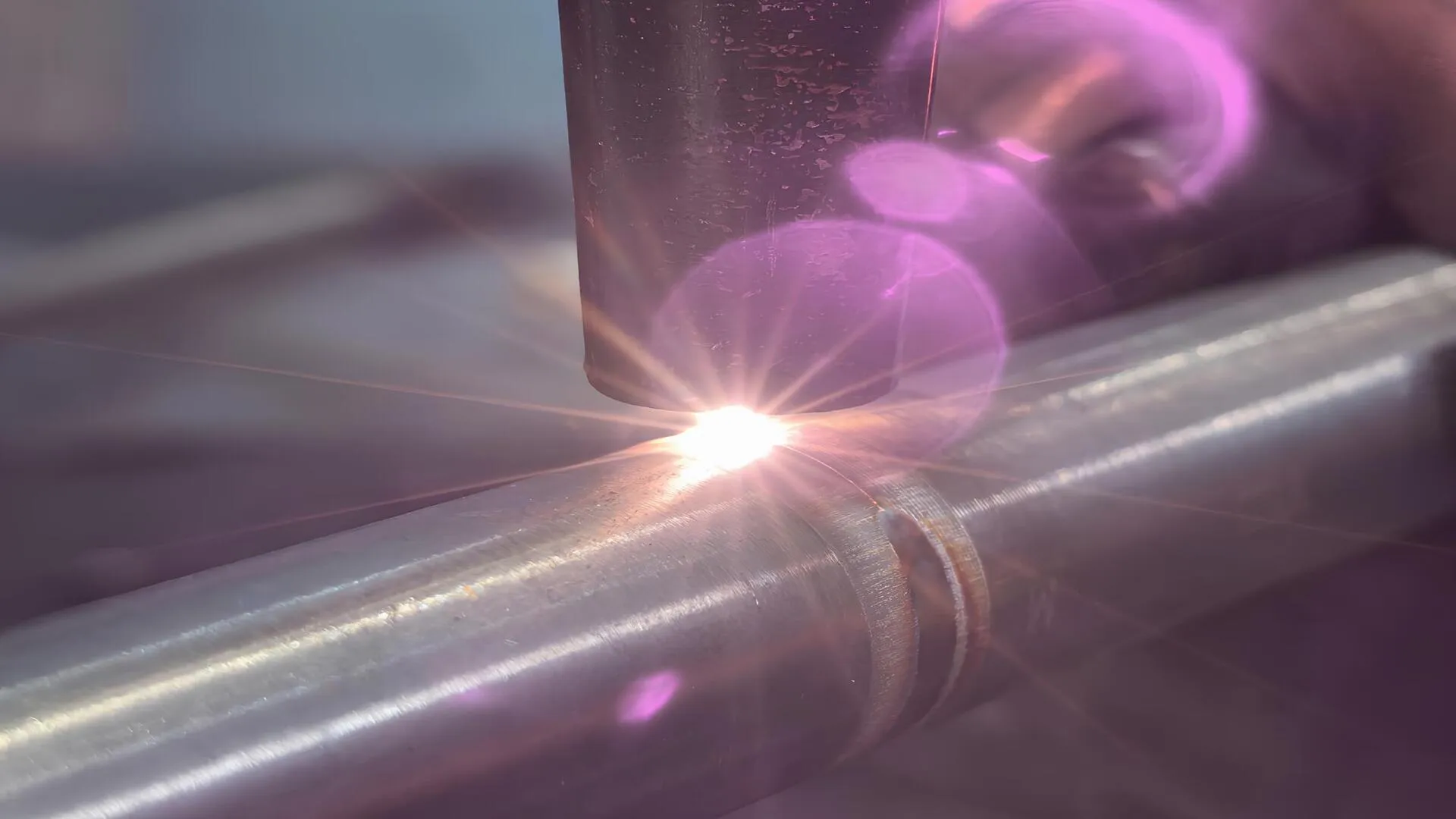
In parallel, the researchers evaluated the effectiveness of laser welding on austenitic and martensitic-ferritic steels, in both homogeneous and heterogeneous joints, achieving significantly better productivity while maintaining high quality standards in the joints. This technology can be applied in both new and existing reactors, including VVER and compact RITM reactors.
Implications for the industry
This combination of high-performance materials and welding technologies is part of the scientific foundation of the “Proryv” project, whose goal is the industrial implementation of a closed nuclear fuel cycle. This cycle makes it possible to reuse nuclear waste as a raw material, increasing the sector’s sustainability.
The introduction of this steel for nuclear reactors represents a key competitive advantage for Russia in the global race to master fourth-generation nuclear energy, with both civilian and strategic applications in long-term energy supply.
Source: Rosatom