
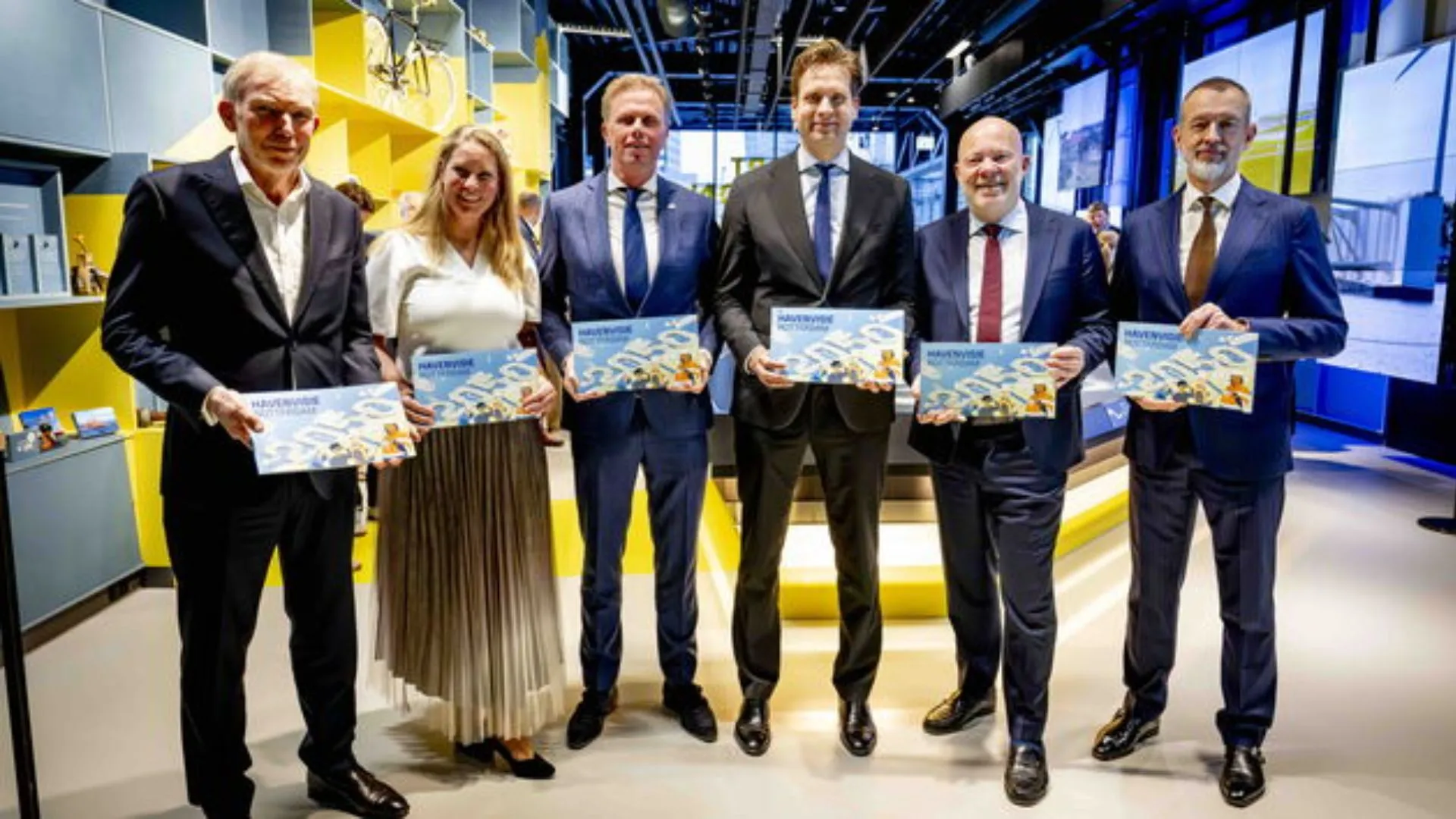
On January 26th, the official presentation of the Port Vision 2050 took place at the Port of Rotterdam Pavilion. The event was attended by local, regional and national authorities, as well as representatives of the business sector and civil society. The focus of this strategy: to transform Rotterdam into the most sustainable port in the world. most sustainable and competitive port in Europe. and competitive port in Europe.
Vincent Karremans, outgoing Minister of Economic Affairs, underlined the need for decisive action: “Doing nothing is not an option”. The Port Vision proposes a clear direction where economic growth is aligned with sustainability and resilience.
Transformation keys: climate neutrality, agility and autonomy
One of the most ambitious objectives of the plan is to achieve climate neutrality. climate neutrality in the port by 2050. To this end, a robust circular industry, the use of clean energy and a deep digitization of the logistics chain are proposed. It also emphasizes resilience to geopolitical crises and the diversification of energy sources and raw materials.
The document also addresses the urgent need to expand physical port space, improve the investment climate and ensure competitive energy rates. It even discusses a seaward expansion to address the shortage of industrial land.
Axes of the Port Vision 2050
The Port Vision 2050 is structured around five main axes:
- Smart and clean logistics: full interconnectivity between cargo, transportation and infrastructure, supported by sensors and algorithms.
- Circular and competitive industry: progressive replacement of fossil fuels and commitment to recycled raw materials and renewable energies.
- Healthy living environment: environmental measures that favor both habitability and economic activity, such as the use of clean fuels and port electrification.
- Inclusive labor market: a port that generates diverse, attractive and accessible employment for all professional profiles.
- Strategic agility: responsiveness to supply chain disruptions, cybersecurity and geopolitics.
Active participation and shared vision
The development of the plan was the result of intensive collaboration between the Municipality of Rotterdam, the Port Authority, the central government, the Province of South Holland and Deltalinqs. More than 100 organizations, including companies, universities and citizens’ groups, contributed ideas and visions for the future.
The Port Vision 2050 was officially adopted by the Rotterdam City Council in December 2025. Its implementation will mark the next decades of European port development.
Source and photo: Port of Rotterdam