
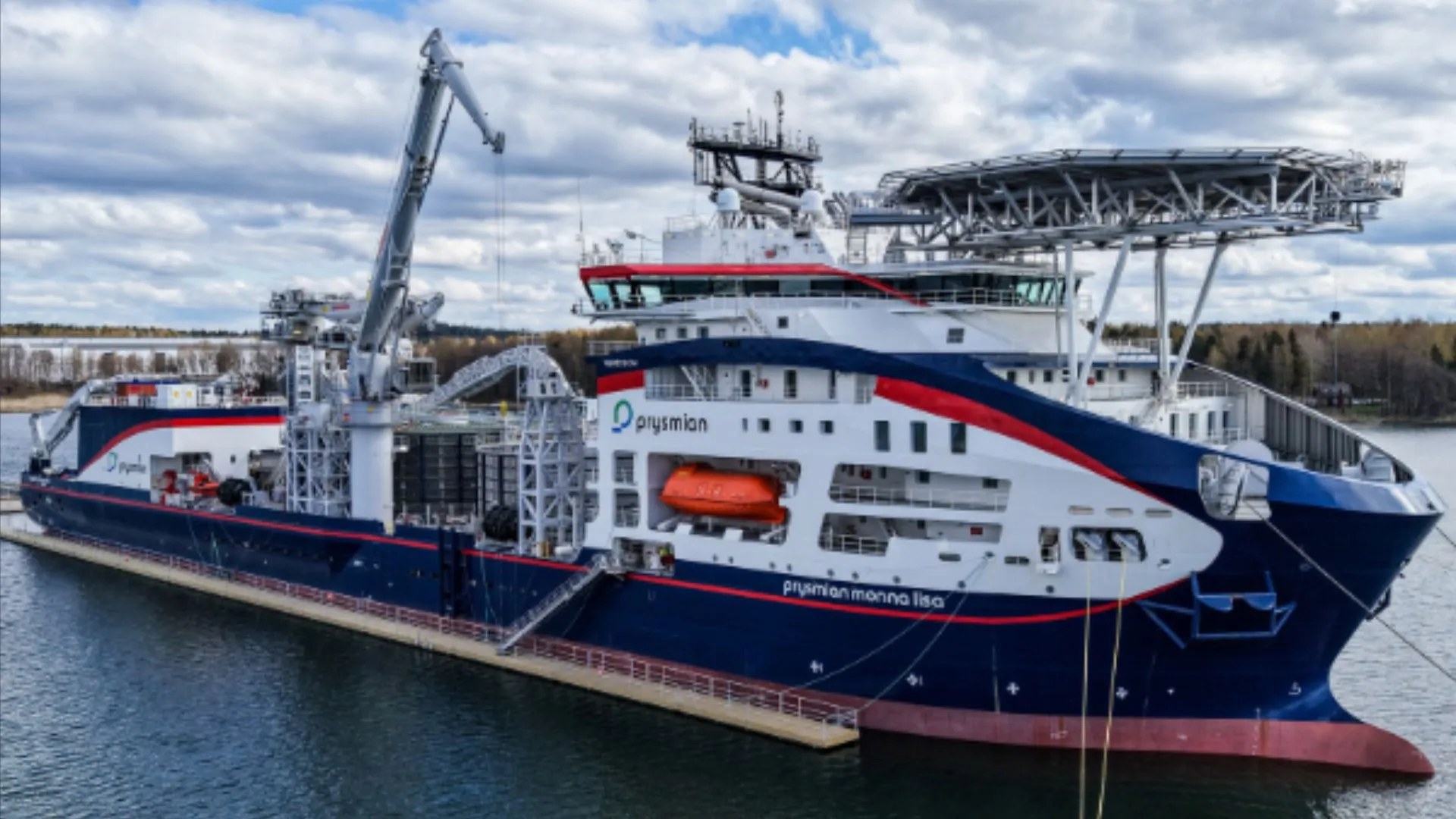
The company Prysmian has certified its 525 kV high-voltage direct current (HVDC) submarine cable systems to operate at a temperature of 90 °C. This increase in the thermal resistance of the plastic insulation allows for raising the transfer power from 2 GW to 2.5 GW without needing to modify the existing physical infrastructure.
The Capacity of Submarine Cable Systems
Fortunately, this technical improvement does not require increasing voltage or altering the size of the converter platforms. The ability to integrate this technology into operational networks becomes an immediate competitive advantage for network operators.
By allowing a greater flow of electricity through the same conduit, resources are optimized in complex projects such as the hybrid interconnectors in the North Sea. Likewise, operational efficiency translates into smarter management of offshore wind energy.
Raúl Gil, who heads the Transmission division at Prysmian, mentions that this progress aims to make electrical projects more affordable assets. The main objective is greater transport capacity with the same investment in materials, which reduces the unit cost of energy.
This saving should eventually be reflected in the monthly expenses of end-users and household bills. The executive emphasizes that these are not temporary measures, but a robust technical solution for global energy security.
On the other hand, Srinivas Siripurapu, head of the Innovation Department at the firm, points out that we are facing a new global standard. The ability to supply up to 2.5 million homes with a single link underscores the magnitude of this optimization.
Source and photo: Prysmian