
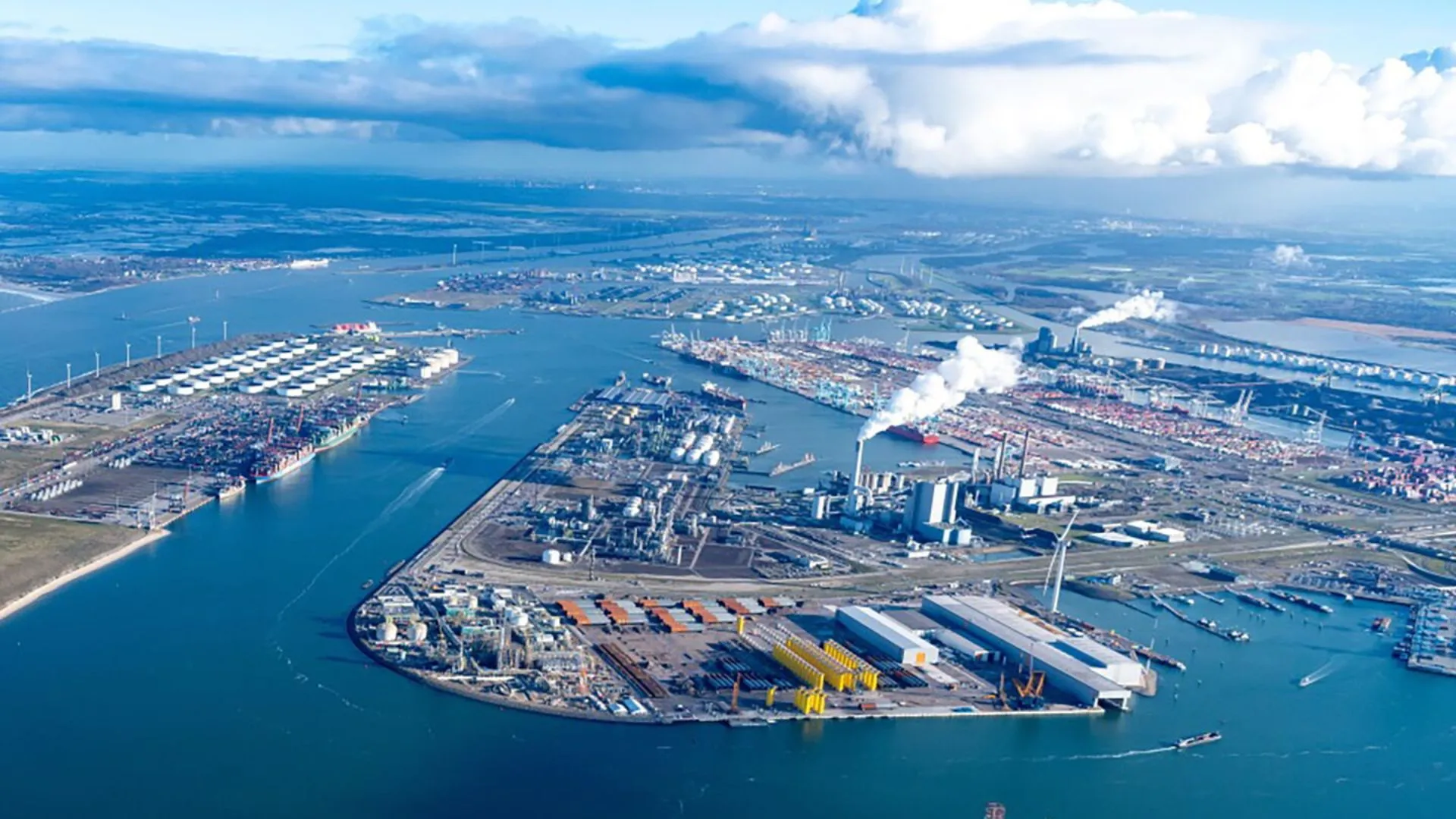
The Port of Rotterdam has asked the Dutch government to fully implement the recommendations of the report presented by Peter Wennink, former CEO of ASML, a document that warns of the loss of competitiveness and revenue if the Netherlands does not revive its investment climate.
Peter Wennink argues that the country needs to grow between 1.5% and 2% annually, which requires mobilizing between 151 billion and 187 billion euros in private investment over the next decade.
Problems identified at the port
The port faces several obstacles that affect competitiveness:
- Billions in industrial investments, two-thirds of them earmarked for the energy transition, are stalled because they cannot obtain environmental permits due to nitrogen emissions regulations.
- The industry faces higher energy costs than in neighboring countries, which hinders its international competition.
- The lack of available electricity connections (grid congestion) slows down the projects necessary for decarbonization.
To mitigate this situation, the Port Authority works together with Deltalinqs and grid operators, collaborating with the government on short- and medium-term solutions. The approach is to solve energy bottlenecks with measures tailored to each industrial cluster.
Specific proposals for the Port of Rotterdam
The report highlights 4 recommendations:
- Maritime Expansion: Create new sea space by 2030/2050, aimed at integrating renewable energy and hydrogen production, alleviating land scarcity.
- AI Gigafactory: Develop a manufacturing plant for artificial intelligence components. artificial intelligence in Europoort to strengthen the EU’s digital sovereignty.
- Modular Reactors (SMRs): Implement small nuclear reactors nuclear reactors in industrial clusters to improve energy security and decongest the grid.
- Strategic Stockpiles: Using the port’s facilities and expertise to store critical raw materials, increasing Europe’s resilience.
The Port’s institutional response
The Port of Rotterdam Authority, through its CEO Boudewijn Siemons, stresses that, economic growth and sustainability must go hand in hand, so fundamental decisions need to be taken now to unlock investments and realize the energy transition. The solution requires close collaboration (tailor-made, cluster by cluster) between industry, grid operators and government.
Source and photo: Port of Rotterdam