
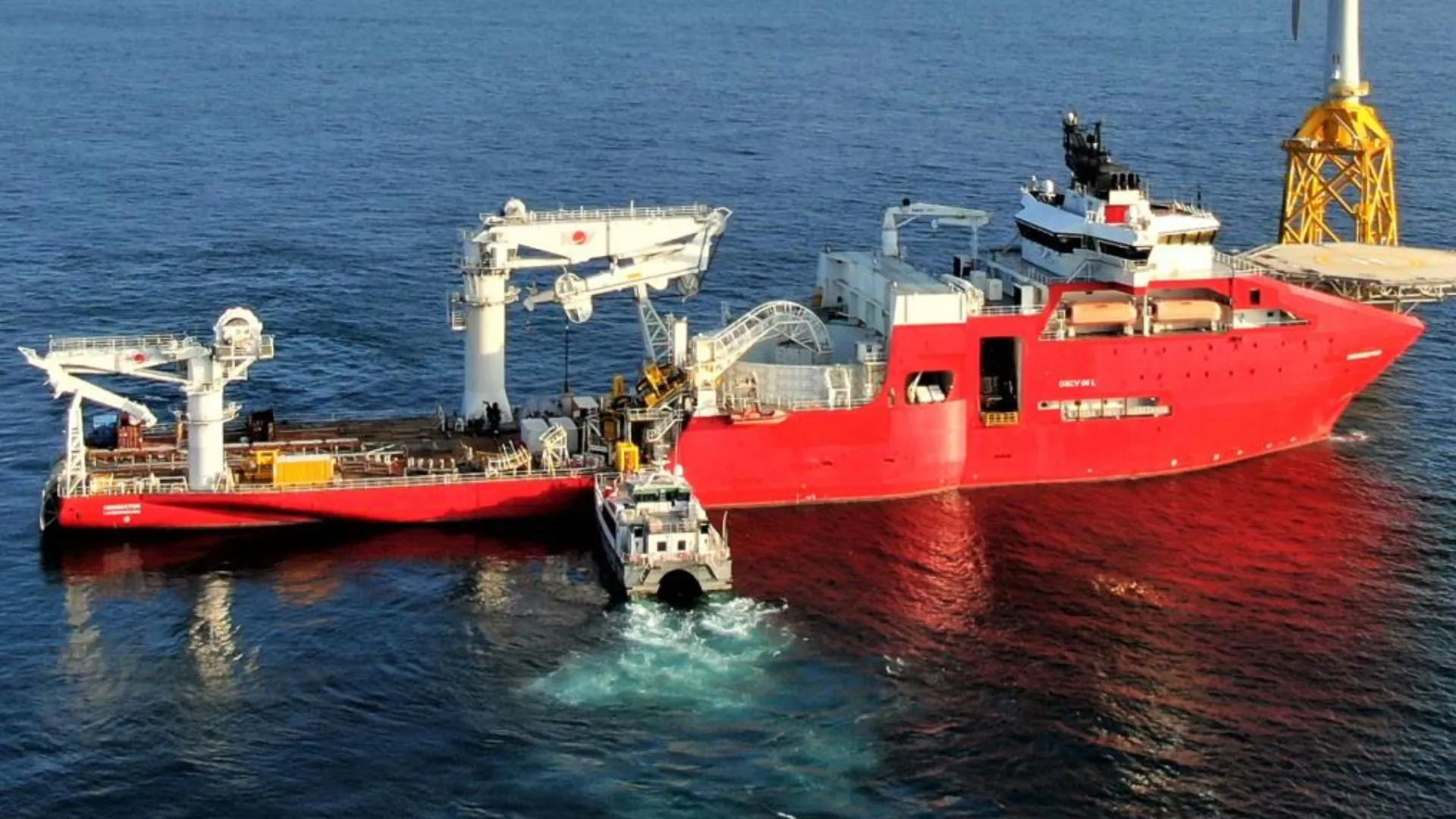
The Nordlicht 1 and 2 offshore wind farms, developed by Vattenfall in the North Sea, will take a step towards German energy self-sufficiency. Also located 85 kilometers off the island of Borkum, both projects are designed to generate around 6 terawatt hours per year, enough to supply 1.7 million households.
The Nordlicht project and the energy benefit
The responsible consortium is led by Vattenfall, with a 51% stake, while BASF owns the remaining 49%. This strategic alliance represents a model of collaboration between the chemical industry and renewable energy.
This contract to install inter-array inter-array cables was awarded to Jan De Nul. The Belgian company will be responsible for deploying 196 kilometers of submarine cabling that will connect 112 wind turbines, ensuring stable transmission of electricity generated offshore. For this operation they will use their specialized vessel “Connector”.
Nordlicht 1 will have an installed capacity of 980 megawatts, while Nordlicht 2 will add a further 630 megawatts. Although the final investment decision is scheduled for 2025, it is already estimated that offshore construction will start in 2026 and both facilities will be fully operational in 2028.
This development is part of Germany’s energy strategy to achieve climate neutrality by 2045. The power generated by Nordlicht will help reduce dependence on fossil fuels, driving a cleaner and more resilient power grid.
In addition to its scale, Nordlicht excels at integrating advanced engineering solutions. The power interconnection network will facilitate energy distribution and strengthen the stability of the energy system. This type of infrastructure represents a new stage in the development of renewable energies in Europe.
Source and photo: DJN