
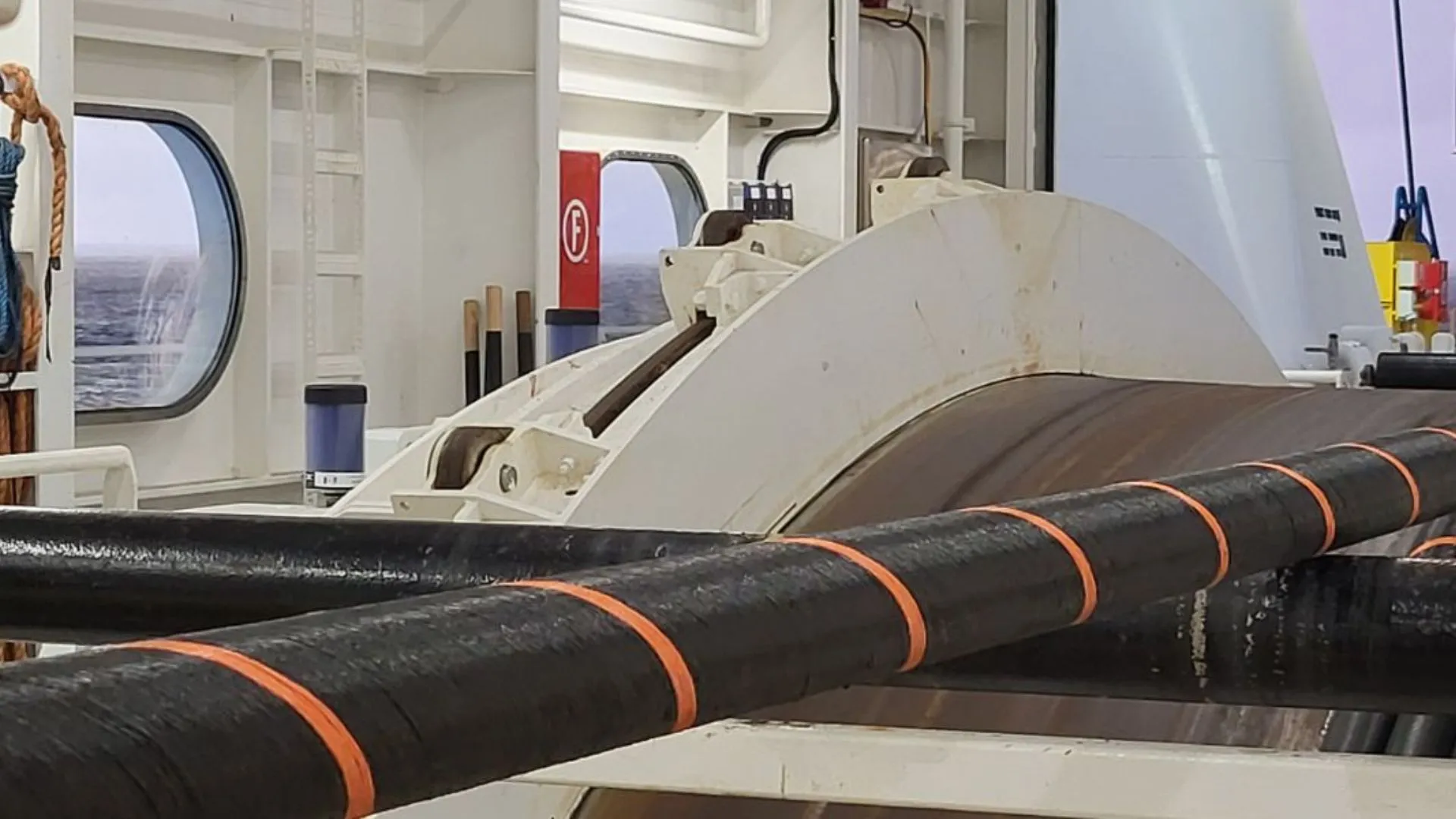
Nexans has taken subsea electrification to a new level. During a recent offshore test, the company successfully installed and retrieved a 525 kV high-voltage direct current (HVDC) submarine cable with mass-impregnated (MI) insulation, reaching an unprecedented depth of 3,000 meters.
This technical validation, performed as part of its participation in the Great Sea Interconnector project, represents a key step in the ability to connect national power grids through robust and reliable submarine cables. The cable was subjected to rigorous electrical testing after recovery, exceeding industry standards by 30% and demonstrating impeccable structural performance.
Nexans HVDC Cable and Its Extreme Operating Capability
The cable system, based on MI insulation technology, was visually inspected after testing and showed no damage or deformation. This confirms its operating capability in ultra-deep zones, critical for future energy interconnections in complex geographies.
This advancement also consolidates the progress achieved by Nexans in December 2025 during the Tyrrhenian Link project in Italy, where the cabling reached 2,150 meters depth. In both cases, deployment was carried out with the company’s proprietary technologies and highly specialized personnel, confirming its leadership in marine electrification.
Accelerating the Global Energy Transition
As a key player in the transition toward low-carbon energy, Nexans reaffirms its commitment to sustainable transmission solutions through its PWR Transmission, Grid, and Connect divisions. This test not only demonstrates exceptional technical capabilities but also opens new possibilities for expanding global energy infrastructure safely and efficiently.
With presence in 41 countries and more than 25,000 employees, Nexans positions itself as a strategic partner in the deployment of reliable energy, even in extreme seabed environments.
Source and photo: Nexans