
Table of Contents
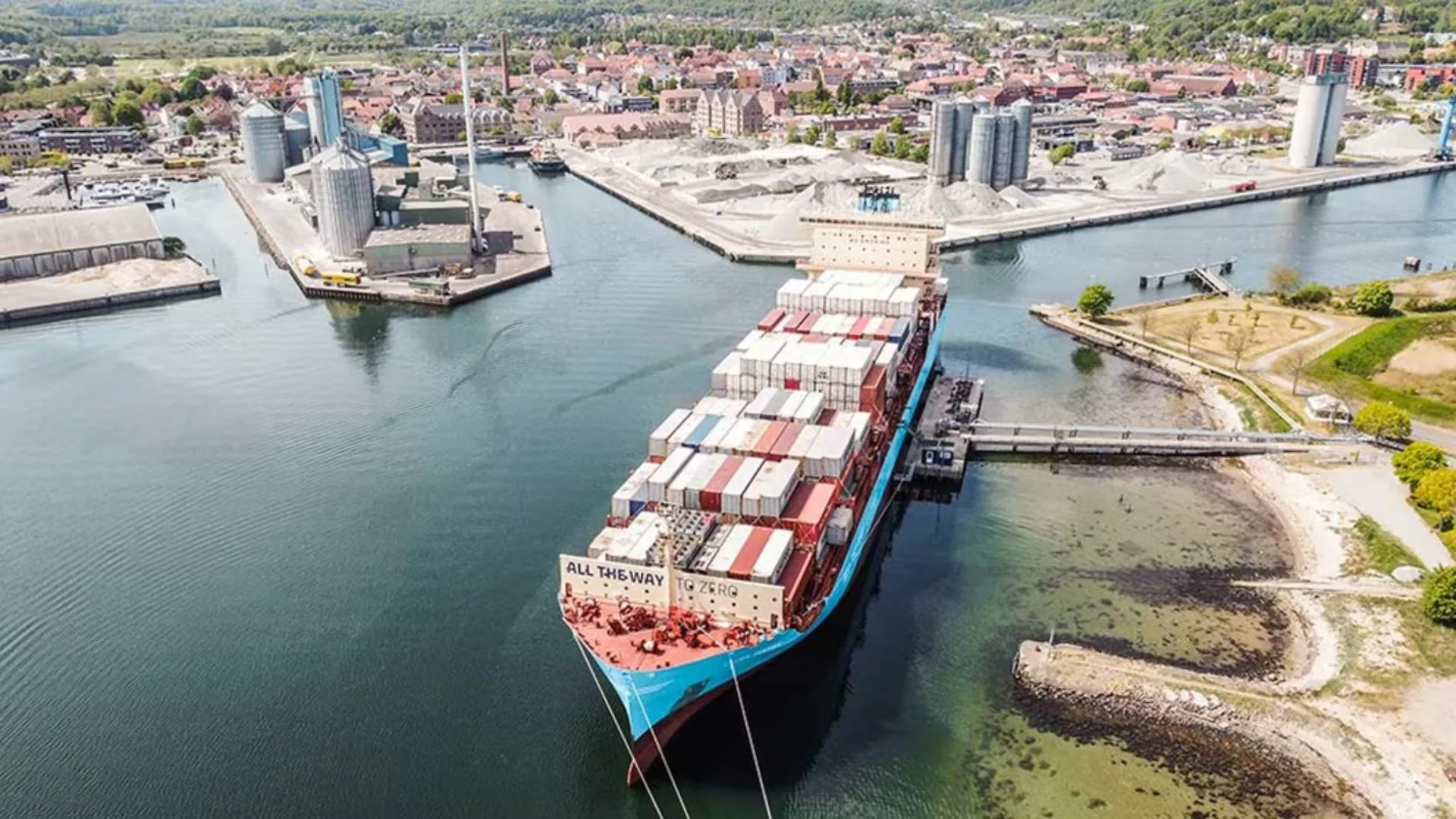
In its bid to diversify its energy matrix and accelerate the transition to a more sustainable fleet, Maersk has initiated a new trial with a blend of ethanol and methanol on its container ship Laura Maersk. This trial represents a further step in the development of alternative fuels. alternative low-emission low emission alternative fuels for shipping.
An innovative mix in dual motors
The test, which involves an equal ratio of ethanol to methanol (50/50), is performed on a dual-fuel engine. dual-fuel engine originally originally designed to operate on methanol. After an initial stage with E10 blend (10% ethanol), the results confirmed stable combustion without affecting engine efficiency. This paves the way for evaluating blends with higher ethanol content and possible commercial applications.
Unlike other experimental fuels, ethanol has a mature global infrastructure, which facilitates its adoption in the marine sector. The United States and Brazil currently dominate world production, with 80% of the global market. This availability makes ethanol a realistic option for reducing emissions without significantly altering existing logistics.
The ethanol used comes from biomass such as corn and sugar cane, so Maersk stresses the need to ensure that its origin meets strict sustainability criteria: avoiding deforestation, not competing with food and ensuring traceability. These conditions are key to its viability as a transition fuel.
Next steps on Maersk’s agenda
The company plans future trials with 100% ethanol to determine its full impact on dual engines. With 19 dual-fuel vessels in its fleet projected for 2025, Maersk reinforces its multi-track strategy: it already operates with biomethanol, e-methanol and biodiesel, and by 2027 will incorporate liquefied biomethane and LNG.
Maersk stresses that the move towards clean fuels cannot be achieved alone. Collaboration with engine manufacturers and key players in the energy supply chain is essential to convert trials such as the one in the Laura Maersk into scalable solutions for the entire shipping industry.
Source and photo: Maersk