
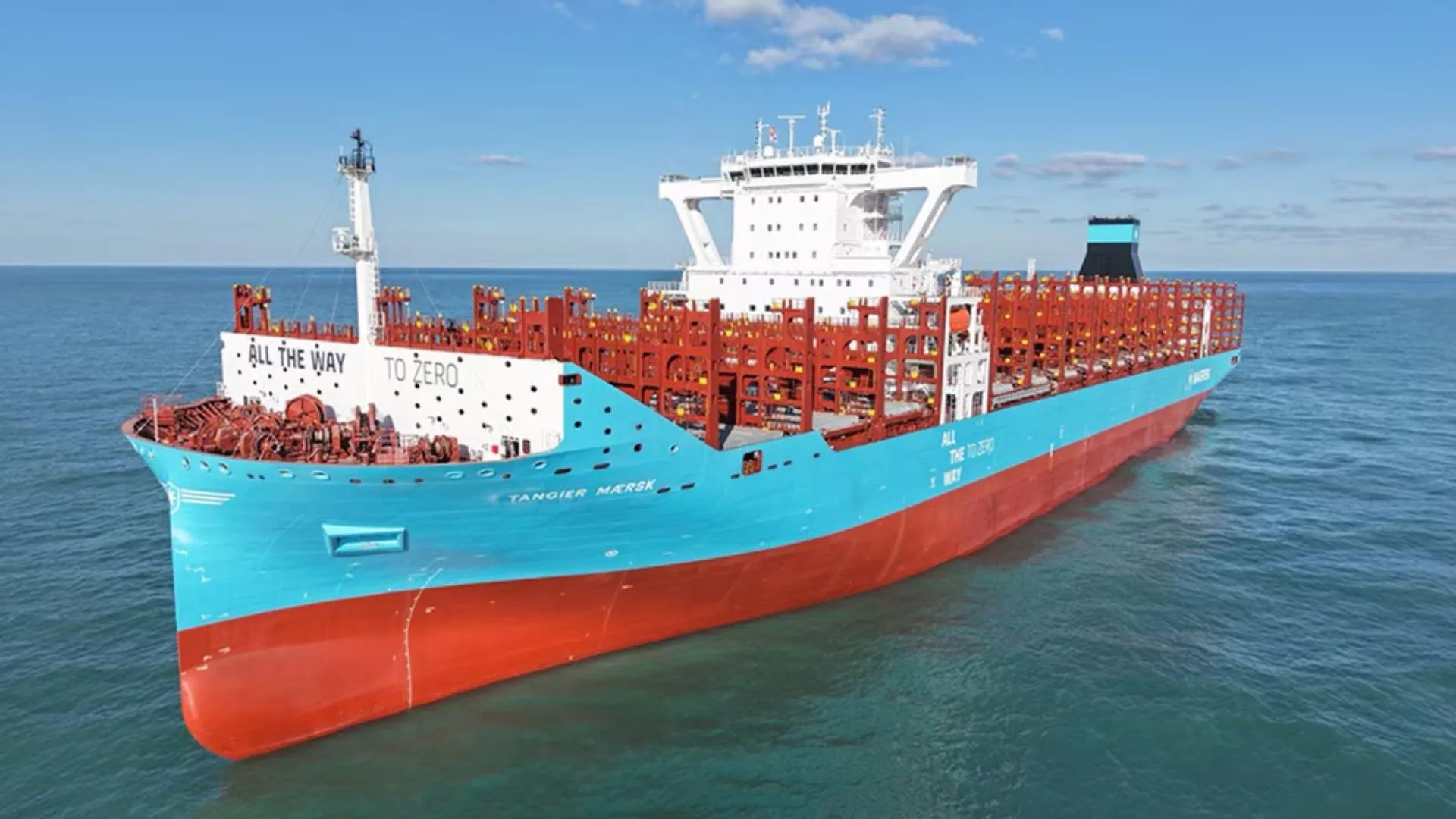
Maersk has taken delivery of the “Tangier Mærsk”, the first of a series of six new container ships container ships, each with a capacity of 9,000 TEU. This delivery marks a strategic step in its commitment to operate with cleaner and more efficient technologies.
The vessel was delivered by Yangzijiang Shipbuilding Group at the Jingjiang Shipyard in Jingjiang, China, three months ahead of the initial schedule. This efficiency in construction also reflects the advancement in logistics and international collaboration processes in the shipping industry.
Ready to operate Asia – U.S. route via Panama Canal
Equipped with bi-fuel engines, the Tangier Mærsk is designed to run on both conventional fuels and methanol. methanolaligning with Maersk’s goal of achieving zero net emissions by 2040. This approach positions the shipping line as a leader in the transition to low-carbon maritime logistics.
On its maiden voyage, the ship will call at Shanghai before joining the TP15 service. TP15 serviceservice, which connects East Asia with the U.S. Gulf Coast via the Panama Canal. This route is key to intercontinental trade and reinforces Maersk’s presence in strategic corridors.
Tangier Mærsk leads progressive renewal until 2027
Maersk expects to take delivery of another four similar vessels before the end of the year, while the last one will be delivered in early 2027. This complete series represents a relevant modernization of the fleet and responds to the growing demand for cleaner and more efficient logistics solutions.
With these new vessels, the company continues its transformation towards a sustainable maritime operation by integrating technological advances in propulsion, energy efficiencyand energy efficiency, and emissions reduction. The commitment to methanol as an alternative fuel is a firm step towards maritime transportation that is less dependent on fossil fuels.
Source and photo: Maersk