
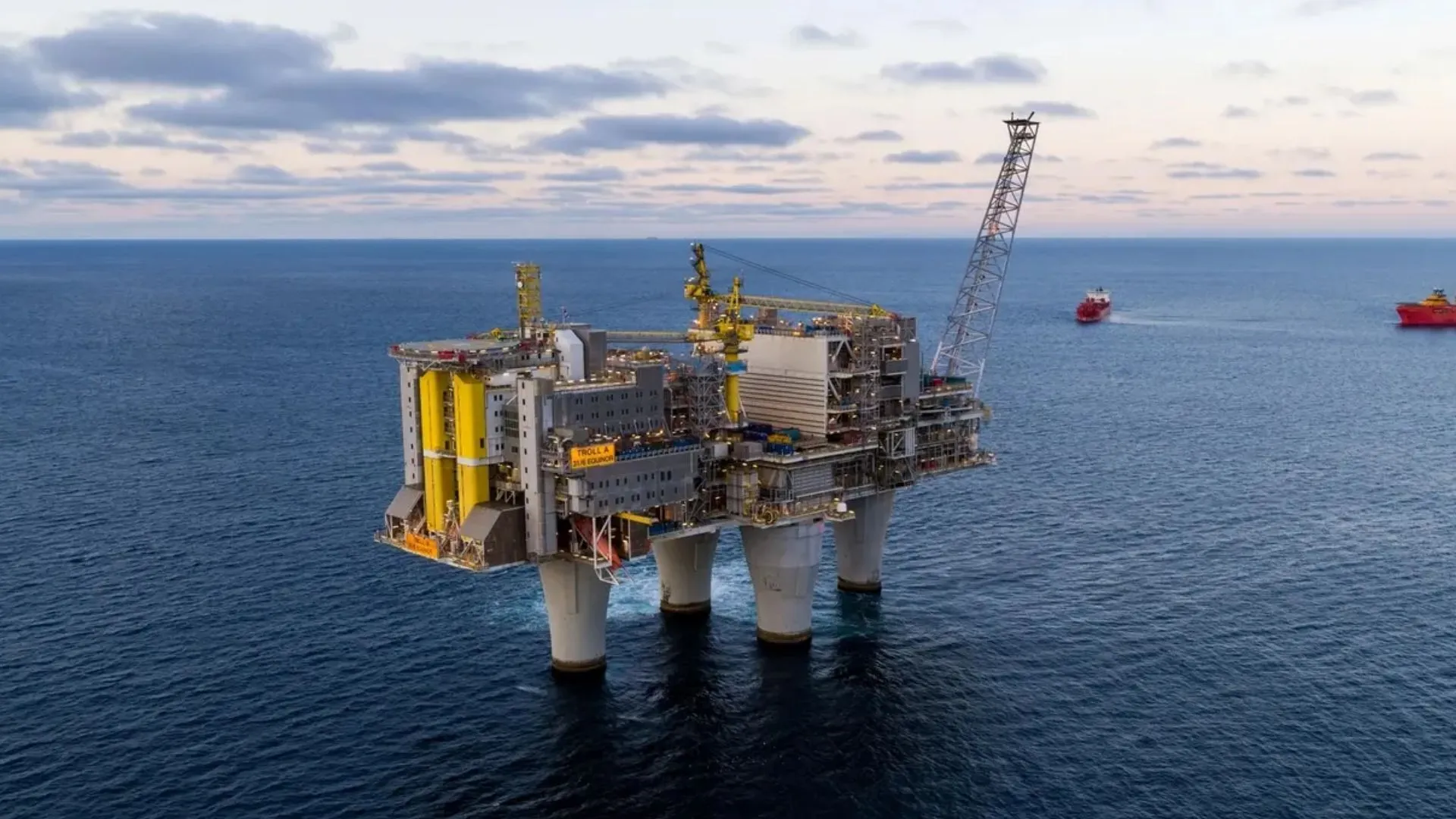
Equinor ‘s international oil and gas production is entering a new phase of expansion. The Norwegian company plans to increase its overseas pumping by more than 23% by 2030 and exceed 900,000 barrels equivalent per day.
Concentrated oil and gas production
The company has reduced its presence in markets considered mature. Following the divestment of land assets in Argentina, Equinor went from operating in a dozen countries to maintaining production in seven jurisdictions outside its home country.
According to its international management, the objective is to grow even after selling declining assets. The strategy is to prioritize offshore fields and projects with well-defined development cycles.
In this scenario, Brazil and the U.S. Gulf concentrate much of the production momentum. Development of the Bacalhau field in the start-up phase is progressing towards an estimated capacity of 220,000 barrels per day in the second half of 2026. Raia will be added to this volume, with production expected to start in 2028.
In addition, the Sparta project in U.S. waters and the increase of volumes at Adurathe joint venture with Shell in the United Kingdom, strengthen the international portfolio. Organic growth in these regions is at the core of the expansion.
On the other hand, Equinor is approaching an investment decision in Bay du Nord off the Atlantic coast of Canada. This project is among the most relevant offshore developments planned in the region. The company has opted for a phased approach to reduce financial and technical risks.
The initial plan calls for more than 400 million recoverable barrels. This phased approach allows cost adjustment and ensures competitiveness in a volatile price environment. Meanwhile, production in Norway would remain relatively stable over the decade. This implies that total growth will depend largely on international performance. Increased foreign production thus becomes the main vector for corporate expansion.
The jump from approximately 730,000 barrels equivalent per day in 2025 to more than 900,000 barrels equivalent per day by 2030 reflects a defined roadmap. The goal integrates development of approved projects and new exploration campaigns.
In East Africa, the company resumed talks with the Tanzanian government to move forward with a liquefied natural gas project. However, the assessment includes political factors following recent post-election violence. The possible development of LNG would broaden exposure to gas in international markets and strengthen geographic diversification. Even so, the final decision will depend on regulatory stability and investment conditions.
Beyond the 2030 horizon, Equinor is analyzing new areas in Brazil, Angola and the U.S. Gulf. It is also studying opportunities in the Eastern Mediterranean and Namibia. The company insists that expansion will be selective and based on rigorous technical criteria.
In short, the increase in Equinor’s international oil and gas production responds to a logic of concentration in competitive assets. The combination of projects in Brazil, the United States, Canada and possible LNG developments in Africa redefines its global map.
Source and photo: Equinor