
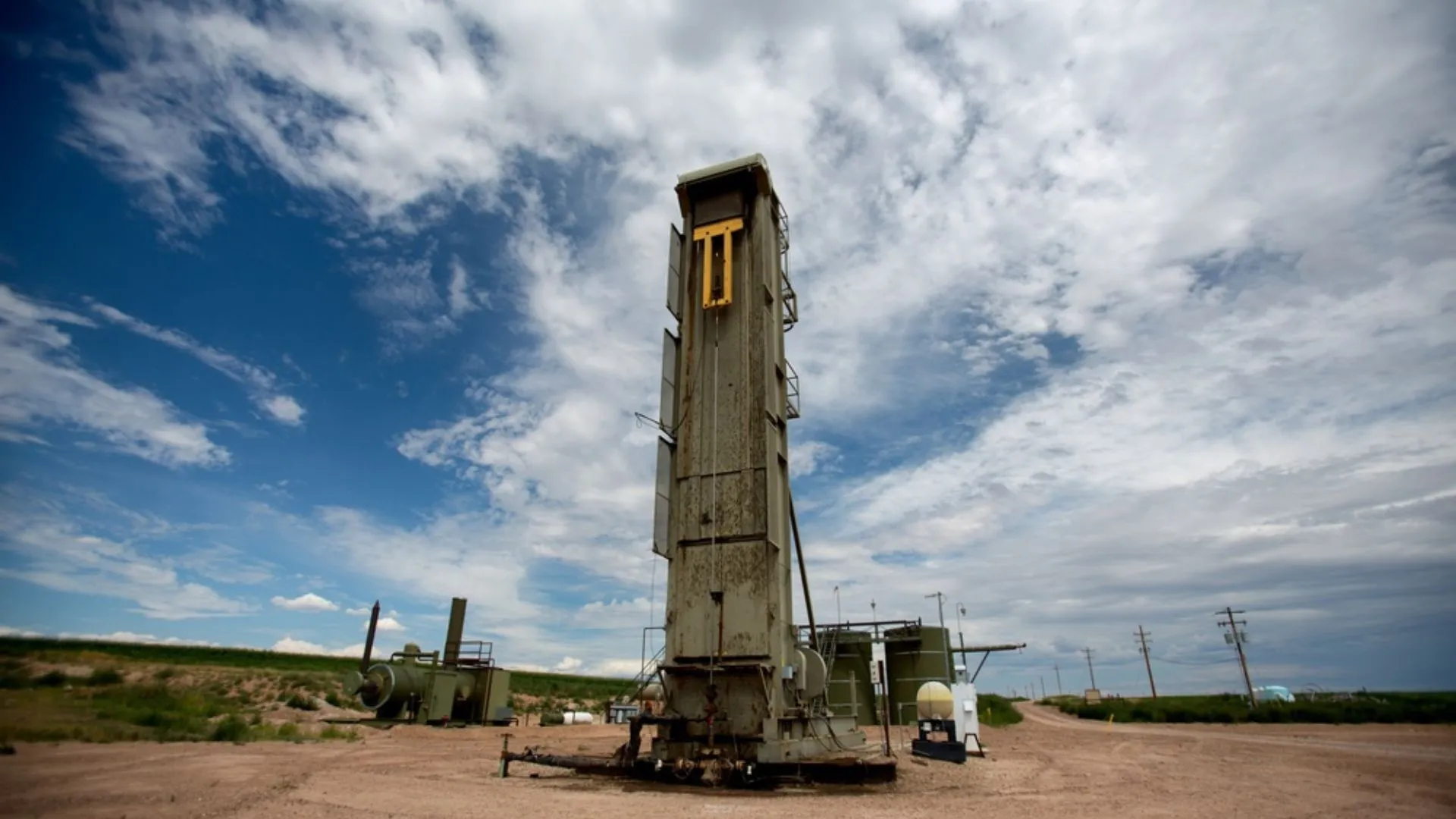
Italian energy company Eni has expanded its stake in the Touat field, located in southwestern Algeria, following French company Engie’s complete withdrawal from the project. This reorganization was formalized by a presidential decree published on February 24, marking a new chapter in the region’s energy dynamics.
With this contractual modification, Eni absorbed an additional 8%, raising its indirect stake to 42.9%. Thailand’s PTTEP also strengthened its position with an additional 22%, reaching 34%, while Algerian state-owned Sonatrach retains its 35%. Despite the changes in shareholding, the field’s production remains entirely allocated to Sonatrach, as stipulated.
Production and Recovery in the Touat Field
Located in the Adrar Wilaya, the Touat field has been operational since 2019, although it faced an interruption in 2021 due to mercury contamination at the processing facilities. Following remediation efforts and technical investment, production stabilized at around 13 million cubic meters per day, equivalent to approximately 4.5 billion cubic meters annually. This figure allows for supplying both the domestic market and export pipelines to Europe.
The shareholding readjustment in Touat reflects a broader trend: the retreat of French operators in the face of advancing Asian and Italian groups in the Algerian energy system. Eni, which has strengthened its presence in the African country over the last decade, is currently positioned as one of Algeria’s main foreign partners in the hydrocarbons sector.
Algeria as an Energy Hub for Europe
In addition to the Touat field, Eni and PTTEP have begun exploratory activities in the neighboring Reggane 2 block, awarded in the recent 2024 licensing round. This move demonstrates a strategy aimed at consolidating operations in the Adrar basin, a key region within the Western Sahara gas system.
Algeria, which continues to be one of Europe’s main gas suppliers, remains a strategic axis in Eni’s energy policy. According to 2024 data, the Italian company ranks second among companies with the highest tax payments to the Algerian government, with over $1.2 billion transferred.
Engie’s departure from the consortium not only redistributes share percentages but also redefines the geopolitical balance of gas in the Maghreb, with new players strongly positioning themselves in a context of energy transition and growing demand from Europe.
Source: Oil Price
Photo: Shutterstock