
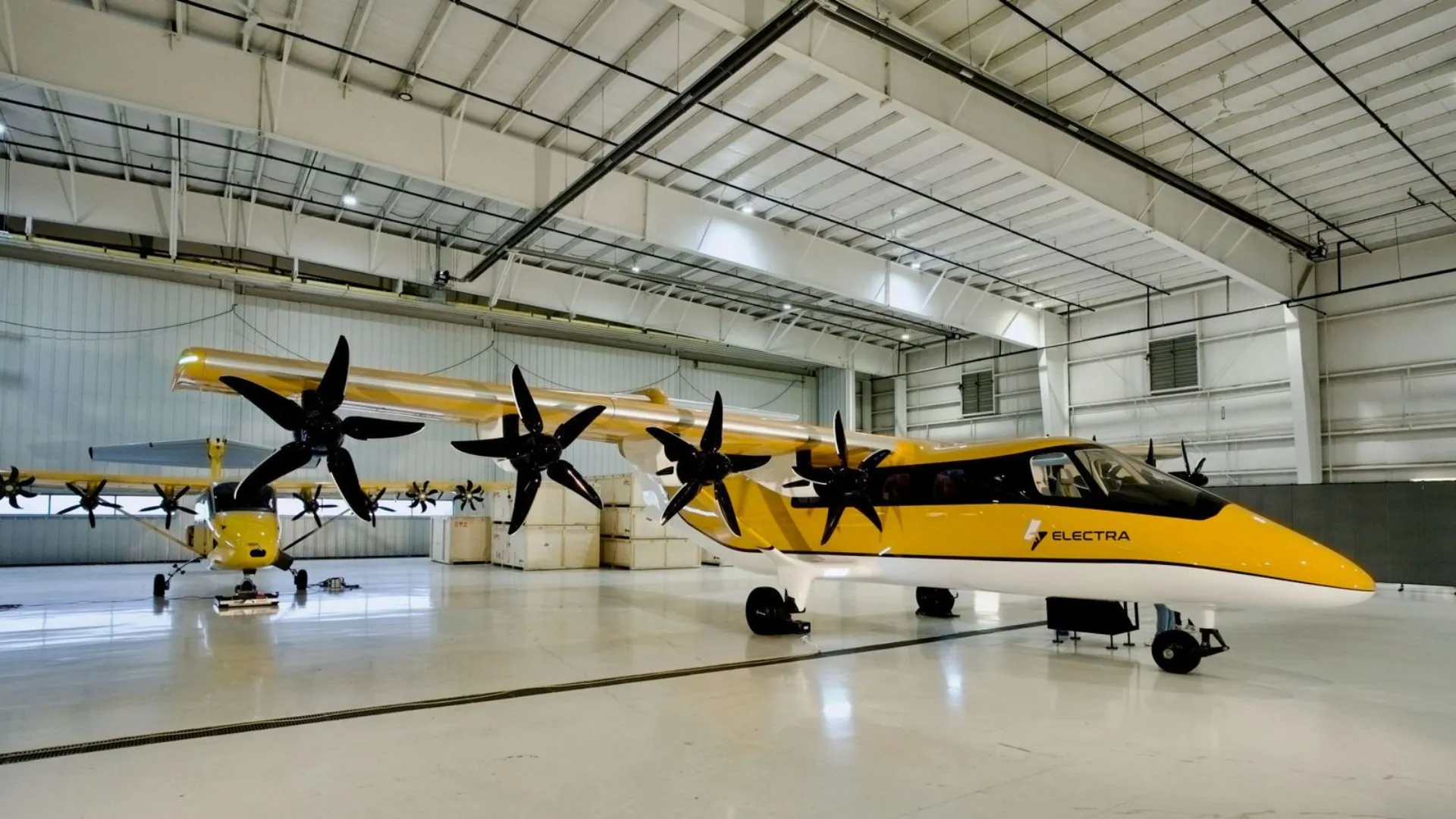
Electra, a manufacturer specializing in hybrid-electric aircraft, announced the official submission to the Federal Aviation Administration (FAA) of the application for Part 23 type certification of its Electra EL9 model. This step marks the formal start of the regulatory process that will allow the aircraft to operate on commercial cargo and passenger routes.
On Electra EL9 is a fixed-wing aircraft with a 9-passenger capacity that combines distributed hybrid-electric propulsion with a blow lift system, which allows it to take off and land in distances of just 45 meters. This STOL (Short Take-Off and Landing) capability positions it as a solution for direct regional air connectivity, without relying on conventional airports.
A different proposal for regional aviation
Designed to enable the Direct Aviation model, the EL9 seeks to connect communities, logistics centers and remote areas through point-to-point operations from small airfields, heliports, docks or even parking lots and industrial facilities. Electra’s proposal aims to offer a silent, efficient and flexible alternative to traditional air traffic.
The EL9’s distributed propulsion technology allows it to maintain the energy and operational efficiency of a fixed-wing aircraft while reducing noise impact and infrastructure requirements.
The road to certification Part 23
The documentation submitted by Electra to the FAA includes Form 8110-12, the EL9 Aircraft Specification and the Project Specific Certification Plan (PSCP). The latter defines the regulatory compliance approach and details the technical criteria that will guide the aircraft validation testing, overseen by the Aircraft Certification Service and the Emerging Technology Division.
This application for certification indicates that EL9 is fast becoming a reality. We combine technology with a clear vision: to get people directly from where they are to where they want to go.
Marc Allen, CEO of Electra.
What’s next for the Electra EL9
Following this initial application, Electra will continue to work closely with FAA technical teams to validate compliance plans and prepare for the testing phase, key to PSCP acceptance and issuance of type certification. The company expects the process to progress over the coming months, paving the way for the Electra EL9 to enter service as a new option in the advanced air mobility segment.
With its compact design, hybrid architecture and innovative approach to operation, the EL9 is emerging as one of the most promising models in the future of sustainable regional aviation.
Source: Electra