
Iberia as a hub for European reindustrialization
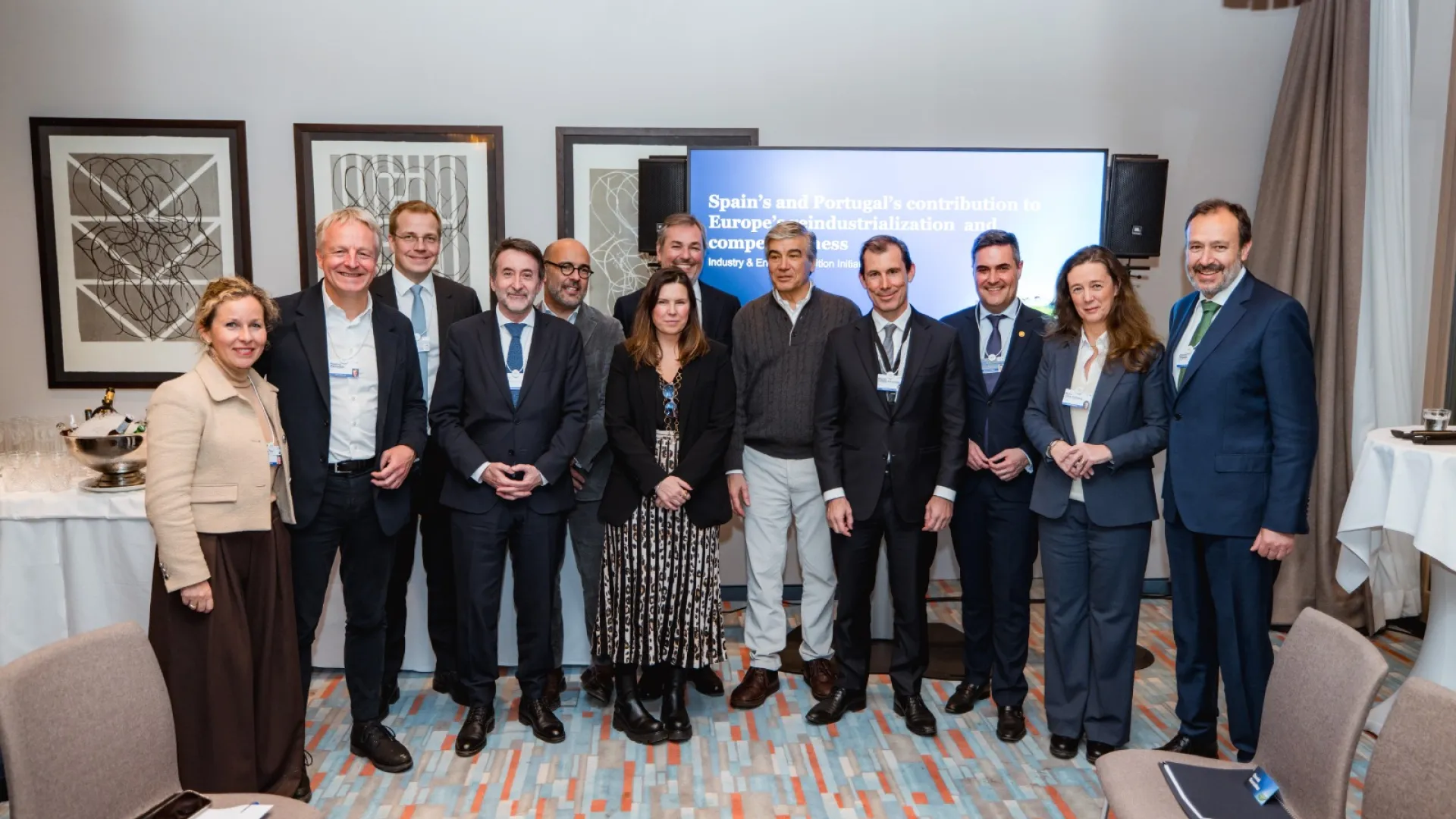
At the World Economic Forum (WEF) Annual Meeting in Davos, the Iberian Energy and Industrial Transition Initiative (IETI) presented its updated vision on the strategic role of Spain and Portugal in Europe’s competitiveness. The initiative, led by McKinsey & Company and supported by companies such as ACS, EDP, Galp, Iberdrola, Moeve, Naturgy, Repsol and Técnicas Reunidas, stresses that the energy transition can become the great engine for the reindustrialization of southern Europe.
European institutional figures and CEOs of member companies participated in a multi-stakeholder session, in a dialogue focused on how to transform the Iberian energy advantage into sustainable industrial growth. The updated IETI Index shows progress in energy investment and renewable deployment, but warns that the speed of implementation will be crucial to close structural gaps compared to other economies.
EDP & Energy transition as a lever for competitiveness and strategic autonomy
Participants agreed that Europe faces industrial weaknesses in strategic sectors, lower labor productivity and regulatory fragmentation in an increasingly demanding geopolitical environment. In this context, energy transition is not only a climate objective, but also a tool to rebuild industrial capacity and strengthen strategic autonomy.
Iberia presents favorable conditions: abundance of renewable resources, competitive energy costs and increasing electrification. Portugal already has a 35% share of renewables in its energy mix, while in Spain energy prices are 27% below the EU average. Moreover, the adoption of electric mobility in Portugal represents 40% of vehicle sales, indicating an evolving ecosystem.
Five initiatives to move from ambition to execution
The IETI Index, which evaluates 21 indicators of energy transition and industrialization, shows positive signs in post-FID energy investment, development of green gases and small-scale storage. However, structural gaps persist in R&D, labor productivity, regulatory quality and industrial weight in GDP, with R&D investment levels of just 1.5-1.7% of GDP.
Faced with this situation, the IETI proposed five priority lines of action in Davos. These include the creation of industrial ecosystems in strategic areas such as batteries, renewable fuels, defense and AI; simpler and more predictable regulatory frameworks; and the acceleration of critical infrastructures, especially power grids, where numerous requests for industrial connection continue to face restrictions.
The need to strengthen innovation through tax incentives, centers of excellence and co-financing mechanisms was also stressed, as was the need to boost talent through massive training, AI-based digital tools and policies to attract skilled professionals. The central message was clear: the opportunity exists, but the margin is shrinking, and European competitiveness will depend on how quickly Iberia manages to turn its energy advantage into real industrial capacity.
Source and Photo: https://edp.com/en