
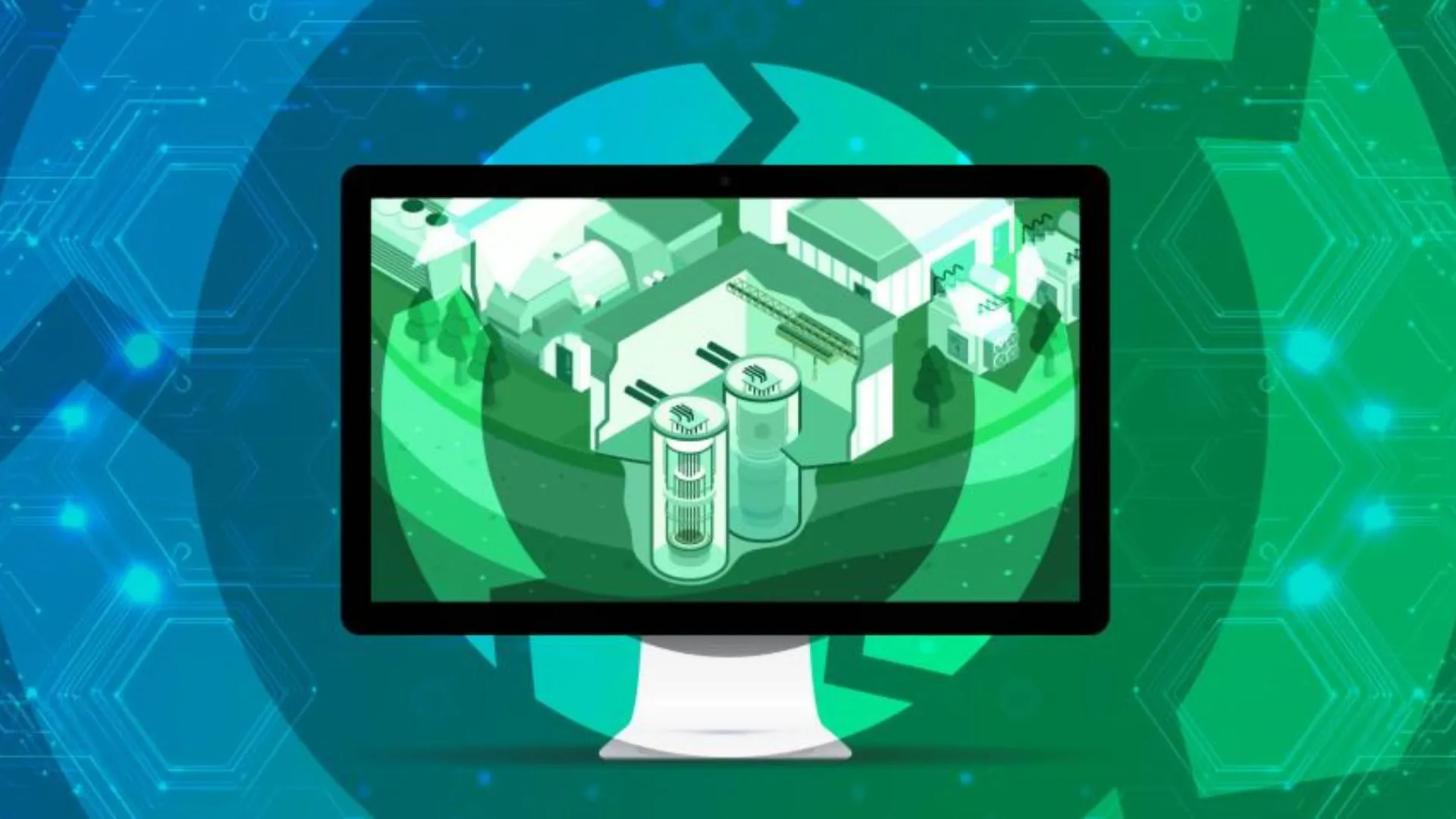
A team at Oak Ridge National Laboratory (ORNL), in collaboration with GE Vernova Hitachi and the University of Tennessee, has developed a risk-based digital twin to improve the performance and safety of small modular reactors (SMRs).
This digital model, centered on the BWRX-300, makes it possible to anticipate failures through real-time probabilistic analysis, which contributes to more efficient operational management and a significant reduction in costs resulting from unscheduled shutdowns.
Digital intelligence at the service of nuclear energy
Unlike traditional approaches, the ORNL’s digital twin integrates real-time operational data and risk analysis methodologies to optimize operational decisions. This tool acts as a virtual replica that simulates reactor behavior under different scenarios, assessing the probability of failure and proposing corrective actions in advance.
Digital twin for SMR as a competitive advantage
Small modular reactors already offer benefits such as simpler construction and reduced costs compared to conventional reactors. With this new digital tool, they gain an additional advantage: predictive monitoring that reduces operational uncertainty and extends component life.
This development is also applicable to other existing nuclear designs and reactors, consolidating its usefulness in an energy landscape that seeks clean and reliable technologies.
A push for SMR adoption
ORNL researcher Michael Muhlheim noted that this technology represents a key tool for rapid and informed decision making. The integration of digital simulation into nuclear management marks an important step towards the consolidation of the SMR as a competitive and safe energy solution.
Source and photo: ORNL