
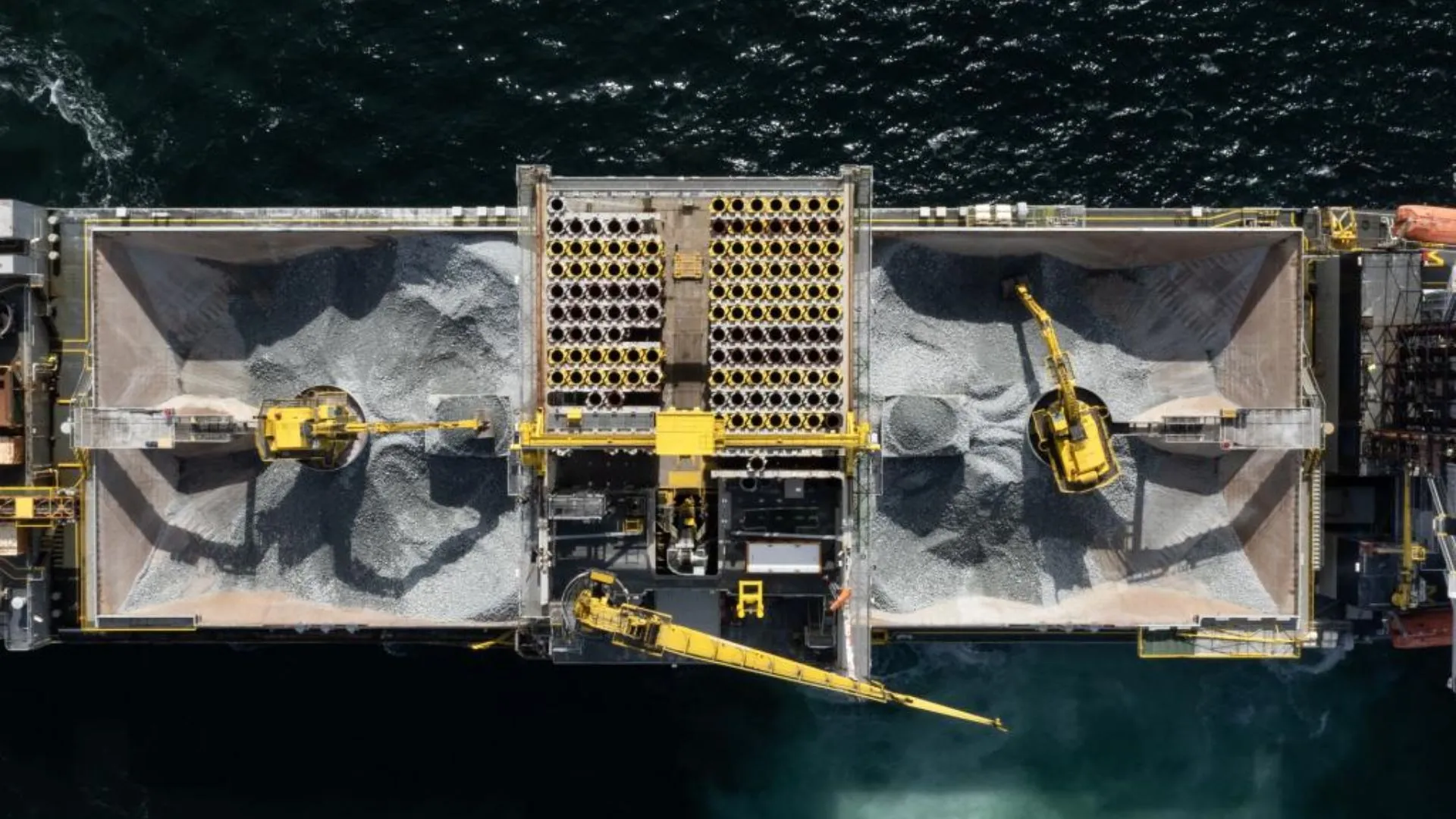
Marine engineering in the North Sea has reached a turning point with the completion of the onshore construction phase of Princess Elizabeth Island. Jan De Nul Group has confirmed that the 23 concrete structures on the concrete structures for the hub have now been successfully fabricated and floated. Following completion of the work at the Vlissingen plant, the blocks are now at the Scaldia terminal to receive final technical adjustments before their final deployment offshore.
Engineering and deployment of Princess Elizabeth Island
The design of these foundation caissons responds to the need to create a defensive perimeter capable of accommodating the high voltage infrastructure that will connect the offshore wind farms to the offshore wind farms offshore wind farms in Belgium. These pieces are not mere containers; they represent the technical basis on which the world’s first artificial energy hub will be erected.
The precision flotation maneuvering and transfer to the Scaldia terminal demonstrates the logistical capability required to handle components of such magnitude in complex port environments.
The project schedule also stipulates that installation on the seabed will resume next spring. This laying process will take place some 45 kilometers off the Belgian coast, where the blocks will be submerged to form the outer ring of the island. Once the structures are in place, work will focus on preparing the interior of the surface, preparing the terrain for interconnection with electricity grids other European countries.
A strategic node for energy transition
The importance of Princess Elizabeth Island island lies in its role as a landing center for submarine cables that will link wind production to the mainland. Jan De Nul Group, with its extensive experience in construction and planetary redevelopment projects, is leading this execution that seeks to stabilize renewable supply in the region.
The infrastructure will not only enable local energy distribution, but will also facilitate cross-border energy exchange with neighboring nations.
To finalize the work, the technical team must ensure that each of the 23 foundations will withstand the hydrodynamic pressures of the North Sea. The official completion of the work at Vlissingen marks the beginning of a critical logistical stage where maritime coordination will be essential. The results achieved so far ensure that the infrastructure is ready to meet the electricity interconnection targets foreseen for the coming years.
Source and photo: Jan De Nul