
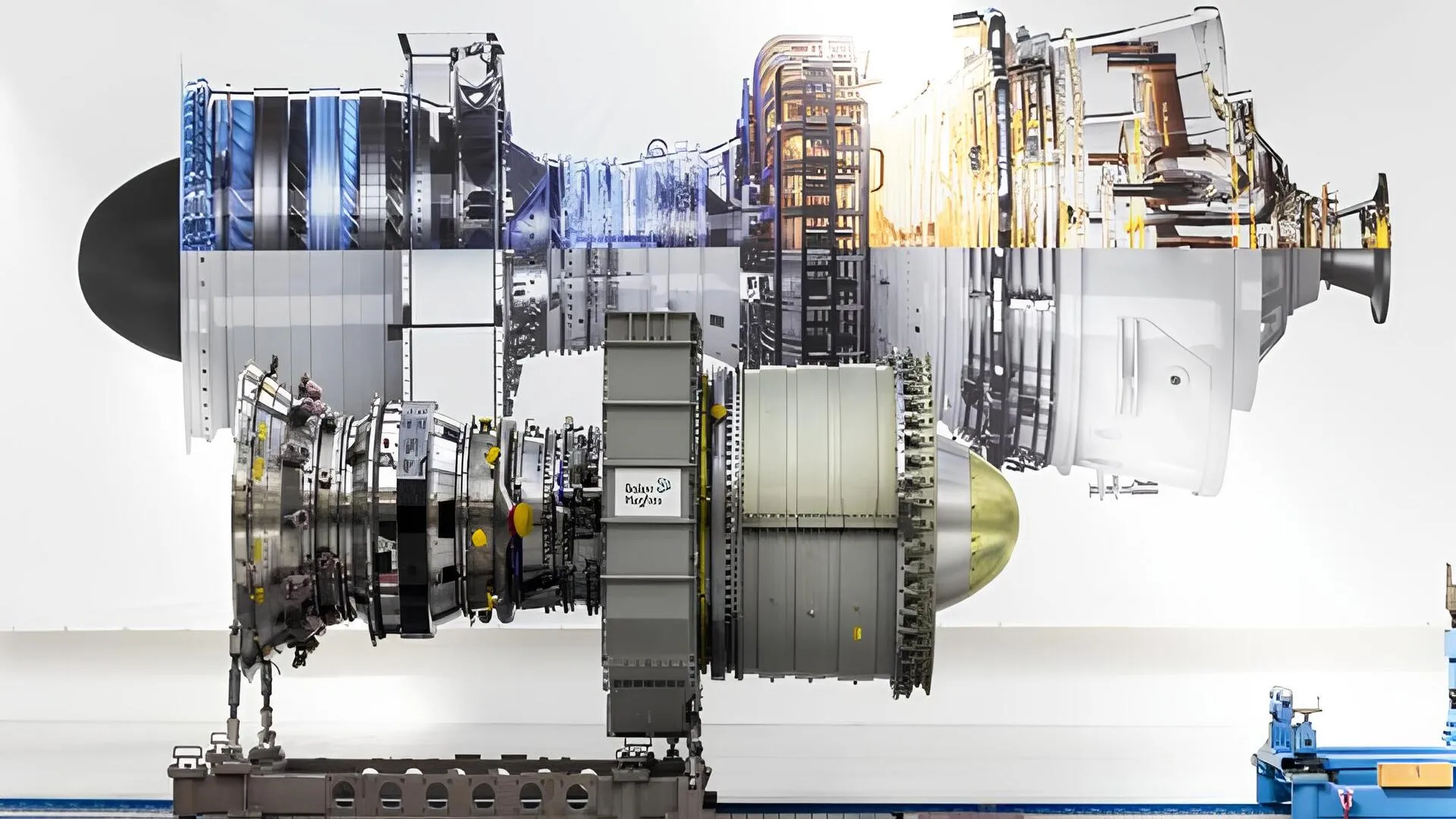
Baker Hughes has been selected to supply liquefaction equipment for Commonwealth LNG‘s ambitious liquefied natural gas (LNG) project located in Cameron, Louisiana. This agreement, awarded by Technip Energies, includes 6 LM9000 turbomachinery trains paired with high-performance centrifugal compressors.
What is the project about?
The project involves the construction of an LNG export plant at an important hub for the export of U.S. gas. It will have a capacity of 9.5 million tons per annum (MTPA) of LNG and will be equipped with state-of-the-art technology aimed at reduce emissions and optimize and optimize energy consumption.
For the project’s parent company, Caturus, this development represents a centerpiece in its plan to position itself as the most relevant independent player in the U.S. natural gas market. natural gas market in the United States.. Its CEO, David Lawler, underlined that this investment supports both the group’s financial and operational commitment to meet the growing global demand for LNG under more sustainable parameters.
What exactly is Baker Hughes going to supply?
The company will supply 6 trains of mixed coolant turbomachines, where each consists of:
- An LM9000 gas turbine: This is the engine, a highly efficient turbine derived from aeronautical technology.
- Centrifugal compressors: These compressors compress the refrigerant that cools the natural gas.
- It also includes associated services such as commissioning, spare parts and warranty.
The LM9000 turbines stand out for their greater than 44% efficiency, compact design and longer mean time between maintenance (MTBM).
Next steps of the project
Commonwealth LNG plans to make its final investment decision in the first quarter of 2026, a step prior to full-scale construction. Technip Energies had previously been awarded the engineering, procurement and engineering, procurement, and construction (EPC) contractcontract for US$1.16 billion.
Overall, this development represents not only a technological evolution, but also a strategic move on the global LNG map, with direct impact on energy security and decarbonization.
Source: Baker Hughes