
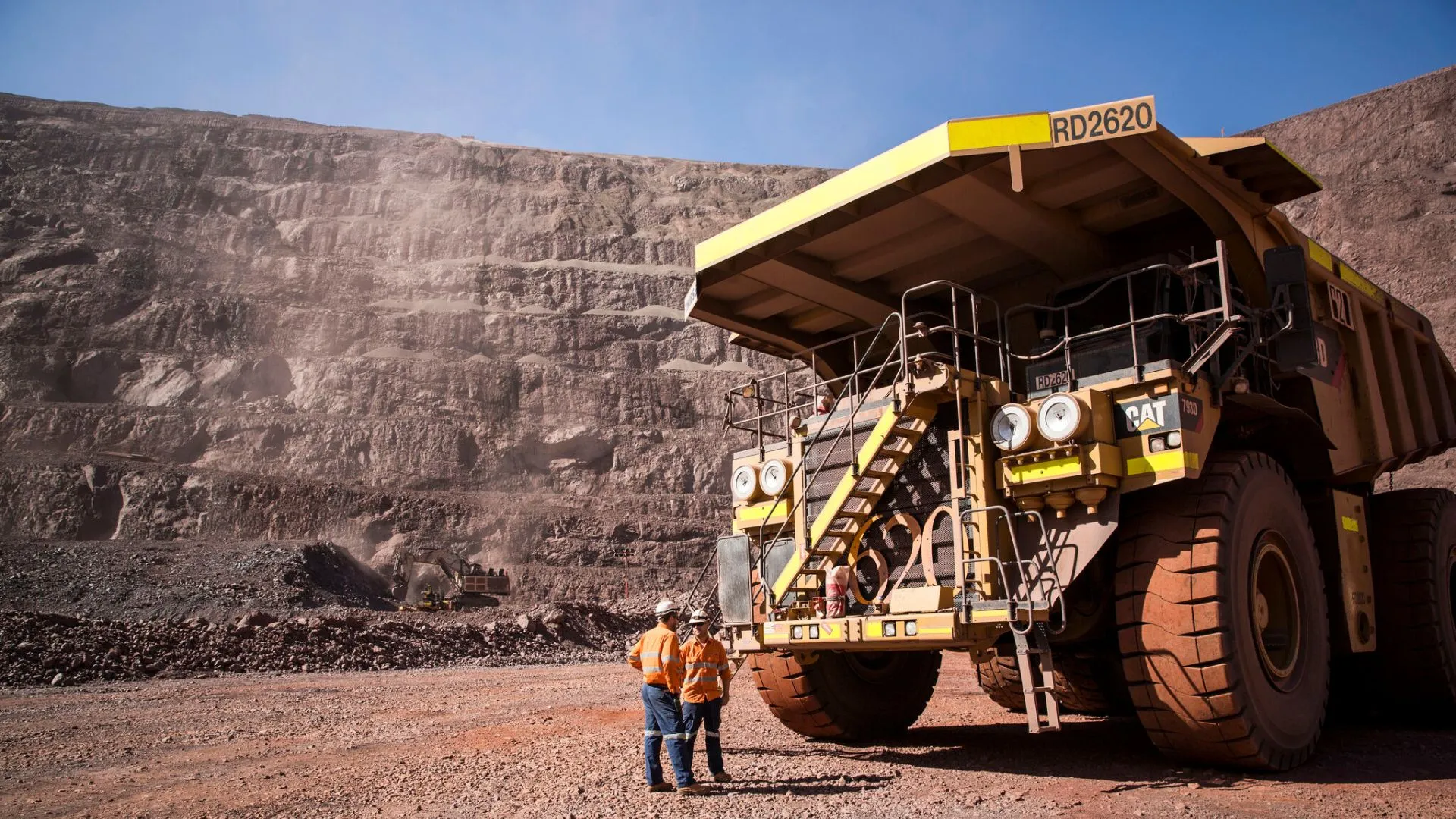
Australia’s mining industry is entering a phase of consolidation and sustained expansion, marked by a robust project pipeline and a regulatory framework that provides stability to the extractive sector. This dynamism is expected to significantly boost production of several key minerals over the next five years.
Australian mining boost in iron ore and gold
At the heart of the growth is iron ore, whose production is projected to increase from 967.2 million tons in 2025 to 1.11 billion tons in 2030. This trend will be supported primarily by replacement mines and operational expansions in Western Australia.
In parallel, gold will experience a significant rebound: it is expected to jump from 10.2 million ounces to 13.2 million ounces in the same period, leveraged by projects such as Hemi and improvements in established operations.
Minerals for future energies
Lithium, essential for the energy transition energy transitionLithium, essential for the energy transition, will maintain sustained growth despite a context of oversupply. Production will rise from 114 to 147 kilotonnes by 2030, with key contributions from deposits such as Kathleen Valley and Mt. Holland. In the same vein, uranium will grow to 6.6 kilotonnes, underpinned by the reactivation of Honeymoon and new developments such as Beverley and Westmoreland.
Bauxite, despite facing limitations in new discoveries, will maintain a stable production line thanks to the Cape York operations and expansions at Bauxite Hills. Coal will increase slightly in volume, from 465.3 to 482.8 million tons in the forecast period, balancing mine closures with new regulatory approvals.
Downgrades in mature minerals
In contrast, lead and zinc production will register notable declines. Lead will fall from 466.8 to 442.6 kilotonnes and zinc from 1.13 million to around 1.0 million tons, affected by closures of mature mines such as Rosebery and Cannington. Manganese will also experience a significant contraction due to the depletion of deposits at Groote Eylandt.
With 96 estimated projects and more than 22,000 projected jobsthe Australian mining Australian mining is shaping up to be a central component of the national economy by 2030. Long-term planning, coupled with a privileged geological base and predictable regulatory conditions, consolidate the country as one of the world’s leading mining hubs.
Source: Mining Technology
Photo: Australian Resources and Energy Employers Association