
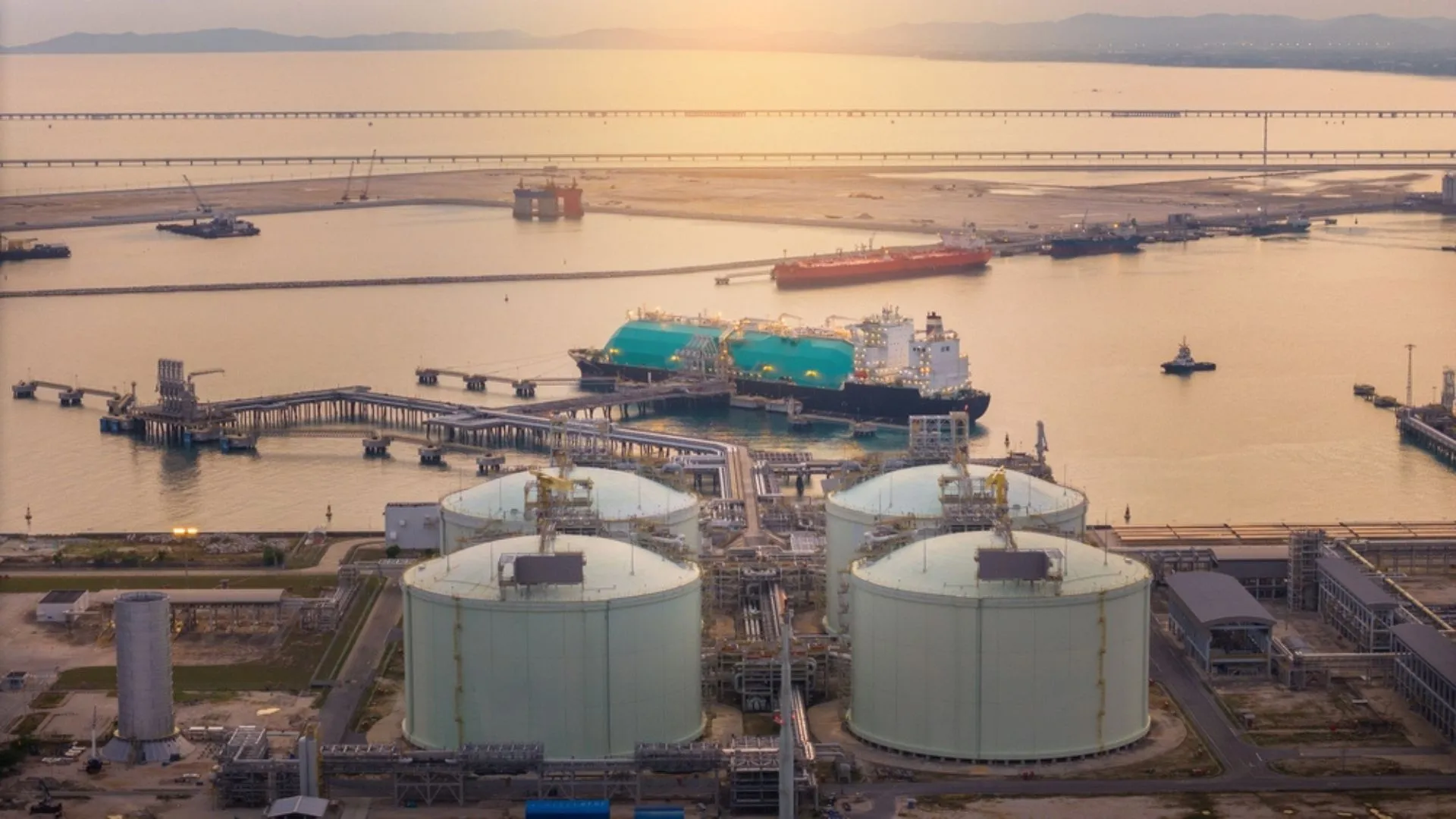
Australia, the world’s third-largest liquefied natural gas exporter, has begun sending shipments to destinations as unusual as eastern Canada and Turkey, marking a shift away from its traditional Asian customers. This change responds to weak demand in Asia, especially in China, which is leading Australian producers to seek new buyers in the spot market.
China, which in previous years led LNG imports, now shows signs of cooling. The Asian country’s purchases will fall to 3.38 million tons in February, their lowest level since April 2018. In response, some shipments previously destined for Asia have been redirected to Europe and North America. Even Beijing has begun reselling shipments with flexible destination clauses, a clear sign of oversupply.
New International Destinations for Australian LNG
One of the most representative cases of this shift is the LNG carrier “Maran Gas Hector“, which departed Australia over a month ago and is about to dock in eastern Canada after a voyage of 16,000 nautical miles. This will be the first shipment recorded on that route since at least 2008, according to Kpler data. In parallel, another shipment was dispatched to Turkey, an unusual market for Australian LNG since 2017.
While Asia pulls back, Europe intensifies its purchases. The region is on track to close February with a new import record, taking advantage of lower spot prices due to reduced Chinese pressure. This scenario has opened a window of opportunity for Australian exporters, who are managing to place shipments in non-traditional markets, benefiting from geographic diversification and falling prices.
The Spot Market Takes Center Stage Globally
Seasonality has also had its effect: current shipments are being scheduled for April, when winter demand has already ceased and summer demand has not yet begun. This has left the spot market as the most flexible route for producers who need to quickly sell surpluses and for buyers who take advantage of the situation to stock up at better prices.
Thus, with Asia cooling and Europe absorbing additional volumes, Australia is reconfiguring its export routes, expanding the range of destinations and adapting to an increasingly volatile global market.
Source: Oil Price
Photo: Shutterstock