
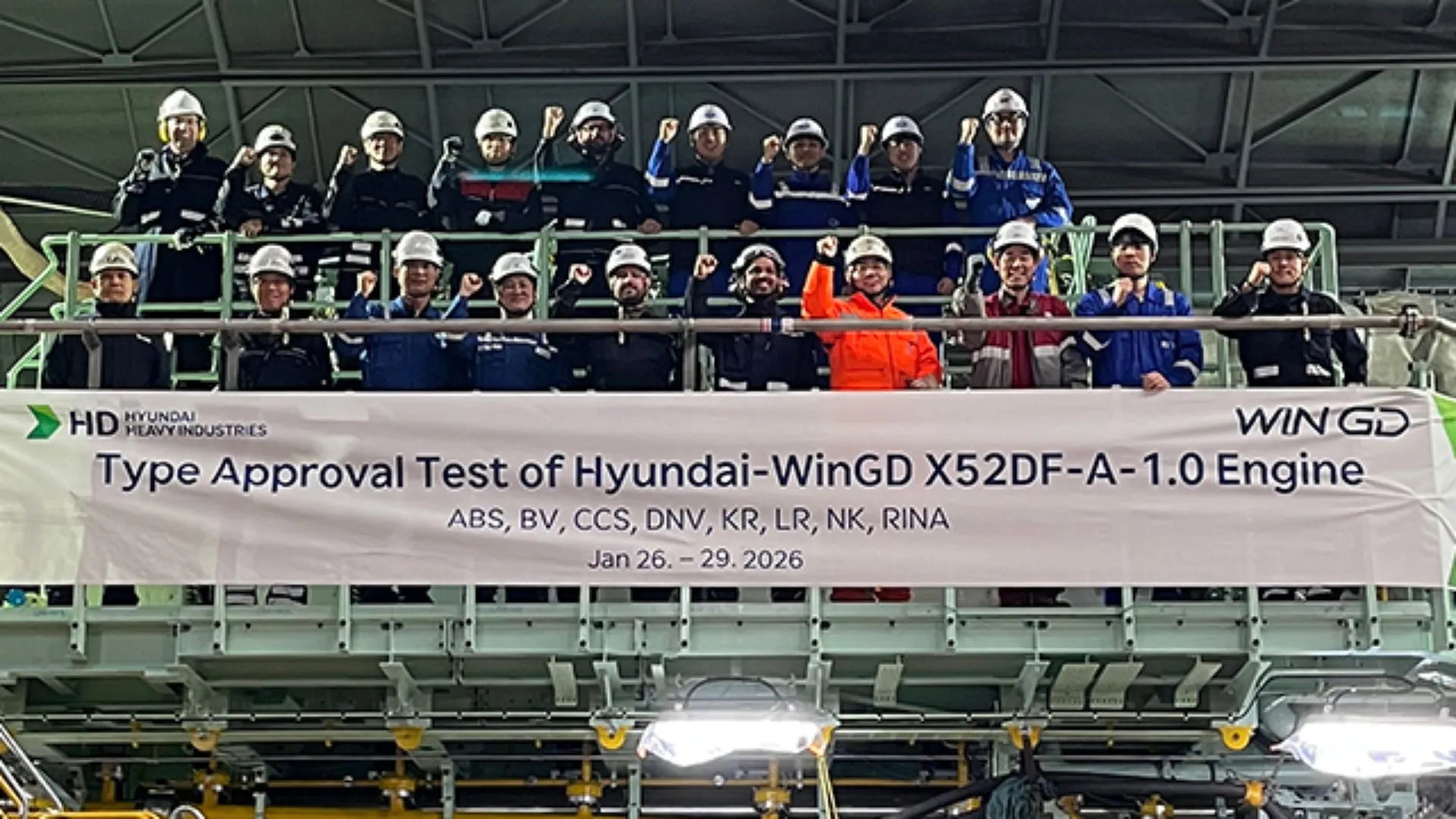
The race towards the decarbonization of maritime transport has taken a key step with the validation of the first ammonia-fueled two-stroke engine. WinGD, the Swiss marine technology firm, successfully completed the Type Approval Tests (TAT) and Factory Acceptance Tests (FAT) of its X52DF-A-1.0 model, developed in collaboration with HD Hyundai Heavy Industries (HHI-EMD).
The tests, conducted at HHI-EMD’s facilities in South Korea with the presence of Lloyd’s Register and other classification societies, solidify the viability of ammonia as a marine fuel. The engine, which will be integrated into a 46,000 m³ gas carrier commissioned by EXMAR, has demonstrated stable and safe performance, with NOx and N2O emissions well below levels generated by conventional diesel.
Ammonia marine engine with operational efficiency and safety
The X52DF-A combines high-pressure direct ammonia injection with a reduced pilot fuel dose, ensuring operational efficiency without compromising safety. Its dynamic response and load handling are comparable to X-series diesel engines, allowing shipowners to adopt clean technologies without sacrificing reliability.
EXMAR, a specialized ammonia transport operator, has actively participated in the testing program since 2021. The collaboration between manufacturers, classification societies, and operators has been key to validating all critical systems on land. Sea trials are expected to begin in the coming months, with the first engines already prepared for service.
Ammonia gains traction in the marine industry
With nearly 30 confirmed orders for the X-DF-A engine across different segments (bulk carriers, gas carriers, tankers, and container ships), the adoption of ammonia as a fuel is gaining ground. WinGD emphasizes that the knowledge gained in the engine’s development will be applied across the entire series, ensuring consistent performance and regulatory compliance.
The completion of the TAT and FAT tests not only validates the engine’s design but also positions WinGD and HHI-EMD as leaders in sustainable propulsion technology. The developed solution offers a real and mature alternative for those seeking to adapt to market demands and advance towards net-zero emission operations.
Source and photo: WinGD