
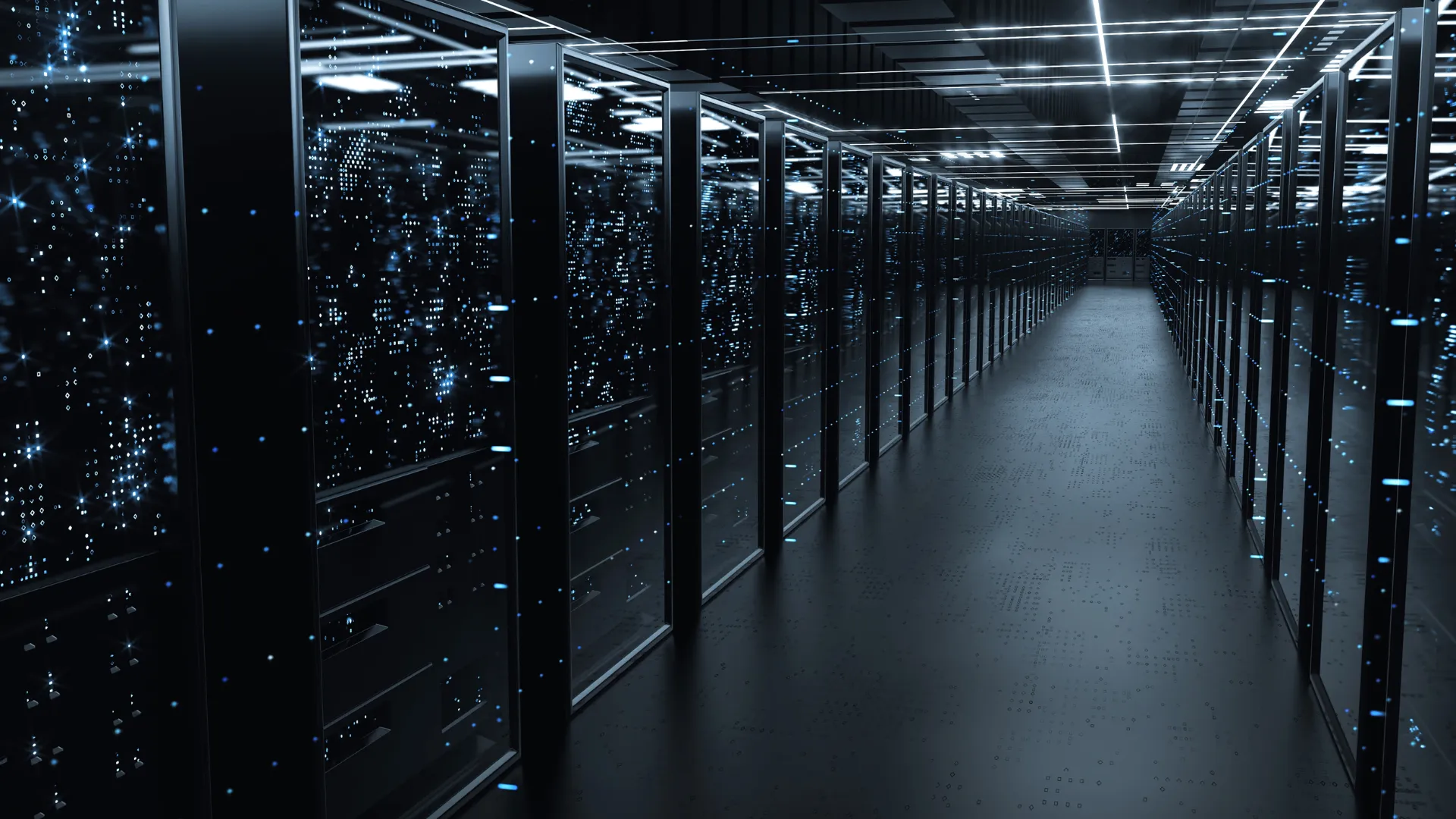
The $100 billion investment announced by Adani Group represents one of the world’s largest commitments to autonomous AI infrastructure. It is not just data centers, but an integrated model that brings together power, transmission and high-performance computing.
The project seeks to position India as a leader in the new Intelligence transformation, a concept promoted by Gautam Adani. The goal is for the country not to be a consumer of AI, but an exporter of technological capabilities.
The strategy envisions this direct investment catalyzing another $150 billion in manufacturing, sovereign cloud and associated services, forming a $250 billion ecosystem by 2035.
5 GW to create the world’s largest AI platform
The technical centerpiece of the announcement is the expansion to 5 GW of hyperscale data center capacity, overcoming conventional models of fragmented expansion. The architecture integrates renewable generation, power grid and parallel processing.
The plan builds on AdaniConneX, whose national platform already has 2 GW and now plans a strategic expansion to gigawatt scale.
Partnerships with Google, Microsoft and Flipkart consolidate campus deployments in Visakhapatnam, Noida, Hyderabad and Pune, strengthening high-performance computing and AI workloads.
Green energy underpins the digital revolution
One of the most disruptive elements is the direct link between renewable energy and data centers. As AI increases global electricity consumption, Adani’s model prioritizes carbon-neutral generation.
Power back-up comes from Adani Green Energy’s Khavda project, with 30 GW planned and more than 10 GW already operational. In addition, the renewable portfolio is expected to expand with additional investments of US$55 billion.
The integration includes BESS storage and advanced transmission networks, creating electrical resiliency to support GPU clusters and large, locally developed language models.
Technological autonomy and resilient chains
The concept of sovereign AI infrastructure goes beyond computational capacity. It includes domestic manufacturing of transformers, power electronics and thermal systems to reduce risks in the global chain.
This strategy aligns with national priorities such as PM Gati Shakti, integrating AI in logistics, ports and heavy industry for smart and safe operations.
In addition, part of the GPU capacity will be reserved for startups and research institutions, democratizing access to high-performance computing and strengthening the national technology ecosystem.
Photo: Shutterstock