
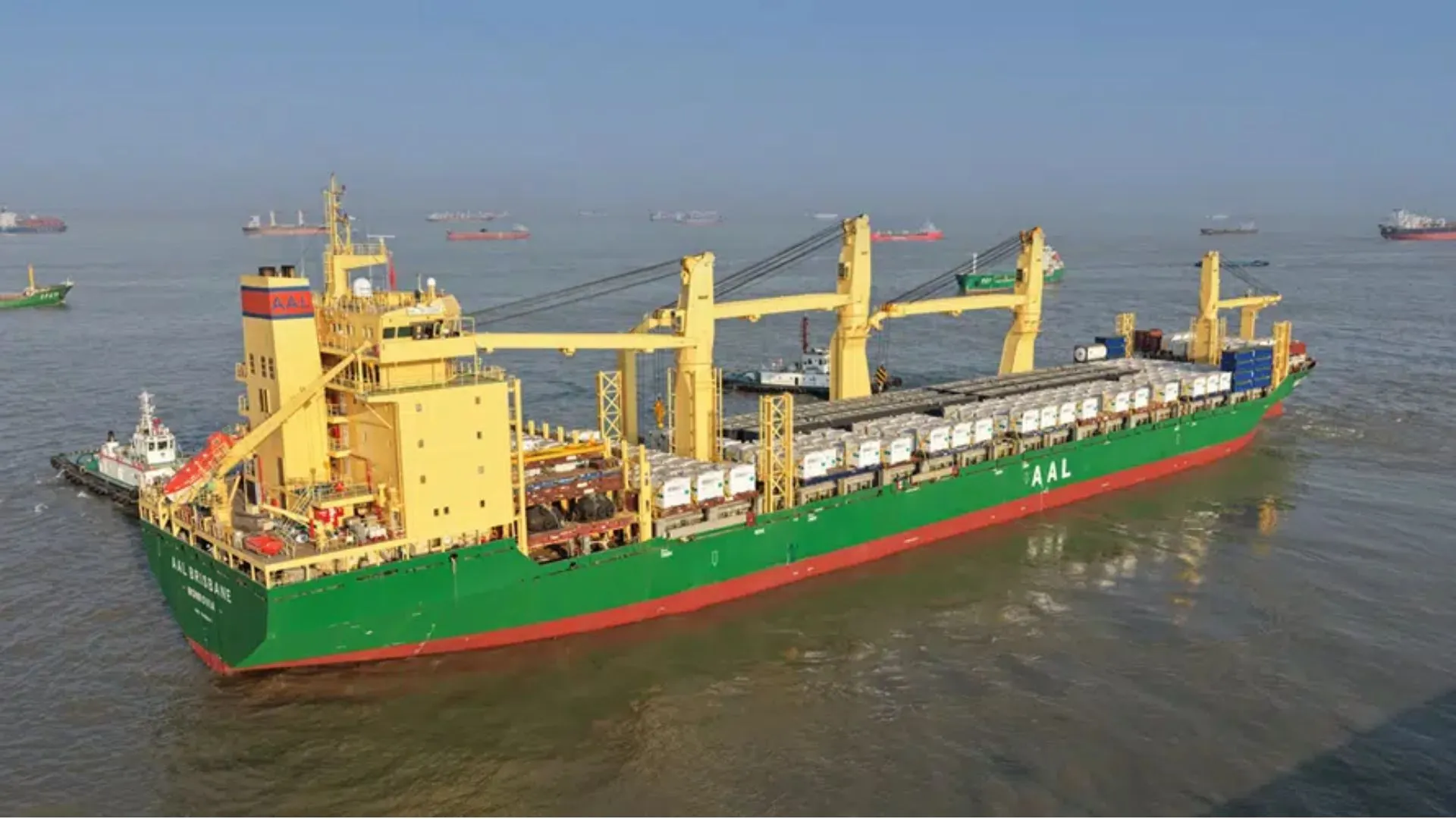
AAL Shipping has successfully completed the shipment of 192 units of BESS systems from Taicang, China to Newcastle, Australia. These units are part of a total of 720 units that will power one of the world’s largest grid-connected storage projects in Australia. grid-connected storage projects in Australia.
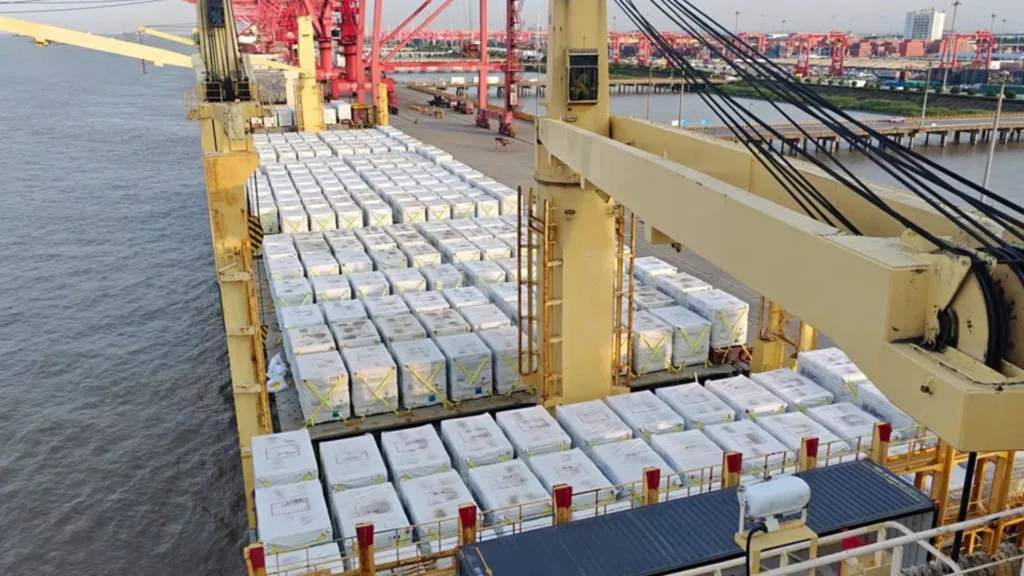
Each BESS unit, consisting of lithium-ion batteries classified as dangerous goods UN3480, weighs 14 tons and has dimensions exceeding 3 meters in length. The multipurpose vessel AAL Brisbane, with a heavy lift capacity of 31,000 deadweight tons, was tasked with transporting this cargo using its 3,000 m² upper deck, in strict compliance with IMO regulations on the transport of dangerous goods.
Engineering and planning for safe transportation
One of the main challenges was the pre-shipment preparation, which included welding work for the installation of mooring rings and meticulously designed stowage. Jack Zhou, AAL’s senior representative in China, stressed the importance of accurate execution of the positioning and lashing plan, highlighting the collaboration between the crew and the specialized surveyors.
The shipment was made within the shipping company’s Asia-Australia liner service, which has been optimized to serve energy projects with complex technical requirements. This is not the first time that AAL has carried out this type of operation: in 2025 alone, the company mobilized nearly 3,000 units of BESS units on 29 different voyages, consolidating its experience in handling this type of solution.
Energy transition and installation of BESS systems
The delivered BESS units will be installed on the site of a former power plant. power plantconverted to store energy from renewable sources such as solar and wind. The first phase of the project will supply electricity to some 800,000 households, with capacity expected to increase toThe capacity is expected to increase by more than 50% in future phases.
This type of project has become essential to stabilize electricity grids that incorporate renewable energies intermittent renewable energies. With the increasing impossibility of using conventional containers to transport such units, vessels such as the AAL Brisbane represent an indispensable solution, thanks to their deck strength, crane capacity and regulatory compliance.
Industry outlook and AAL’s commitment
With global installed capacity now exceeding 300 GWh, BESS solutions have become a key component of the energy transition. AAL Shipping reaffirms its commitment to invest in technical capabilities, safety and compliance to continue to lead this growing segment.
Zhou concluded by noting that the growth in unit size, coupled with regulatory tightening and accelerating demand, demands a robust and specialized response from the shipping industry. AAL is thus positioning itself as a strategic partner in the clean energy supply chain.
Source and photos: AAL Shipping