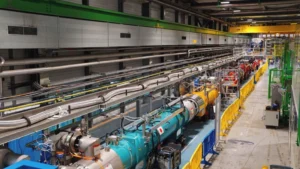
Science continues to provide the knowledge base behind many of the breakthroughs transforming industry, energy and technology. This section covers news on research, discoveries, scientific applications and emerging findings that expand understanding in areas essential to industrial progress and technical development.
Coverage includes advances in materials, physics, chemistry, energy, environmental science and other disciplines influencing industrial innovation and the response to complex technical challenges. It also highlights scientific studies, research projects, institutional collaborations and findings that support the development of new technologies, processes and industrial solutions.
Through these stories, Science follows the research, discoveries and scientific contributions that continue to shape innovation, process improvement and the evolution of modern industry.