
MPD redefines the extension of the offshore SSV Victoria
The 1,455-day extension of the semi-submersible SSV Victoria, owned by Ventura Offshore Holding, not only represents an additional $466 million in revenue but also introduces a differentiating technical element: the installation of a Managed Pressure Drilling (MPD) system during its next dry dock.
This detail, often underestimated in corporate announcements, marks a significant shift in ultra-deepwater operational strategy. MPD allows for more precise control of wellbore pressure, reducing risks associated with narrow pore pressure and fracture windows.
In the context of the Búzios field in the Santos Basin, where geological conditions are complex, the adoption of MPD is not an incremental improvement but a critical advantage for optimizing drilling times and minimizing non-productive time (NPT).
Búzios demands precision in ultra-deepwater
The deployment of the SSV Victoria in Búzios responds to the growing technical complexity of Brazilian offshore developments. This field, one of the most productive in the pre-salt layer, demands advanced solutions to maximize operational efficiency.
With the capacity to operate in water depths of up to 10,000 feet and drill up to 40,000 feet, the sixth-generation rig is positioned as a robust unit. However, it is the integration of MPD that elevates its technological profile compared to other similar units.
The possibility of unilateral termination starting from day 910 also introduces contractual flexibility for Petrobras, reflecting a balance between long-term commitment and adaptability to market conditions or operational performance.
Atlantic Zonda optimizes revenue with adjusted rates
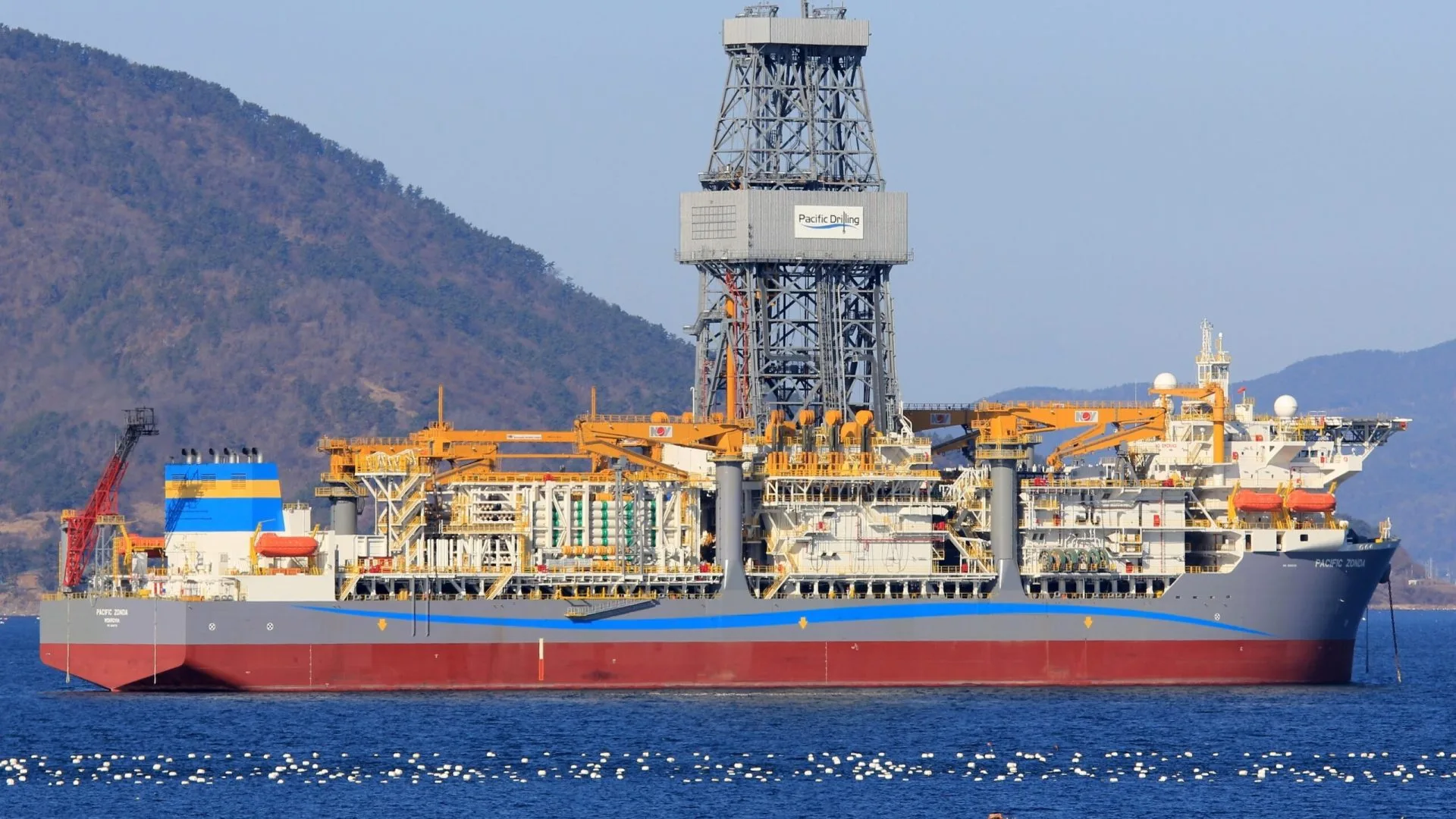
For its part, the drillship Atlantic Zonda secures a 365-day extension that prolongs its operations until at least the second quarter of 2029, adding approximately $145 million in additional backlog.
The most interesting technical-financial component lies in the rate structure: a temporary reduction in the day rate until 2028, followed by the restoration of adjusted original rates. This scheme reflects a strategy to optimize utilization in a market still sensitive to demand cycles.
As a seventh-generation unit, the Zonda can operate in depths of up to 12,000 feet, consolidating itself as an essential component in the portfolio managed by Ventura Offshore, especially in high-demand technical environments.
Backlog visibility and long-term strategy
Together, both extensions add more than $600 million to the order backlog, strengthening Ventura Offshore’s financial visibility in the medium term. This aspect is crucial in a sector where capital planning depends on long-term contracts.
Beyond the numbers, the emphasis on safe and consistent operational performance reinforces the relationship with Petrobras, one of the most demanding operators in deepwater offshore. Contractual continuity is, in itself, an indicator of technical reliability.
The incorporation of technologies such as MPD, along with flexible contractual strategies, suggests that Ventura Offshore is not only seeking to secure revenue but also to position itself as a technologically competitive provider in the demanding Brazilian ultra-deepwater market.
Source and Photo: https://ventura-offshore.com/