
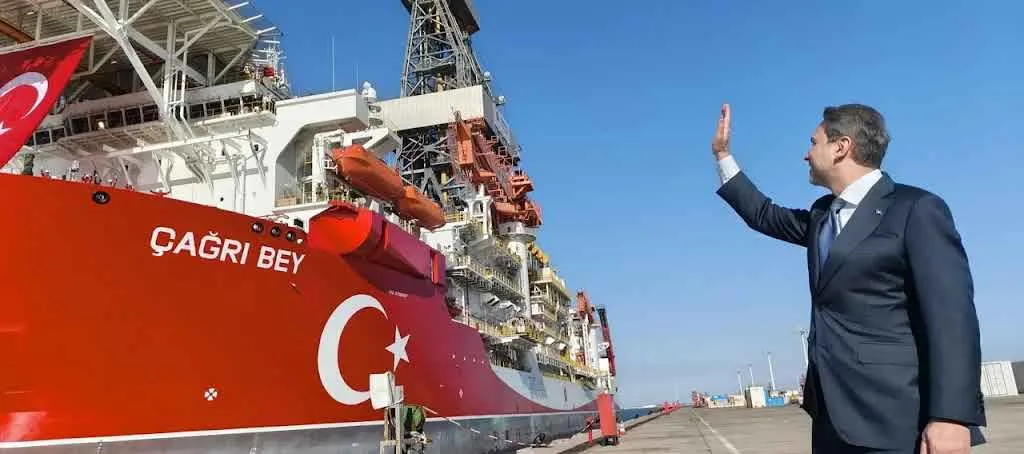
Turkey reaches global top 4 in offshore fleet
The expansion of Turkey’s energy fleet marks a turning point in its energy independence strategy. With the addition of two new seventh-generation ultra-deepwater drilling vessels, the country reaches six active units, consolidating its position as the world’s fourth operator in combined offshore capacity.
This positioning is not only quantitative, but also qualitative. The integration of drilling and seismic vessels enables a complete exploration cycle: data acquisition, geological interpretation, and well execution, reducing timelines and reliance on international contractors.
From a technical perspective, this evolution implies greater control over exploration campaigns in deep waters, optimization of costs per barrel discovered, and a significant improvement in exploration success rate.
Black Sea: core of gas development
The main focus remains the development of the Sakarya field in the Black Sea, considered the largest global offshore discovery of 2020, with approximately 720 billion m³ of natural gas.
Current operations include new wells such as Kandıra-2 and Eflani-1, executed by high-capacity units such as the Fatih and the Abdülhamid Han. These campaigns aim to expand proved reserves (1P/2P) and accelerate the production curve.
From an engineering standpoint, the development of Sakarya involves significant challenges: deepwater completions, pressure control in complex formations, and the design of integrated subsea systems for sustained production.
International expansion: first well in Somalia
In parallel, Turkey begins its international offshore expansion with the drilling of the Curad-1 well off Somalia, marking a significant technical milestone: its first drilling vessel operating outside the country.
The Çağrı Bey vessel will carry out operations in areas previously assessed seismically by the Oruç Reis, which reduces geological uncertainty and enables more targeted drilling based on 3D seismic attributes.
This move reflects a classic energy internationalization strategy: diversification of the exploration portfolio, access to new petroleum provinces, and geopolitical positioning in emerging regions.
Technical capabilities: ultra-deepwater drilling
New vessels such as the Yıldırım significantly enhance the technical capabilities of Turkey’s fleet. With drilling depths of up to 12,000 meters, dynamic positioning (DP) systems, and operations in adverse metocean conditions, Türkiye enters the offshore technological elite.
In addition, units such as the Yavuz incorporate dual-derrick systems, enabling simultaneous operations, which reduces non-productive time (NPT) and improves operational efficiency.
Seismic support, led by vessels such as the Barbaros Hayreddin Paşa and the Oruç Reis, completes the technological ecosystem, with data acquisition capabilities down to 15,000 meters below the seabed, essential for advanced geological modeling.
Source and Photo: https://www.dailysabah.com/