
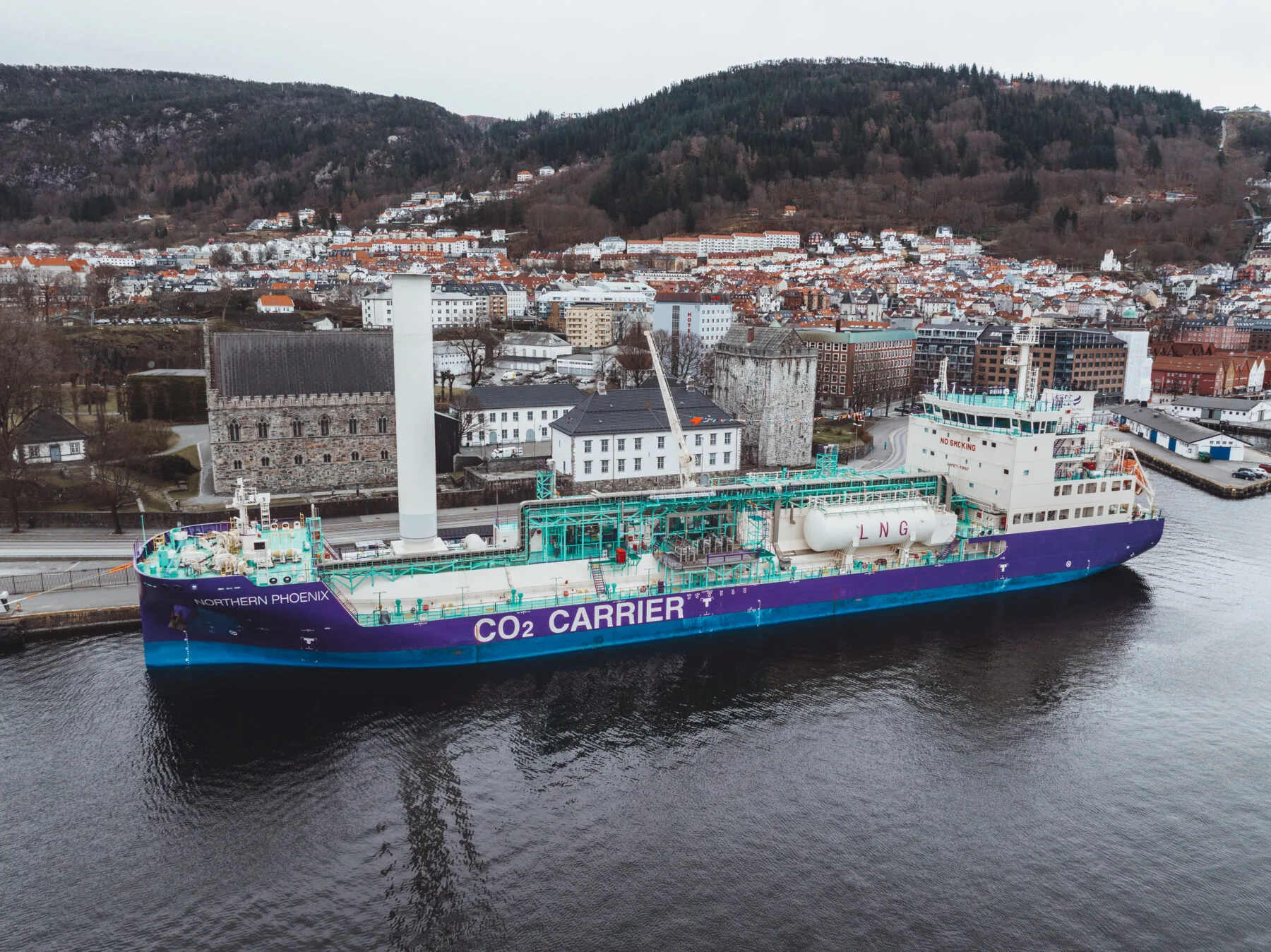
CO₂ transport: the real constraint
The deployment of the Northern Phoenix vessel by Northern Lights JV marks a turning point in Europe’s carbon capture and storage (CCS) infrastructure.
Beyond the symbolism of its christening in Bergen, the most relevant fact is the consolidation of liquefied CO₂ maritime transport as a strategic link in the CCS value chain.
While capture technologies have matured, transport logistics remain the main constraint on scaling solutions at an industrial and cross-border level.
Naval engineering for large-scale liquefied CO₂
Northern Phoenix has been designed specifically for transporting CO₂ in liquid state, which entails technical challenges related to cryogenics, pressure, and operational safety.
This type of vessel requires advanced containment systems, thermal management, and pressure control to ensure CO₂ stability during maritime transport.
Its integration into the logistics chain makes it possible to connect industrial emitters, such as Yara International, with geological storage infrastructure, enabling continuous and safe flows.
Øygarden: a strategic geological storage hub
The transported CO₂ will be received at the Øygarden terminal, where it is compressed and injected to approximately 2,600 meters below the seabed.
This approach makes offshore storage a leading technical solution to ensure permanent containment, minimizing leakage risks and ensuring long-term integrity.
The infrastructure is part of the Longship project, considered one of the most advanced global developments in industrial-scale CCS.
CCS as a service: toward industrial decarbonization
Northern Lights’ business model introduces the concept of “CCS as a Service,” where industrial emitters outsource CO₂ transport and storage.
Companies such as Equinor, TotalEnergies, and Shell support this initiative, consolidating a collaborative ecosystem for decarbonization.
In this context, Northern Phoenix is not just a vessel, but a logistics enabler that makes it possible to scale CCS from pilot projects to interconnected industrial networks across Europe.
Source and photo: https://norlights.com/news/