
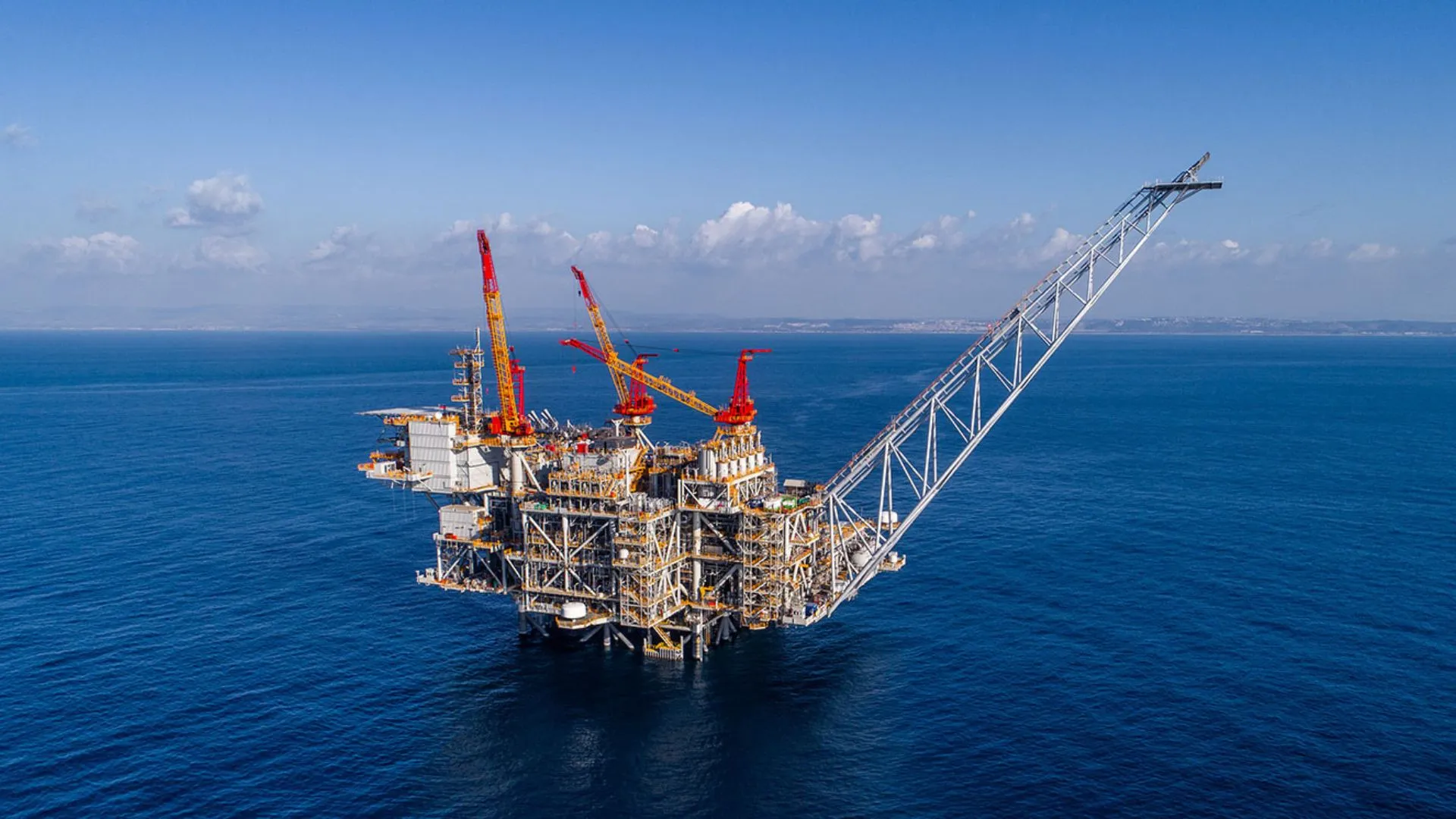
Leviathan restarts after a period without active production
The resumption of the Leviathan field marks a technical strategy for energy stability in the Eastern Mediterranean, following a 33-day shutdown due to regional security reasons. Operator Chevron received official authorization to restart operations on March 31, 2026.
The most relevant data point is precisely the duration of the interruption: 33 days of production inactivity with no material impact on expected cash flow. This factor redefines the asset’s operational resilience to external, non-technical events.
From a technical standpoint, this suggests a robust strategy of financial redundancy and production planning, supported by Brent price projections and previously calibrated discounted cash flow models.
Technical impact on cash flow and stable production
Despite the interruption, estimates indicate there will be no significant impact on projected 2026 revenues. This outcome is particularly relevant for high-capacity offshore assets such as Leviathan.
The financial performance demonstrates efficient management of operational buffers, supply contracts, and flexibility in gas delivery, which mitigates losses during unplanned shutdown events.
From a technical perspective, this also implies that the system’s recovery capability—including wells, flowlines, and processing facilities—remained within optimal parameters, preventing production degradation after the shutdown.
Ownership structure and risks of state compensation
The Leviathan project maintains an ownership structure led by NewMed Energy (45.34%), followed by Chevron (39.66%) and Ratio Energies (15%). This distribution directly influences risk management and operational decisions.
An essential element in the assessment is the potential state compensation for the interruption. However, there is no certainty regarding its approval or scope, which introduces a relevant short-term financial variable.
Technically, this scenario opens the debate on risk-hedging mechanisms in offshore projects exposed to geopolitical factors, where operational continuity depends not only on mechanical integrity, but also on the security environment.
Source: https://newmedenergy.com
Photo: Shutterstock