
Table of Contents
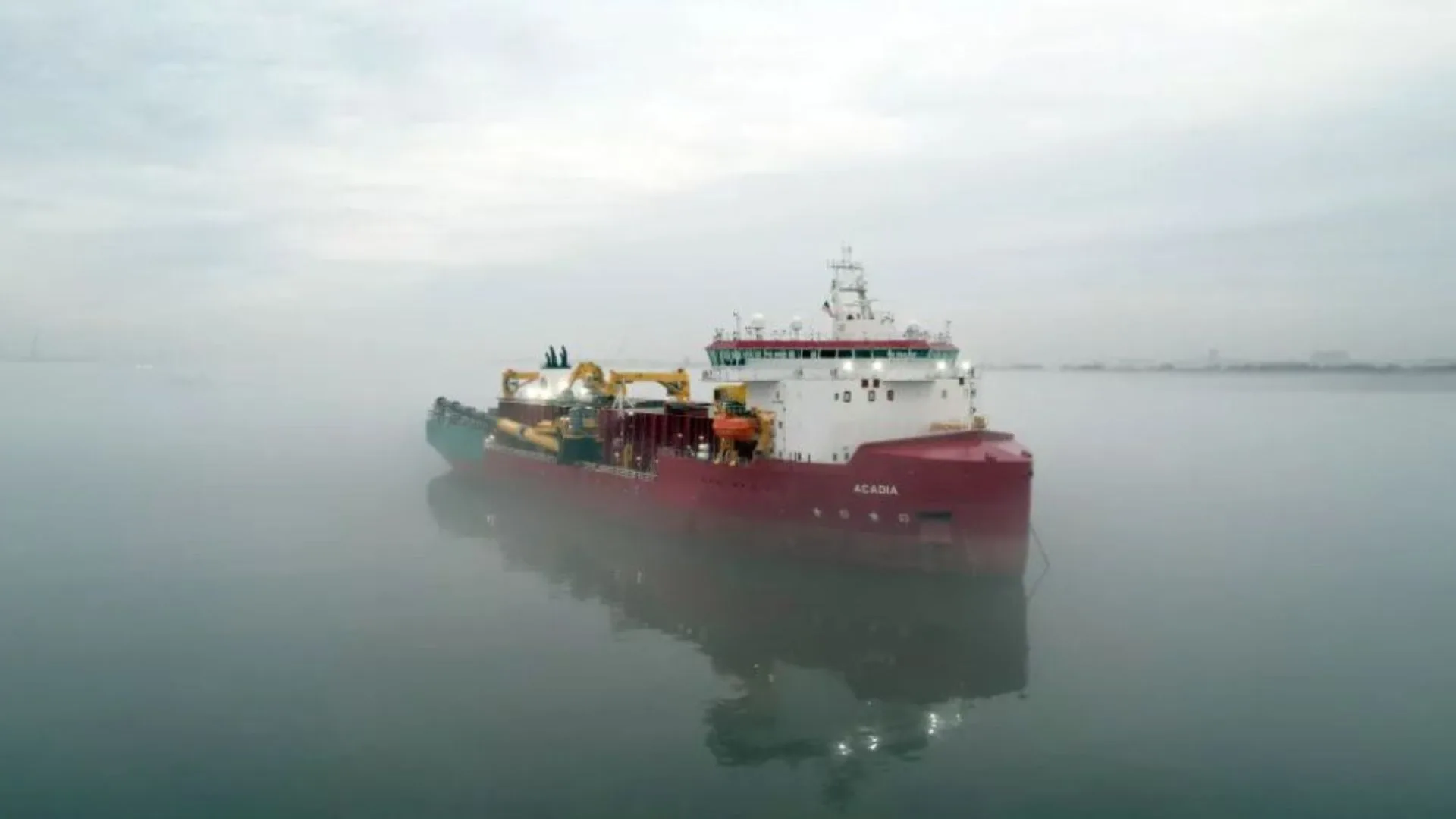
The Acadia subsea rock installation vessel, owned by Great Lakes Dredge & Dock Company (GLDD), has begun its dynamic evaluations after leaving the shipyard. The design was developed by Norwegian firm Ulstein Design & Solutions, representing an integration of European technology with North American execution capability for local regulatory compliance.
Sea Trials of the Acadia Vessel
Regarding its technical specifications, the Acadia stands out for its robustness and operational efficiency. Based on the Ulstein S211 model, the vessel has a transport capacity of up to 20,000 tons of rock. This cargo volume is essential for foundation and cable protection tasks at offshore wind farms.
Furthermore, the importance of this project lies in its technical exclusivity within U.S. territory. As an industry professional, I observe that the SRIV configuration enables precise discharge of materials onto the seabed through automated systems.
The coordination between GLDD and Ulstein has enabled the vessel to meet the most demanding safety and environmental performance standards required by today’s energy industry.
Finally, the deployment of the Acadia will facilitate the expansion of large-scale renewable projects on the East Coast. The ability to operate with optimized logistics and reduced cycle times positions this unit as the most relevant asset for subsea protection in the region.
Once current sea trials are completed, the vessel will immediately begin commercial operations to meet the growing demand for offshore infrastructure.
Source and photo: Ulstein