
Hot Tapping without DBB: The Critical Final Hidden Risk
For decades, in-service drilling operations have been considered safe under robust isolation schemes. However, there was an overlooked structural vulnerability in the final stage.
The advanced engineering solution that redefines this news is compelling: at the end of the operation, the system lost the DBB standard, becoming exposed to a single, unverifiable seal.
This technical contradiction created a gap in barrier integrity, where safety depended on an O-ring without prior validation capability.
SureTap®: real verifiable double seal engineering
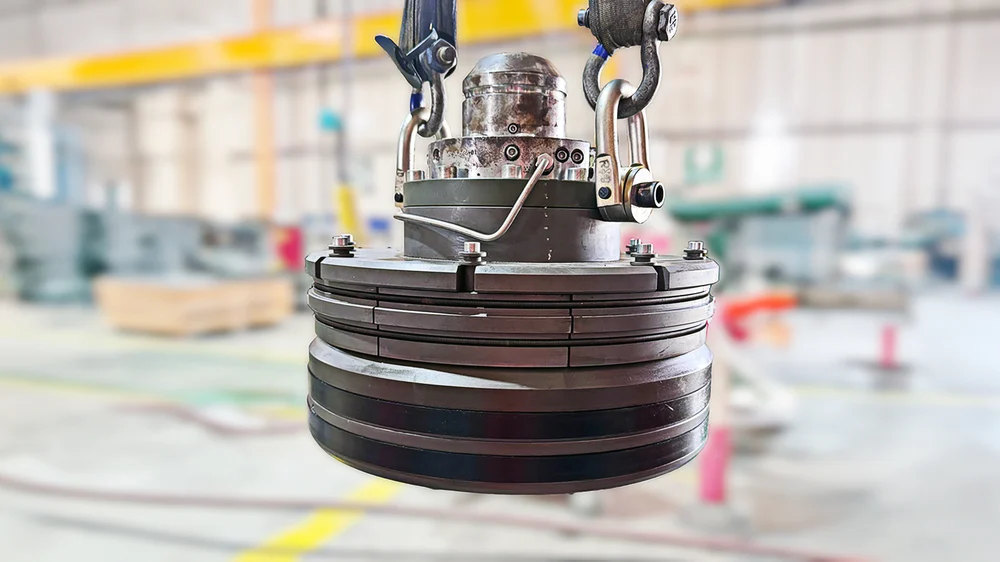
The new SureTap® from STATS Group introduces, for the first time, a completion plug with independent dual seals and a testable intermediate cavity.
This design allows for the verification of isolation integrity under the double block and bleed principle, even in the final phase of the process.
From an engineering perspective, this represents a paradigm shift: the barrier is no longer assumed but becomes measurable, verifiable, and certifiable in the field.
Mechanical Architecture: Safety with No Margin for Error
The system incorporates internal interlocking mechanisms that enforce correct positioning before seal activation, eliminating human error.
The inability to generate differential pressure without full activation of the safety mechanisms redefines the concept of “fail-safe” in this type of tool.
Furthermore, the optimized sealing profile increases the contact surface, improving performance even on flanges with imperfections after hot cutting.
Operational Impact and Applications in Critical Energies
Beyond safety, SureTap® reduces operational times by allowing earlier equipment demobilization, decreasing costs associated with hot tapping.
Its compatibility with hydrocarbons, hydrogen, and CO₂ positions it as a key solution for energy transition and high-pressure systems.
With a 25-year lifespan and no special licensing requirements, this technology not only corrects a historical problem but also redefines integrity standards in the industry.
Source: https://www.statsgroup.com/