
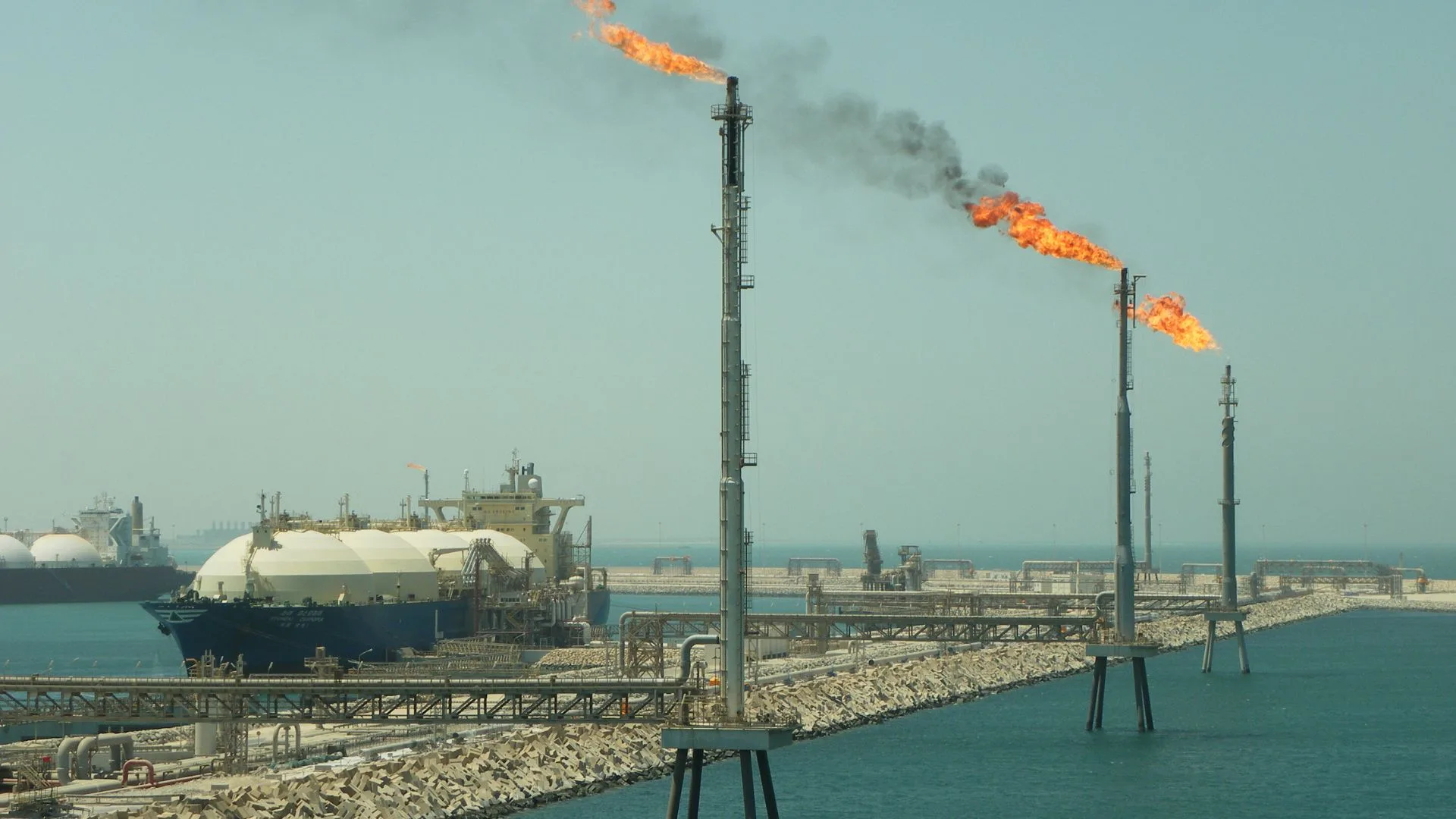
QatarEnergy confirmed on March 19 that recent missile attacks on Ras Laffan Industrial City took 17% of its liquefied natural gas (LNG) export capacity offline. Losses are estimated at $20 billion annually and repair work could extend up to 5 years.
Affected facilities include LNG trains 4 and 6, in which ExxonMobil holds equity stakes, as well as the Pearl GTL plant, operated by Shell. These assets were critical in supplying energy to strategic markets such as China, South Korea, Italy, and Belgium.
Force Majeure Declaration and Global Consequences
In official statements, the Minister of State for Energy Affairs and CEO of QatarEnergy, Saad Sherida Al-Kaabi, announced that the country will declare force majeure on several long-term LNG contracts, which could affect supply for a period of up to 5 years. This measure will directly impact customers in Europe and Asia.
The attacks also took one of the two trains at the Pearl GTL plant offline, which converts natural gas into high-quality liquid fuels and whose repair could take at least one year.
Impact on Qatar’s Energy Exports
The disruption affects not only LNG, but also associated products essential to the Qatari economy:
- Condensates: 18.6 million barrels lost (24% of exports)
- Liquefied petroleum gas (LPG): 1.281 MT (13%)
- Naphtha: 0.594 MT (6%)
- Sulfur: 0.18 MT (6%)
- Helium: 309.54 million cubic feet annually (14%)
These figures represent a drastic drop in Qatar’s capacity to supply international markets with energy products.
QatarEnergy Praises National Security Response
Minister Al-Kaabi emphasized that no casualties were reported thanks to the swift action of security forces and emergency teams from the energy sector. He described the attack as an assault on global energy stability and on the right to safe access to energy.
This was an attack against all who defend development and human progress, sustained by fair, reliable, and secure access to energy.
Minister of State for Energy Affairs and CEO of QatarEnergy, Saad Sherida Al-Kaabi.
Repercussions on Markets and Energy Diplomacy
The prolonged disruption in Qatari supply could impact international gas prices and trigger strategic moves among Asian and European importers. The force majeure declaration could lead to contract renegotiations, new energy alliances, and increased pressure on other global exporters.
The situation poses new geopolitical challenges in a key region for global energy supply.
Source: QatarEnergy
Photo: Wikipedia