
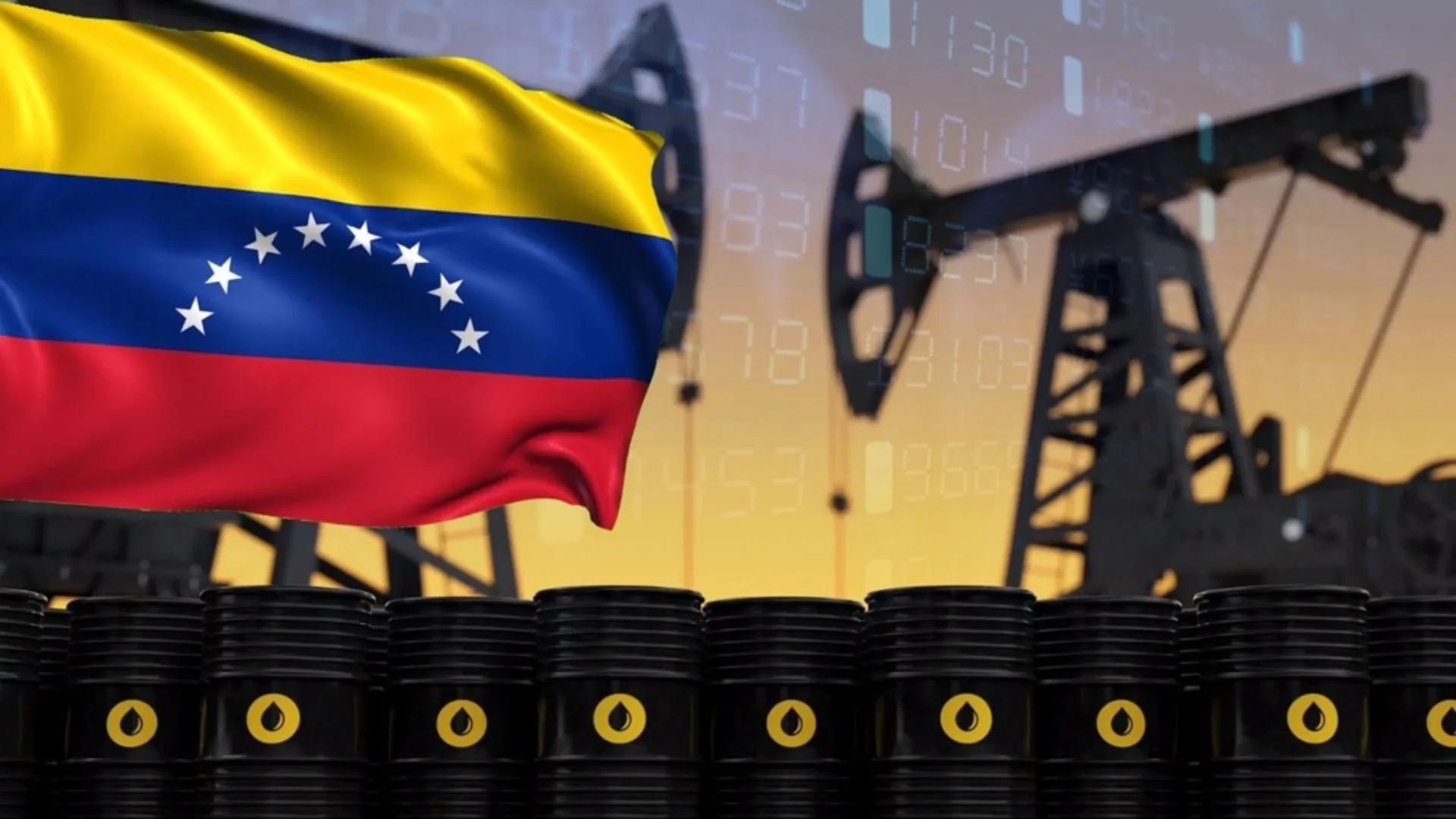
The global energy market is once again showing signs of reconfiguration following India’s increase in imports of Venezuelan crude, driven by supply disruptions from the Middle East.
According to data from tracking firms such as Kpler, the Asian country could receive up to 12.51 million barrels of Venezuelan oil during April, which would represent the highest monthly volume in more than six years. This increase also marks the return of cargoes from Venezuela after nearly a year of absence.
The Middle East crisis puts pressure on supply
In parallel, the conflict in the Middle East has affected key routes such as the Strait of Hormuz, creating tensions in the global flow of hydrocarbons. This situation has forced India, which relies on imports to meet nearly 85% of its daily demand, to seek alternative sources of supply.
Likewise, higher logistics costs and geopolitical uncertainty have reduced the availability of crude from the Persian Gulf, traditionally one of the country’s main suppliers.
Venezuela re-emerges as a strategic supplier
Against this backdrop, Venezuelan oil is once again positioning itself as a viable option. Some cargoes were negotiated before the conflict escalated, which enabled their arrival amid the current crisis.
One of the recent shipments arrived at the port of Sikka, on India’s western coast, after transshipment operations in the Caribbean. This type of logistics reflects the complexity of energy trade in a context of sanctions and restrictions.
Meanwhile, Reliance Industries, one of the world’s largest private refiners, has resumed direct purchases of crude from PDVSA after receiving specific authorizations, consolidating the restart of this commercial relationship.
India diversifies its energy mix
In addition to Venezuelan crude, India has also increased its imports of Russian oil. During March, these purchases grew significantly compared to the previous month, taking advantage of relaxations in international restrictions.
This move demonstrates a clear strategy: to diversify the energy supply in order to reduce dependence on unstable regions. In a context of global volatility, securing multiple sources of crude has become a priority for the main importing economies.
Impact on the global oil market
Finally, the increase in imports from Venezuela and Russia could alter traditional flows of the oil trade. As geopolitical tensions persist, other countries are likely to adopt similar strategies to ensure their energy security.
In this way, India positions itself as a key player in the redistribution of the global hydrocarbons market, in a scenario marked by uncertainty and competition for supply.
Source: Oil Price
Photo: Shutterstock