
Its First Production of Liquefied Natural Gas (LNG)
Golden Pass LNG has achieved its first production of liquefied natural gas (LNG) at its Train 1 in Sabine Pass, Texas. This milestone marks the beginning of the operational phase for one of North America’s most significant energy projects.
The development of Golden Pass, backed by QatarEnergy and ExxonMobil, represents years of engineering, construction, and operational testing under world-class standards.
The commissioning of the liquefaction train confirms the project’s technical viability and paves the way for LNG exports in the short term, consolidating its strategic global position.
Engineering and Execution: Decisive for Operational Startup
The achievement at the Sabine Pass LNG Terminal is the result of complex execution that integrated multiple disciplines: cryogenics, compression, process control, and large-scale storage systems.
Each liquefaction train involves highly sophisticated processes where natural gas is cooled to approximately -162 °C for efficient transport in liquid state, reducing its volume by up to 600 times.
The commissioning phase is particularly critical, as it validates mechanical integrity, thermal performance, and operational stability under real conditions, minimizing risks in continuous operation.
Strategic Impact on the Global LNG Market
Golden Pass’s entry into operation significantly strengthens the United States’ export capacity in the global liquefied natural gas market, amidst high energy demand.
The project envisions a total capacity of 18.1 million tons per year, positioning it among the continent’s most relevant infrastructures in terms of volume and logistical scope.
Furthermore, its strategic location on the Gulf Coast allows efficient access to key markets in Europe and Asia, optimizing maritime routes and reducing transportation costs.
Decisive Parameter: Storage Capacity
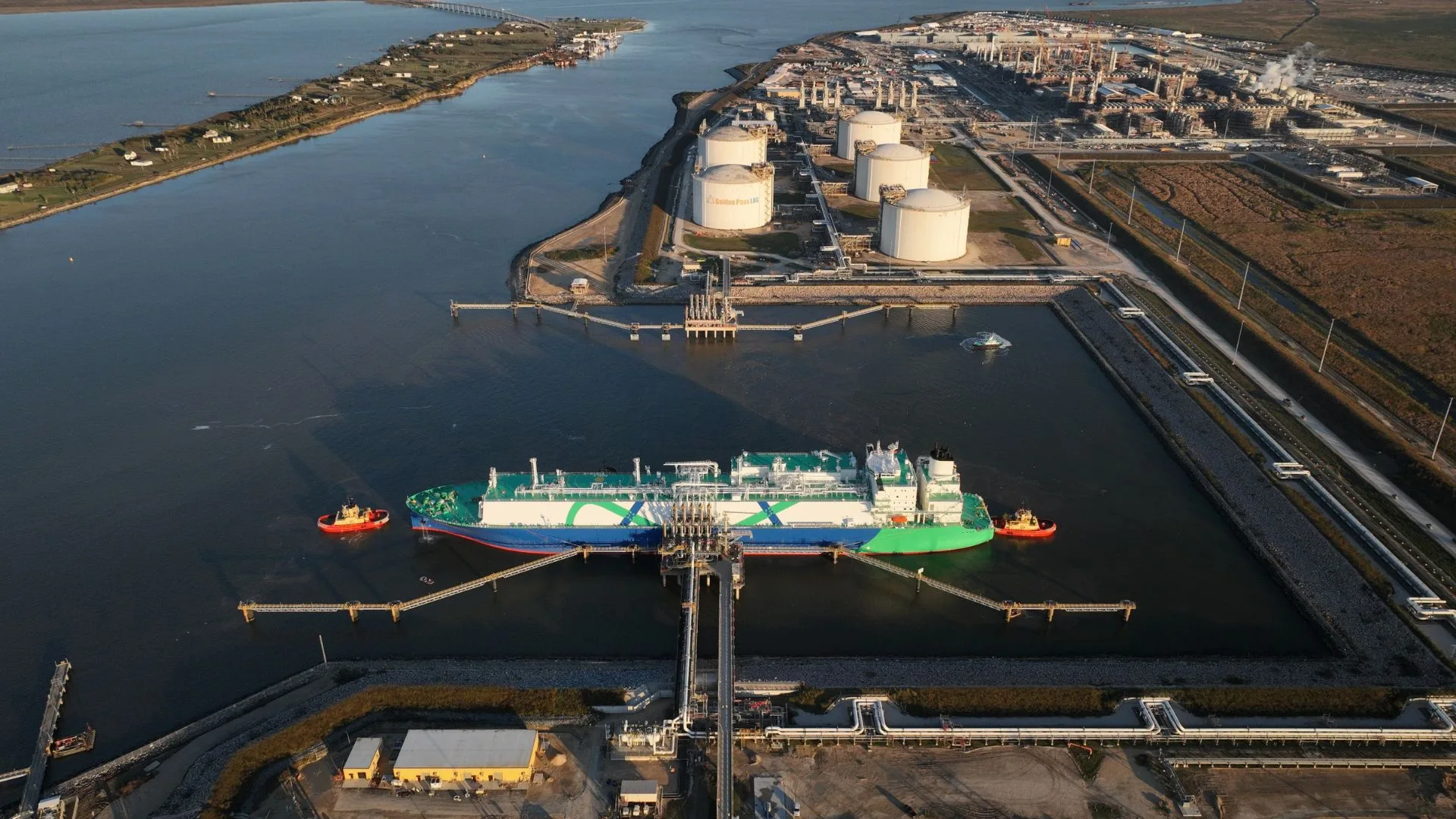
A particularly interesting aspect of the project is its storage infrastructure: it features five LNG tanks, each with a capacity of 155,000 m³, designed under strict cryogenic safety standards.
This means the terminal can store over 775,000 m³ of LNG, providing operational flexibility to manage demand peaks and cargo scheduling.
Additionally, the docks are designed to accommodate some of the world’s largest LNG carriers, maximizing export efficiency and reducing the frequency of port operations.
Operational Outlook and Upcoming Technical Advances
Golden Pass LNG anticipates commencing commercial exports during the second quarter of 2026, marking its full transition to sustained operations.
This advancement not only reinforces global energy security but also consolidates LNG’s role as a key fuel in the energy transition, especially in gas-dependent markets.
With the progressive entry of its three trains, the project is poised to become a dominant player in the global midstream, combining scale, efficiency, and operational resilience.
Source: Golden Pass LNG