
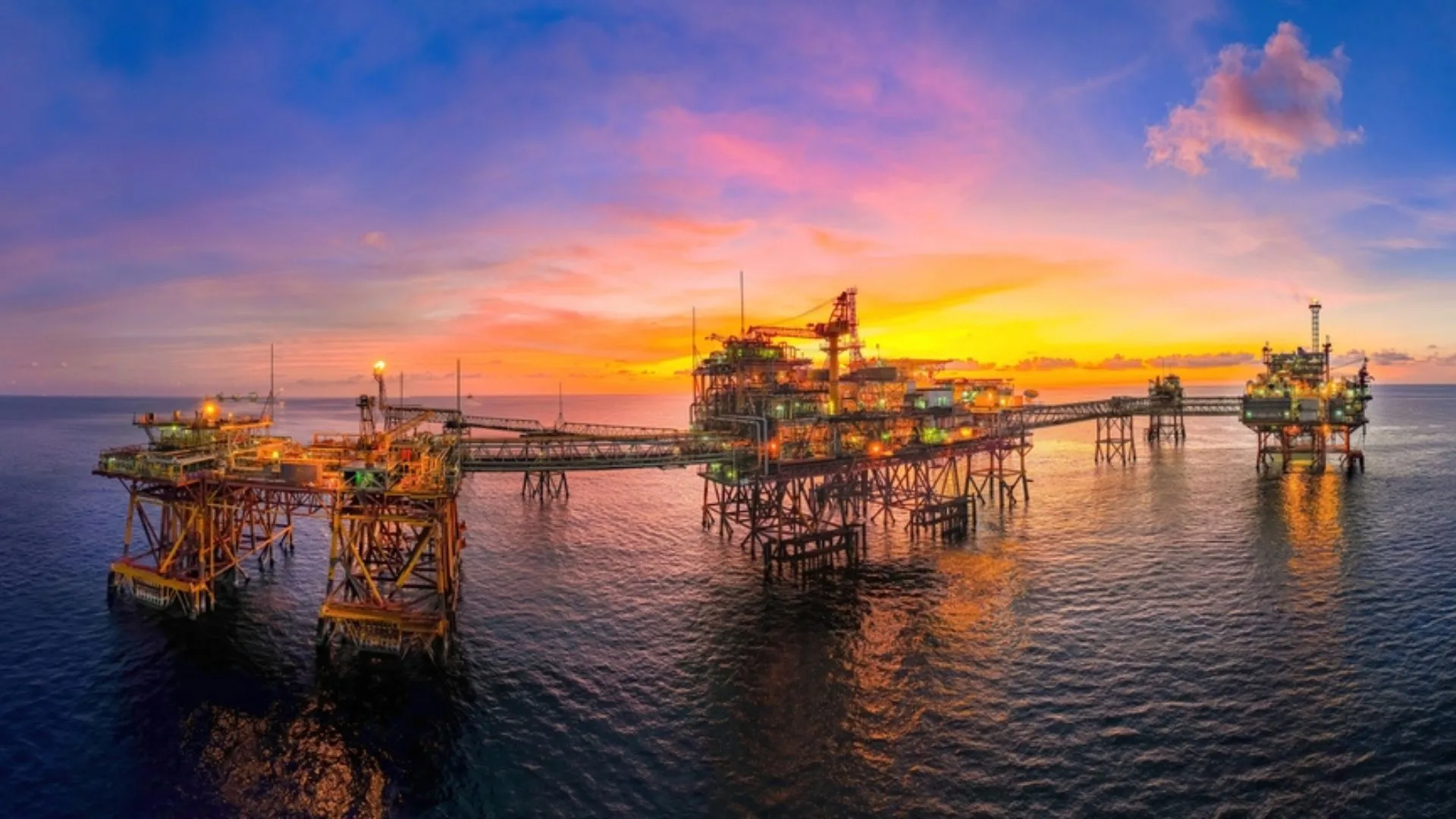
The new find in the Eastern Mediterranean reinforces gas production in Egypt and opens opportunities for immediate development due to its proximity to existing infrastructure.
A strategic gas discovery in the Mediterranean
Eni has confirmed a significant natural gas discovery and condensates off the coast of Egypt following the drilling of the Denise W-1 exploratory well, located in the Temsah offshore concession in the Eastern Mediterranean.
According to preliminary estimates, the field contains approximately 2 trillion cubic feet (Tcf) of gas initially in place (GIIP), along with about 130,000 barrels of associated condensates. These figures position the find as a relevant contribution to the country’s gas reserves.
Key advantages for accelerated development
Unlike other offshore discoveries, the Denise W field presents especially favorable conditions for rapid production startup. It is located about 70 kilometers from the coast, in a water depth of 95 meters and less than 10 kilometers from existing infrastructure.
This proximity allows for operational synergies that reduce development times and costs. Furthermore, the identified sandstone reservoir shows high-quality gas and a net pay thickness of nearly 50 meters, characteristics that support its technical viability.
Impact of gas in Egypt on energy strategy
This new find aligns with Egypt’s objectives to increase its gas production and strengthen its energy security. In an international context marked by energy market volatility, the country seeks to consolidate itself as a key player in regional supply.
In this regard, exploratory activity in areas near existing fields is positioned as an efficient strategy to maximize resources and optimize infrastructure.
Alliances and operational continuity
The development of the Denise field is part of the Temsah concession, the extension of which was agreed upon in 2025 between Eni, EGPC, and EGAS for a 20-year period. Eni holds a 50% stake alongside bp, while operations are managed by Petrobel, a joint venture between Eni and the Egyptian General Petroleum Corporation.
Furthermore, this discovery consolidates the historical presence of Eni in Egypt, where it has operated since 1954 with a portfolio spanning exploration, development, and production. By 2025, the company reaches an approximate production of 242,000 barrels of oil equivalent per day.
Implications for the upstream sector
The find reinforces the trend of exploration in the Eastern Mediterranean, a region that continues to reveal significant natural gas resources. Additionally, it highlights the value of exploration in mature areas near existing infrastructure, where development can be significantly accelerated.
With this new discovery, Eni consolidates its positioning in the upstream segment and expands its capacity to contribute to the energy supply in North Africa and Europe.
Source: Eni
Photo: Shutterstock