
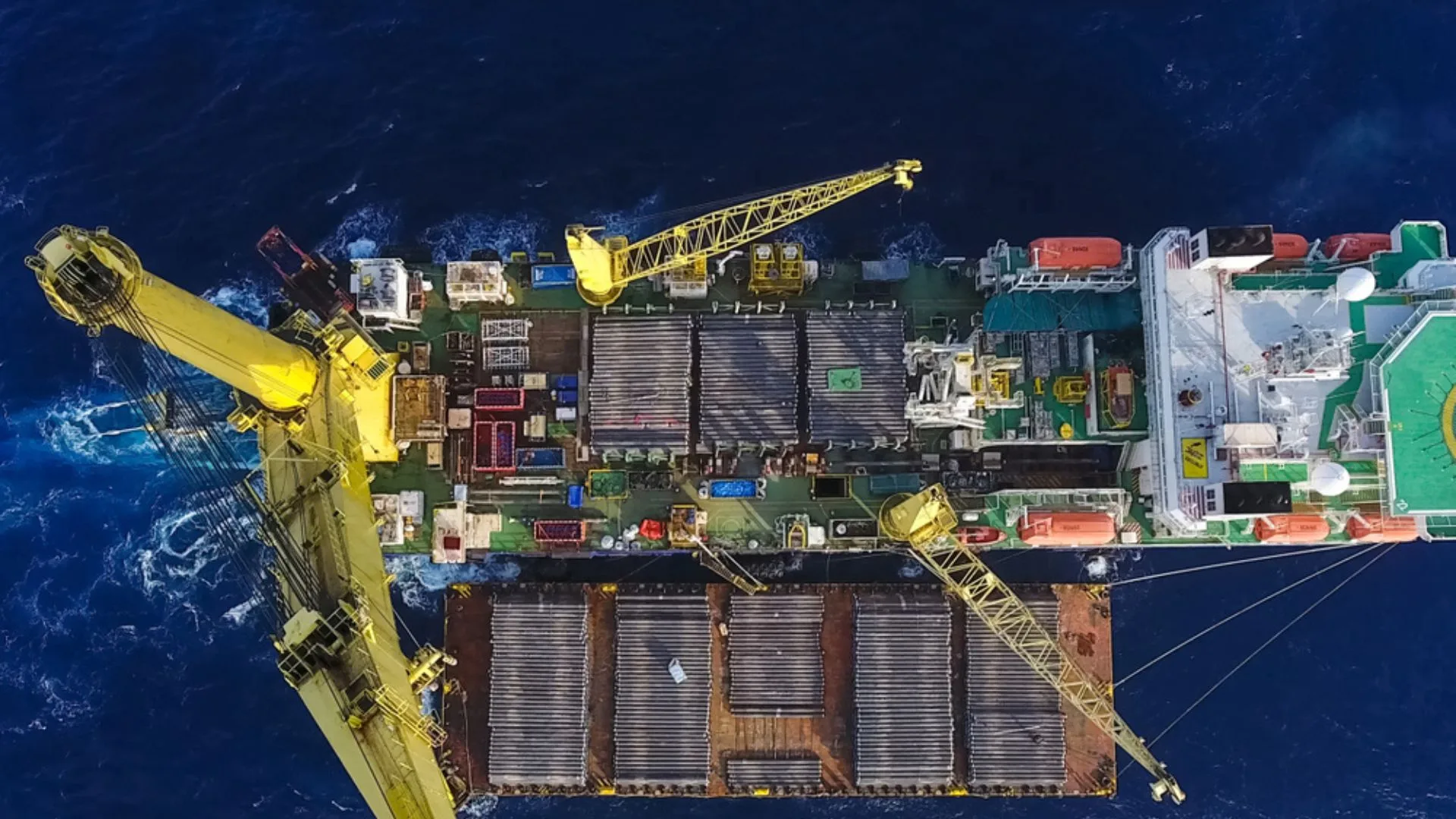
Eni confirmed new gas discoveries in Libya following a recent offshore exploration campaign, consolidating its presence in one of the Mediterranean’s key regions.
New gas fields in Libya
Specifically, the discoveries are located in two nearby geological structures: Bahr Essalam South 2 (BESS 2) and Bahr Essalam South 3 (BESS 3). Both prospects were drilled through wells B2-16/4 and C1-16/4, situated approximately 85 kilometers off the Libyan coast and at an approximate depth of 650 feet.
Furthermore, these structures are located just 16 kilometers from the Bahr Essalam field, the country’s largest offshore field, operational since 2005.
Confirmation of a high-quality reservoir
Additionally, studies identified gas-bearing intervals within the Metlaoui Formation, considered the main productive reservoir in the area.
The data obtained indicates a high-quality reservoir. Likewise, a well test confirmed its productive capacity, reinforcing the technical viability of the development.
Estimated volume exceeding 1 trillion cubic feet
According to preliminary estimates, the BESS 2 and BESS 3 structures jointly contain over 1 trillion cubic feet of natural gas.
This volume positions the discovery as one of the most significant in the region in recent years, aligning with recent offshore exploration campaigns in North Africa.
Accelerated development and connection to existing infrastructure
In this context, the proximity of the new fields to the Bahr Essalam field will allow for agile development by connecting them to already operational offshore facilities.
As a result, the gas produced will be allocated to both the Libyan domestic market and for export to Italy, strengthening regional energy security.
Eni strengthens its energy leadership in Libya
Currently, Eni is the leading international operator in Libya, with a presence in the country since 1959.
The company records an attributed production of approximately 162,000 barrels of oil equivalent per day in 2025. It also maintains three development projects underway, two of which will begin operations in 2026.
In parallel, Eni continues to advance its energy transition strategy, combining the expansion of gas resources with investments in low-carbon technologies.
Source: Eni
Photo: Shutterstock