
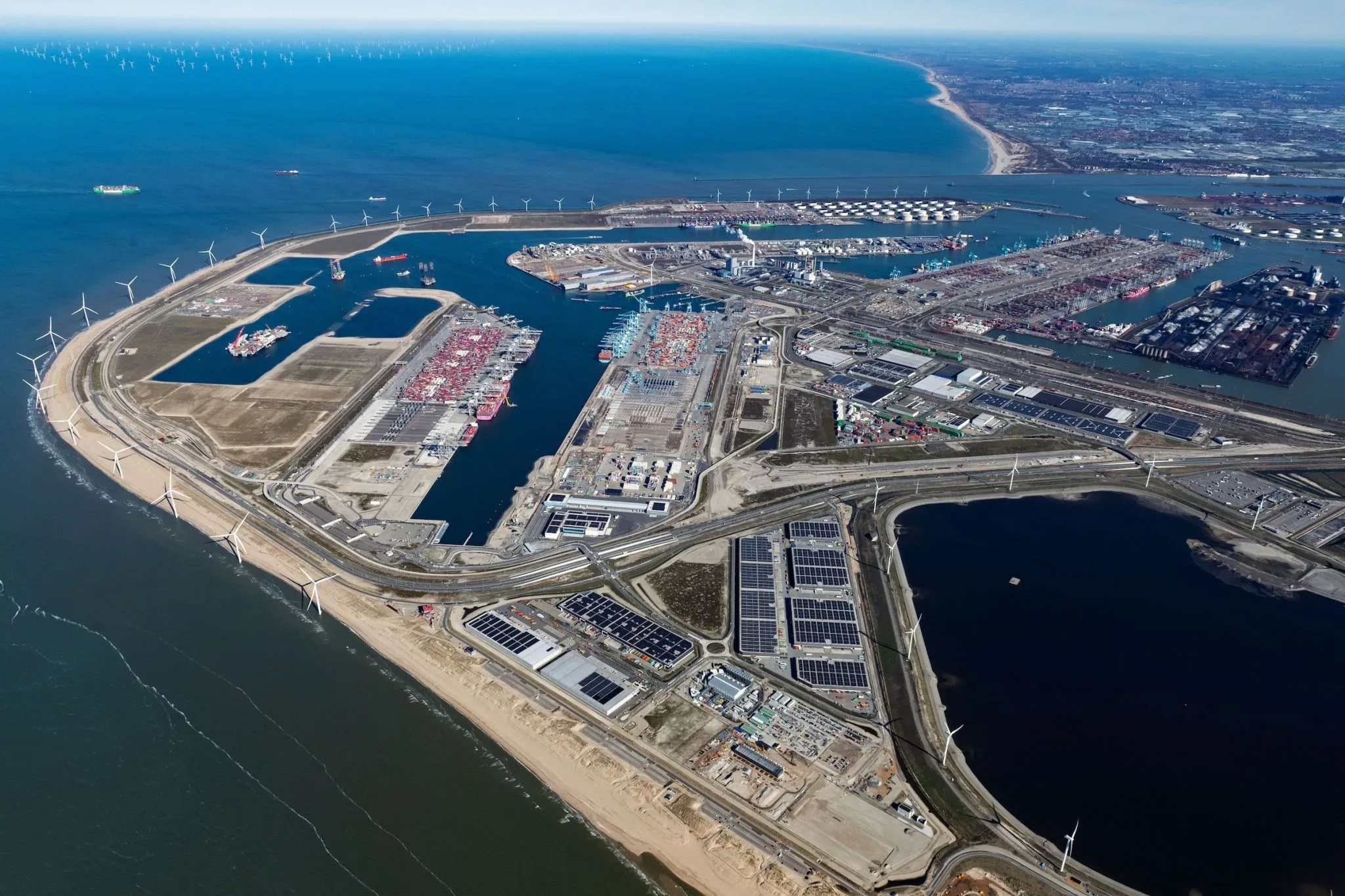
Port Electrification Redefines Energy Demand
The European Investment Bank has approved a €90 million loan to accelerate the electrification of the Port of Rotterdam, marking a milestone in the energy transformation of the European maritime sector.
The project involves the installation of shore power supply systems at three deep-sea container terminals, allowing vessels to switch off their auxiliary engines while docked and significantly reduce their emissions.
The most relevant data is the scale: 8 kilometers of electrified quay and 35 connection points, which implies a concentrated energy demand comparable to that of a small industrial city.
Electrical Infrastructure and Integration Challenges
The initiative will be executed by Rotterdam Shore Power, a joint venture between the Port Authority and Eneco, integrating electricity supply, grid connection, and associated civil works.
From a technical standpoint, the challenge lies not only in the installation but in managing peak loads, power quality, and grid stability when multiple vessels connect simultaneously.
This type of infrastructure demands advanced solutions in power electronics, reactive compensation systems, and coordination with grid operators to prevent disruptions to the regional electrical system.
Financial Impact: Rotterdam’s Global Maritime Transition
The European Investment Bank’s financing not only supports infrastructure but also reduces investment risk in capital-intensive projects linked to the energy transition.
From a financial perspective, the business model will depend on competitive electricity tariffs compared to marine fuel, as well as increasingly strict environmental regulations in the European Union.
This project positions the Port of Rotterdam as a global benchmark in port electrification, anticipating a future where ports will be key energy hubs in the decarbonization of maritime transport.
Source: https://www.linkedin.com
Photo: Shutterstock