
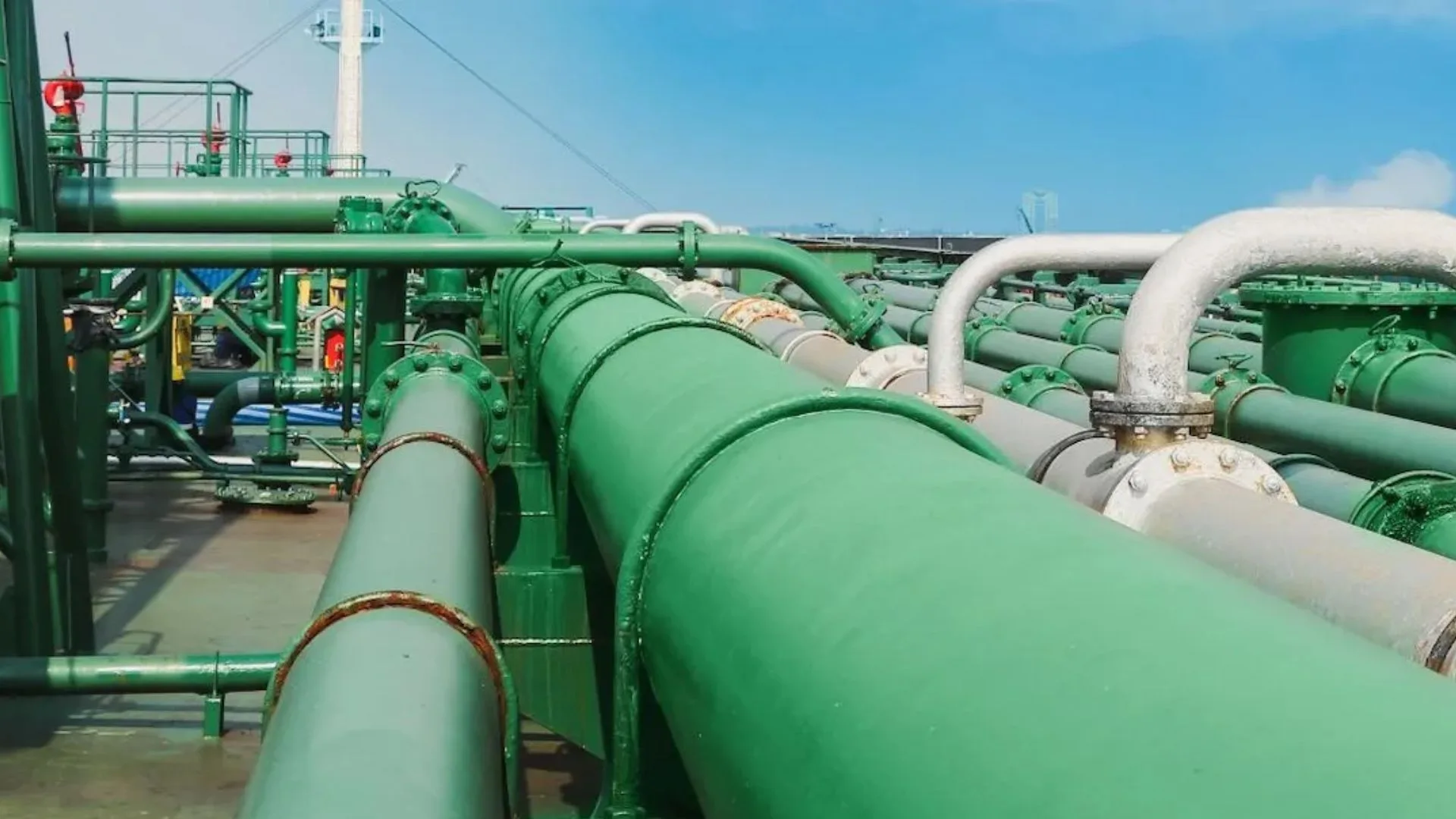
DNV has published the recommended practice DNV-RP-F123, focused on the design and operation of subsea pipelines for safe transport. This new technical guide stems from the H2Pipe joint industry project and seeks to address the specific challenges that hydrogen presents in existing and future infrastructures.
Guide to Reduce Risks in Subsea Hydrogen Pipelines
Unlike natural gas, hydrogen introduces particular risks that affect material integrity. Among these, hydrogen embrittlement stands out—a phenomenon that can compromise the structural strength of pipelines.
In this regard, DNV-RP-F123 provides clear criteria for the design, operation, and requalification of subsea gas pipelines. It also complements the DNV-ST-F101 standard, widely used in offshore oil pipelines since 1976.
Thanks to this regulatory integration, companies now have a more solid technical foundation to adapt existing infrastructures for hydrogen transport.
Key to Scaling Hydrogen Infrastructure
The development of hydrogen networks is considered essential for reducing emissions in hard-to-decarbonize sectors. However, one of the main obstacles has been uncertainty about material behavior and operational limits.
In this scenario, pipelines remain one of the most cost-effective alternatives for large-scale transport. The new recommended practice seeks precisely to close these technical gaps and facilitate decision-making in energy projects.
A Joint Effort from the Energy Industry
DNV-RP-F123 was developed between 2021 and 2026 within the framework of the H2Pipe JIP project, which brought together 37 organizations including operators, manufacturers, engineering firms, and academic centers.
The objective was to consolidate experimental data, testing, and industrial experience into a guide directly applicable to engineering projects.
Currently, DNV is advancing toward a new phase of the project focused on full-scale testing, whose results will allow further refinement of standards for hydrogen transport.