
Table of Contents
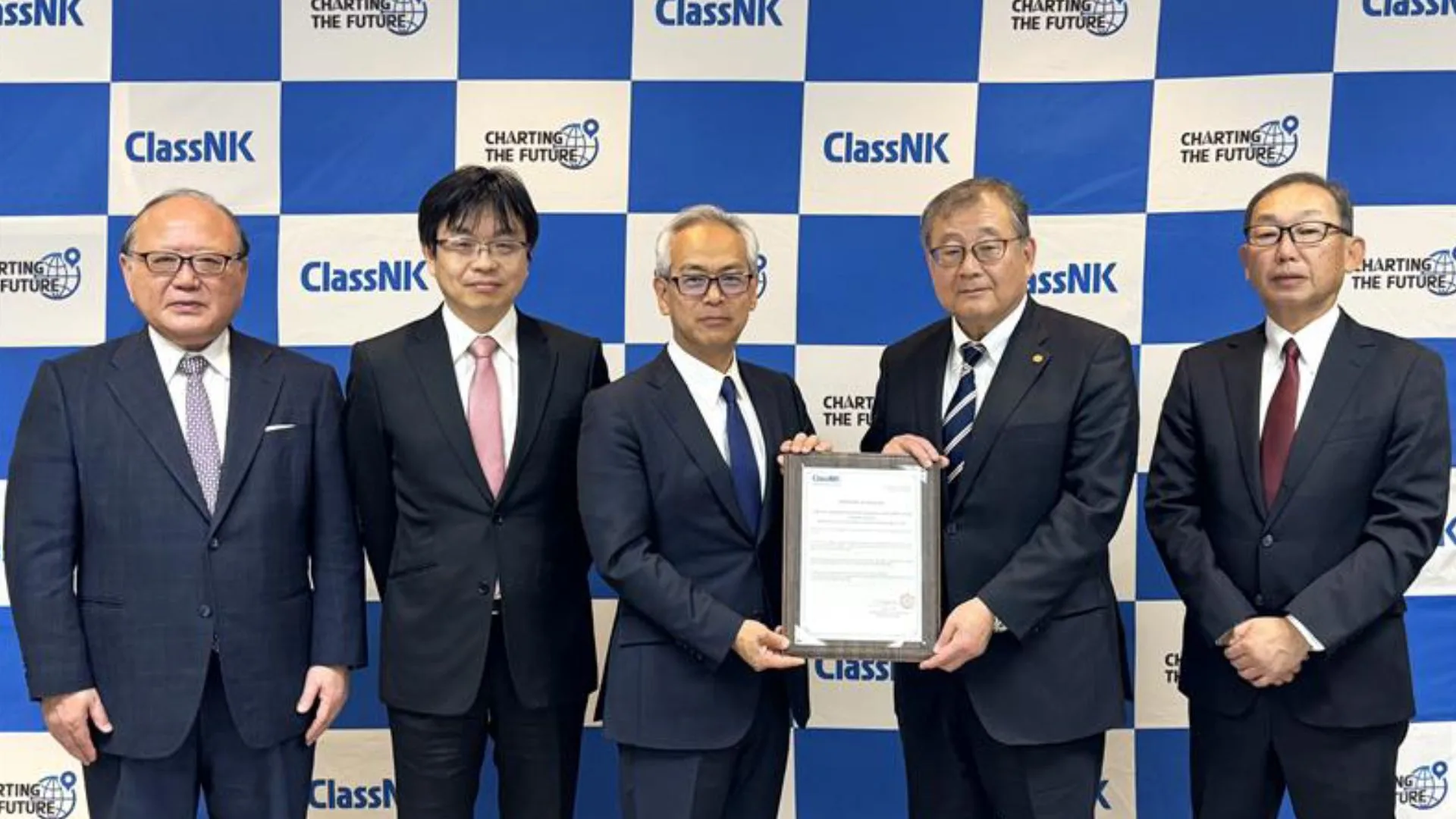
The classification society ClassNK has granted Approval in Principle (AiP) for the design of a liquefied CO2 carrier specifically created to operate with the Socket SPAR injection unit in Japan.
The feasibility of the Socket SPAR injection system in deep waters
Japan’s geography presents considerable challenges for carbon storage due to the depth of its coastal waters. In these scenarios, the use of subsea pipelines is technically unfeasible, making the implementation of floating facilities an operational necessity.
The Socket SPAR system acts as a receiving station, allowing vessels to discharge carbon dioxide directly onto storage sites for subsequent injection into the subsea subsurface.
Under the technical supervision of ClassNK, the project has passed critical reviews based on the rules for steel ships and the IGC Code. Specific tests have been conducted to prevent dry ice formation in relief valves and transport pipelines.
Likewise, the design developed by Shin Kurushima Sanoyas Shipbuilding for Uyeno Transtech integrates secure gangways that facilitate the transfer of personnel between the vessel and the SPAR unit during injection maneuvers.
This technical advancement improves the value chain of CCS projects in the region and establishes a benchmark for future CO2 transport vessels. The validation of these floating systems allows for projecting safe operations in complex marine environments.
Source and photo: ClassNK