
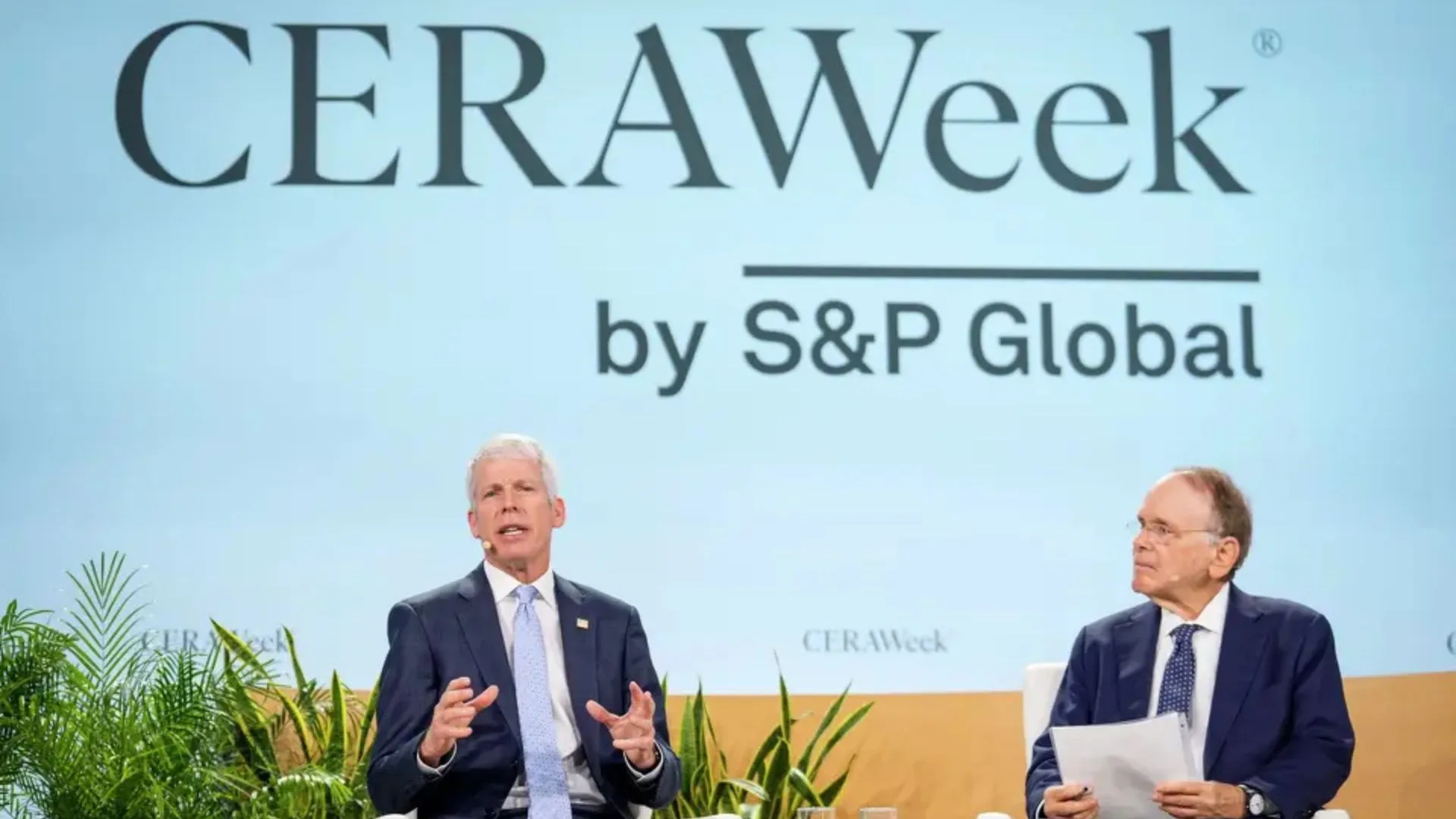
The start of CERAWeek 2026 in Houston confirms an energy landscape marked by geopolitical tensions, high oil prices, and global demand that continues to grow with no signs of slowing down. Industry leaders agree that the energy system faces a structural mismatch between consumption and available infrastructure.
During the initial days of the event, the technical debate has focused on the system’s capacity to respond to an environment where energy security, digitalization, and market stability critically converge.
Geopolitics and Prices Redefine the Energy Balance
The international context has taken center stage in the summit’s initial agenda. Volatility stemming from Middle East conflicts has pushed crude oil prices to levels near $100 per barrel, creating market uncertainty and pressuring energy supply chains.
This scenario reinforces the need for resilient energy strategies, where diversification of sources and operational flexibility become key variables to ensure supply continuity.
Sustained Energy Demand with No Signs of Contraction
Despite the price increase, analyses presented at CERAWeek agree that no significant demand destruction is observed. Global energy consumption remains robust, driven by industrial activity, electrification, and the expansion of new technologies.
This demand stability redefines market expectations, forcing operators and regulators to plan under scenarios of sustained high consumption, even in conditions of economic volatility.
Artificial Intelligence: A Catalyst for New Structural Load
The expansion of artificial intelligence has been identified as one of the main drivers of energy consumption growth. The accelerated deployment of data centers and intensive computing models is introducing an additional base load that transforms traditional demand patterns.
Technology sector executives have warned that current energy capacity may not be sufficient to sustain the growth rate of these digital infrastructures, positioning AI as a determining factor in energy planning for the next decade.
Energy Supply Not Scaling at the Pace of Consumption
One of the most relevant consensuses of the event is the existence of a gap between demand expansion and the capacity to develop new energy infrastructure. This imbalance manifests at multiple levels:
- Limitations in transmission networks for concentrated loads
- Need to accelerate generation and storage projects
- Aging infrastructure requiring urgent modernization
The inability to scale supply at the same speed as consumption introduces operational and economic risks that directly impact system reliability.
A Space for Real Decisions, Not Just Discussion
Beyond technical analysis, CERAWeek 2026 solidifies its position as a venue where key decisions for the global energy future converge. The participation of governments, energy companies, and technology giants is aimed at establishing agreements, defining investments, and aligning strategies in an increasingly complex environment.
The working groups in Houston aim to accelerate coordination between sectors, with an emphasis on critical infrastructure, energy development, and technology adoption, seeking to ensure sustainable growth without compromising energy security.
The start of CERAWeek 2026 highlights that the global energy system faces an unprecedented convergence of geopolitics, growing demand, and digital transformation.
Source: INSPENET